Fresh Live News Report
Sunday, July 5, 20261. Trump to meet Zelenskyy and Syria’s leader at NATO summit
President Donald Trump is scheduled to meet Ukrainian President Volodymyr Zelenskyy and Syrian President Ahmed al-Sharaa during the NATO summit in Ankara, Turkey.
The Zelenskyy meeting comes as the Ukraine war remains unresolved and Russia continues to resist any settlement that does not give it control over the Donbas region.
Trump recently spoke with Russian President Vladimir Putin for about 90 minutes. U.S. officials say Trump wants to restart peace efforts and press NATO allies on defense spending.
The Syria meeting comes amid regional tension involving Israel, Lebanon, Hezbollah, and post-Assad Syria. The White House has not released full details of the agenda.
What is still unknown:
Whether the NATO meetings will produce any concrete Ukraine peace framework, new weapons commitments, or Syria-related security agreement.2. Iran holds major funeral for Khamenei; successor absent
Iran held a large funeral ceremony in Tehran for slain former Supreme Leader Ayatollah Ali Khamenei.
Three of Khamenei’s sons appeared publicly at the ceremony, but Mojtaba Khamenei, his successor, did not.
Reuters reported that the funeral drew tens of thousands at the Imam Khomeini Grand Mosalla. AP reported hundreds of thousands of mourners.
Iranian officials, military figures, clerics, and ordinary citizens attended.
The absence of Mojtaba Khamenei is significant because he has not appeared publicly and is reportedly still under heavy security concerns.
The funeral is part of a longer mourning process, with Khamenei’s body expected to be taken through religious cities before burial in Mashhad.
What changed today:
Iran used the funeral to project unity after months of war, strikes, deaths, and internal uncertainty.3. Super Typhoon Bavi threatens Guam and the Northern Marianas
The National Weather Service warned that Super Typhoon Bavi is affecting Guam and the Mariana Islands.
NWS said Bavi’s eyewall reached Rota and was expected to bring dangerous winds, heavy rainfall, and storm surge to Guam, Rota, Tinian, and Saipan.
A typhoon warning remained in effect.
Local NWS Guam updates reported maximum sustained winds around 155 to 165 mph during Sunday updates.
Residents were urged to shelter as the storm moved through an area still recovering from earlier storm damage.
Main dangers:
Destructive wind.
Storm surge.
Flooding rain.
Power outages.
Damage to homes, roads, ports, and communications.What may happen next:
Emergency crews will not be able to fully assess damage until the worst conditions pass.4. Dangerous U.S. heatwave tied to at least 25 deaths
A major heatwave continued across large parts of the United States.
The Guardian reported at least 25 deaths linked to the heat, with more than 20 states affected and more than 140 million people under heat alerts.
New Jersey reported 22 suspected heat-related deaths.
Additional deaths were reported in Illinois and Mississippi.
Emergency services in Washington, D.C., treated dozens of people for heat-related illness during Independence Day events.
People most at risk:
Older adults.
People without air conditioning.
Outdoor workers.
Children.
People with heart, kidney, or breathing problems.
People living alone.What may happen next:
Some northern cooling is expected, but heat remains a threat in the Mid-Atlantic and Southeast.5. Ukraine hits Russian oil terminal near St. Petersburg
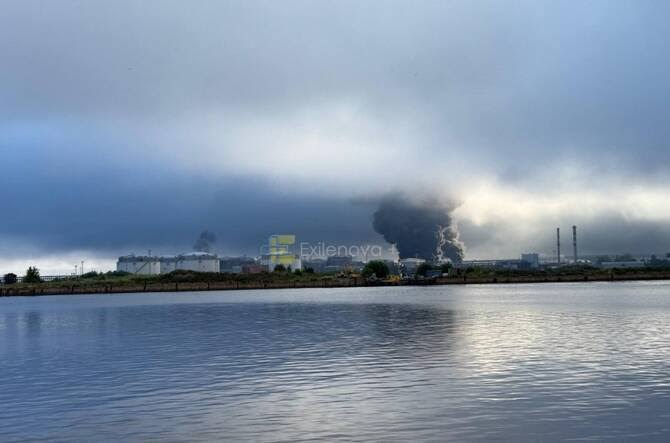
Ukraine launched a major drone attack on the St. Petersburg region, striking an oil terminal and targeting military-linked facilities near Russia’s Baltic coast.
Reuters reported that Russia said the St. Petersburg region was hit by a large drone attack. Ukraine said it targeted an oil port and naval base.
Officials reported one death each in Bryansk and Crimea.
The strike comes during a widening fuel crisis inside Russia.
Recent reporting says Ukrainian attacks on oil infrastructure have helped drive shortages, rationing, and higher pump prices in parts of Russia.
What changed:
The war’s energy front is moving deeper into Russia, with oil terminals, refineries, ports, and fuel distribution now under repeated pressure.6. Gaza strike kills at least two, medics say
Reuters reported that an Israeli airstrike killed at least two Palestinians in Gaza City on Sunday, according to health officials.
The strike comes months into a fragile ceasefire environment in which Gaza remains unstable, aid access remains limited, and the underlying conflict remains unresolved.
The report did not include full details on the identities of those killed or the target of the strike.
What is still unknown:
Whether the strike was part of a larger operation.
Whether more casualties will be reported.
Whether the incident will affect ceasefire talks or aid access.7. Vance criticizes British leadership after Starmer resignation
U.S. Vice President JD Vance said Britain had been “failed by its leadership for a long time” and said he hoped the next prime minister would deliver change.
The remarks followed Prime Minister Keir Starmer’s recent decision to step aside after two years in office.
Reuters reported that Andy Burnham is widely expected to succeed Starmer.
Britain is now preparing for its seventh prime minister in a decade.
Vance said the U.S.-UK relationship remains strong despite political disagreement.
Issues affecting relations:
Iran.
Gaza.
Ukraine.
Energy policy.
Immigration.
Defense and NATO burden-sharing.8. Michigan Senate race shifts after McMorrow exits
Michigan Democrat Mallory McMorrow suspended her campaign for the U.S. Senate.
Her withdrawal leaves the Democratic primary largely between U.S. Rep. Haley Stevens and Abdul El-Sayed.
The seat is being vacated by retiring Democratic Sen. Gary Peters.
The winner of the Democratic primary is expected to face Republican former U.S. Rep. Mike Rogers in the general election.
Why it is important:
Michigan is a major battleground state.
The Senate seat could affect control of the chamber.
The primary now presents a sharper moderate-versus-progressive choice.What comes next:
A debate between Stevens and El-Sayed is scheduled for Tuesday.9. Trump administration will not seek new bids for Reflecting Pool repair
The Trump administration will not open new bids to repair the Lincoln Memorial Reflecting Pool.
Interior Secretary Doug Burgum defended the existing contractors and said repairs would continue.
AP reported that damage involved multiple cuts totaling about 350 feet in the pool lining.
The pool is expected to be at least partly drained for repairs.
The project has drawn scrutiny because of no-bid contracts and renovation problems, including algae and peeling material after recent work.
Reported contract figures include:
$1.7 million to Green Water Solutions.
$14.7 million to Atlantic Industrial Coatings.More than six people have been arrested in connection with alleged vandalism.
What is still disputed:
The full cause of the damage.
Whether the project spending and contract process were handled properly.
How long repairs will take.10. Foxconn revenue jumps nearly 40% on AI demand
Foxconn reported a 39.8% year-over-year increase in second-quarter revenue.
Revenue reached T$2.513 trillion, or about $78.71 billion.
June revenue rose 52.1% year over year to T$821.8 billion, a record for the month.
The company said demand for AI-related cloud and networking products helped drive the results.
Foxconn is the world’s largest contract electronics manufacturer and a major supplier for Apple and AI-server supply chains.
The company also warned that geopolitical and economic volatility could affect future operations.
What this means:
AI demand is still reshaping global electronics, chip, server, and data-center supply chains.11. Samsung expected to report record AI-driven chip profit
Reuters reported that Samsung Electronics is expected to estimate an 18-fold jump in second-quarter operating profit.
Analysts expect operating profit around 86 trillion won, or about $56.35 billion.
The expected gain is tied to strong demand for memory chips used in AI systems.
Average DRAM prices reportedly rose 44%.
Average NAND prices reportedly rose 53%.Samsung supplies major technology customers, including Nvidia, Google, and Apple.
What could affect the outlook:
AI infrastructure spending.
Memory shortages.
Worker bonus costs.
Higher component costs in smartphones.12. U.S. marks 250th birthday with citizenship ceremony at Mount Vernon
At George Washington’s Mount Vernon estate in Virginia, 150 people from 50 countries became U.S. citizens during an Independence Day naturalization ceremony.
The ceremony was held as the United States marked its 250th birthday.
Participants took the Oath of Allegiance and recited the Pledge of Allegiance.
One participant was U.S. Marine Sgt. Diakaria Sangare of Guinea, who appeared in dress uniform.
The ceremony highlighted immigration, military service, national identity, and the continuing meaning of citizenship.
13. World Cup weather affects Mexico vs. England
The Mexico vs. England World Cup Round of 16 match in Mexico City was delayed by weather.
The match was scheduled at Estadio Azteca, with kickoff pushed back by about one hour.
The game is one of the major sports events of the day, with Mexico playing at home and England trying to advance under difficult conditions.
Weather delays are now part of the tournament’s public-safety picture, especially with storms and extreme heat affecting multiple regions.
14. Today’s reality in brief
The strongest confirmed developments today are not light stories.
A typhoon is threatening U.S. Pacific territories.
A heatwave has killed people across the United States.
Ukraine is striking deeper into Russia’s fuel system.
Iran is trying to show unity after Khamenei’s killing.
Trump is preparing major NATO-side meetings with Zelenskyy and Syria’s leader.
Gaza remains unstable.
Britain is moving toward another prime minister.
AI demand is producing huge corporate gains and supply-chain strain.The common thread:
Weather, war, leadership instability, public safety, and technology are all moving fast at the same time.— @ErnieMilleur Jul 6, 2026
Month: July 2026
I write in novel, The Tsar’s Puppet, about Tsar Peter’s (Putin’s) threats to use tactical nuclear weapons to threaten Poland and the Baltic states. Go to: jerryanderon.ink Read the story. #Putin
Video
Olena Rohoza (@OlenaRohoza)The United States has reportedly warned Poland about the possibility of a Russian provocation targeting either Poland or the Baltic states. According to European media citing sources in the Polish security services and allied officials, such an operation would be intended to test NATO’s willingness to respond with force while simultaneously weakening Western support for Ukraine.The reports describe not a full-scale invasion, but a limited military operation. Possible scenarios reportedly include drone or missile strikes on critical infrastructure, simulated air attacks designed to force Poland to activate its air defenses, or a hybrid operation in a border region. The exact nature of such a hybrid attack has not been disclosed.
The most serious scenario mentioned involves Russian or Belarusian troops crossing into Polish territory. Such an incident could reportedly be presented as a “navigation error,” a rescue mission following a helicopter emergency landing, or another accidental event. Britain’s The Telegraph has also reported that Moscow could attempt to portray such a provocation as the work of Ukraine, with any incursion or strike potentially originating from either Russia’s Kaliningrad region or Belarus.
The alleged calculation would be that, instead of immediately engaging Russian or Belarusian forces, Poland would come under pressure from the United States and be pushed toward negotiations. Moscow could then present any withdrawal as the result of a negotiated settlement rather than a retreat under NATO pressure.
One possible Russian demand during such negotiations, according to the report, could be reducing or ending Western military assistance to Ukraine.
In this scenario, the objective would not be to seize Polish territory, but to demonstrate that NATO can be placed in a politically difficult position and forced to negotiate over security on its eastern flank.
Polish authorities have not officially confirmed the details of the reported U.S. warning but have indicated that they take the threat seriously.
“I don’t want to scare anyone, but the coming months could be critical,” Polish Prime Minister Donald Tusk said.
According to Tusk, Poland is “preparing very intensively for various scenarios” and cannot ignore intelligence provided by its allies.
Foreign Minister Radosław Sikorski was even more direct. He compared a potential Russian provocation to the 1939 Gleiwitz incident, which Nazi Germany used as a pretext for invading Poland.
“We know what you’re planning. Don’t do it,” Sikorski said, addressing Vladimir Putin.
Polish Defense Minister Władysław Kosiniak-Kamysz likewise stated that the government is taking these warnings “very seriously.”
He also pointed to the SAFE program, which Warsaw describes as the largest military modernization and rearmament effort in Poland’s history.
The reports further claim that Polish intelligence agencies are preparing for Russian sabotage operations intended to inflame tensions between Poles and Ukrainians.
Tomasz Siemoniak, the minister responsible for coordinating Poland’s intelligence services, said Russia’s information campaign against Poland has intensified, with bots and trolls attempting to fuel disputes between Poles and Ukrainians online.
Against this backdrop, Poland continues to maintain substantial forces along its eastern border. Operation Safe Podlasie, launched in August 2024, allows for up to 17,000 troops to participate in border security operations.
Polish troops continue assisting border guards along the Polish-Belarusian frontier, which Warsaw considers an area of ongoing pressure from the Lukashenko regime.— https://x.com/OlenaRohoza/status/2073751236705235406
— @JerAndersonInk Jul 6, 2026
Pokrovsk, July 4, Ukrainian paratroopers called in an airstrike on a burned-out high-rise being used by Russian troops as a drone base.
A Ukrainian Air Force Su-27 dropped a 1,000-pound JDAM-ER glide bomb on the building, collapsing it.
Video
— @Osinttechnical Jul 5, 2026
Live: Trump to meet with Ukraine, Syria leaders on sidelines of NATO summit – France 24 france24.com/en/europe/20260…
— Michael Novakhov (@mikenov) Jul 5, 2026
🇮🇷 Iran’s supreme leader, Mojtaba Khamenei, has not appeared in public since February, when a U.S.-Israeli strike killed his father, his wife, his sister, his brother-in-law, and his 14-month-old niece.
He was reportedly injured in the same strike. He will not attend his father’s funeral this week. Security officials say Israel will kill him if he surfaces.
His existence is confirmed only by written statements on state media. In June he approved a ceasefire he said he opposed “on principle.” 10 days later he called for the criminals to be “seized by the collar.” 2 messages, 5 months, 0 appearances.
Iran’s hardliners are calling it a coup because a supreme leader who cannot show his face cannot project supreme authority. Iran’s pragmatists are running the country in the vacuum. The IRGC generals are making the decisions. And the man theoretically in charge is somewhere in hiding, signing statements nobody can verify he actually wrote.
The most powerful position in the Islamic Republic is currently occupied by a ghost. What does a country look like when its supreme leader can’t come out?
Source: Al Jazeera / Writer: Oliver
— @MarioNawfal Jul 5, 2026
Summary
NATO’s southern flank strengthens as Italy and Türkiye align ahead of the Ankara summit, while Ukraine intensifies strikes on Russian energy infrastructure with record drone attacks. Fuel crises in Russia and prisoner abuse reports highlight deepening wartime strains, as diplomatic efforts led by Trump show mixed progress amid rising regional tensions in the Caucasus and Middle East.
Key Stories
Ukraine escalates drone strikes on Russian oil infrastructure — Ukraine has launched at least 194 attacks on Russian refineries in 2026, an 11-fold increase from the previous year, driven by expanded drone production and U.S. intelligence support. The campaign suggests a strategic shift to degrade Russia’s energy exports and military logistics.
Russia faces fuel shortages and rationing amid price surges — Gasoline prices in 12 Russian regions now exceed U.S. levels, with Soviet-era rationing reintroduced as the Kremlin lowers fuel quality standards and hides diesel import sources. Analysts warn the crisis exposes systemic vulnerabilities in Russia’s oil sector.
Trump mediates Ukraine-Russia talks ahead of NATO summit — Donald Trump held separate calls with Putin and Zelensky to discuss conflict resolution before the NATO summit in Ankara, where Italy and Türkiye are deepening strategic ties. Russia accused Ukraine of rejecting a local ceasefire to retrieve soldiers’ bodies, signaling stalled humanitarian efforts.
Systematic torture of Ukrainian prisoners documented — Russian forces are accused of using coordinated sexualized violence and electrocution threats against Ukrainian male detainees, with identical interrogation scripts suggesting centralized training. The report by Truth Hounds and IPHR highlights escalating war crimes.
Caucasus emerges as geopolitical flashpoint amid shifting alliances — Azerbaijan’s ties with India and Italy, alongside Armenia’s opposition bloc joining parliament, reflect realignments in the South Caucasus. Reports of Indian troops in the region and protests in Albania underscore rising instability in Eurasia’s borderlands.
#CIA #FBI #ODNI
x.com/mikenov/status/2073839…Michael Novakhov (@mikenov)Ukraine War: July Week One share.gemini.google/Iw75lflW…
AI Mode
share.google/aimode/P2Huh44f…
Pic.: St. Petersburg oil terminal strike. Source: ARAB NEWS— https://x.com/mikenov/status/2073839359820751217— Michael Novakhov (@mikenov) Jul 5, 2026
Ukraine War: July Week One share.gemini.google/Iw75lflW…
AI Mode
share.google/aimode/P2Huh44f…
Pic.: St. Petersburg oil terminal strike. Source: ARAB NEWS— Michael Novakhov (@mikenov) Jul 5, 2026
Ukraine War: July Week One share.gemini.google/Iw75lflW…
— Michael Novakhov (@mikenov) Jul 5, 2026
Summary
Recent developments highlight intensifying geopolitical tensions, including sustained military operations in Lebanon and Yemen, alongside political controversies involving U.S. and global leaders. Emerging cybersecurity tools and legal challenges for high-profile figures suggest broader implications for security and governance.
Key Stories
Lebanese casualty figures surge as Israeli strikes persist — Lebanese Ministry of Health reports 4,304 fatalities and 12,203 wounded since March 2, indicating a sharp escalation in cross-border hostilities. Israeli forces continue sustained operations, raising concerns about regional stability.
Houthi offensive in Yemen sparks fears of wider conflict — A major Houthi offensive in western Yemen has raised alarms about potential regional escalation, with reports suggesting a shift in conflict dynamics. The development may indicate broader destabilization in the Middle East.
Trump’s potential legal troubles and diplomatic moves draw attention — Reports suggest Trump could face up to 20 years in prison for alleged wire fraud, while unconfirmed claims link his potential Russia visit to Ukraine deal negotiations. These developments may signal heightened political and legal volatility.
U.S. military supports Venezuela earthquake relief amid tensions — A U.S. Marine Corps unit conducts site surveys in Venezuela as part of State Department-led earthquake relief efforts. The operation underscores ongoing U.S. engagement in Latin America despite strained diplomatic relations.
New OSINT tools and cybersecurity threats emerge — AI-powered username scanning tools and red team exploitation guides highlight growing capabilities in open-source intelligence. Concurrently, reports of violent crimes linked to digital platforms suggest rising cybersecurity and law enforcement challenges.