.jpeg?trim=0,0,400,0&width=1200&height=800&crop=1200:800)
Katie Miller claimed she deliberately led Fauci, who said he repeatedly checked in on her when she had Covid, to believe they were on friendly terms so he ‘did not leak against me or my husband’
 My News Links
#CIA #FBI #Mossad
WRONG PIVOT!
x.com/mikenov/status/2082812…Michael Novakhov (@mikenov) #Russia‘s Pivot #East: A Strategic Gamble My Opinion: #Putin made the major strategic mistake: he turned Russia’s pivot to the East thenewsandtimes.blogspot.com…— https://x.com/mikenov/status/2082812505185833409— Michael Novakhov (@mikenov) Jul 30, 2026
#Russia‘s Pivot #East: A Strategic Gamble My Opinion: #Putin made the major strategic mistake: he turned Russia’s pivot to the East thenewsandtimes.blogspot.com…
— Michael Novakhov (@mikenov) Jul 30, 2026
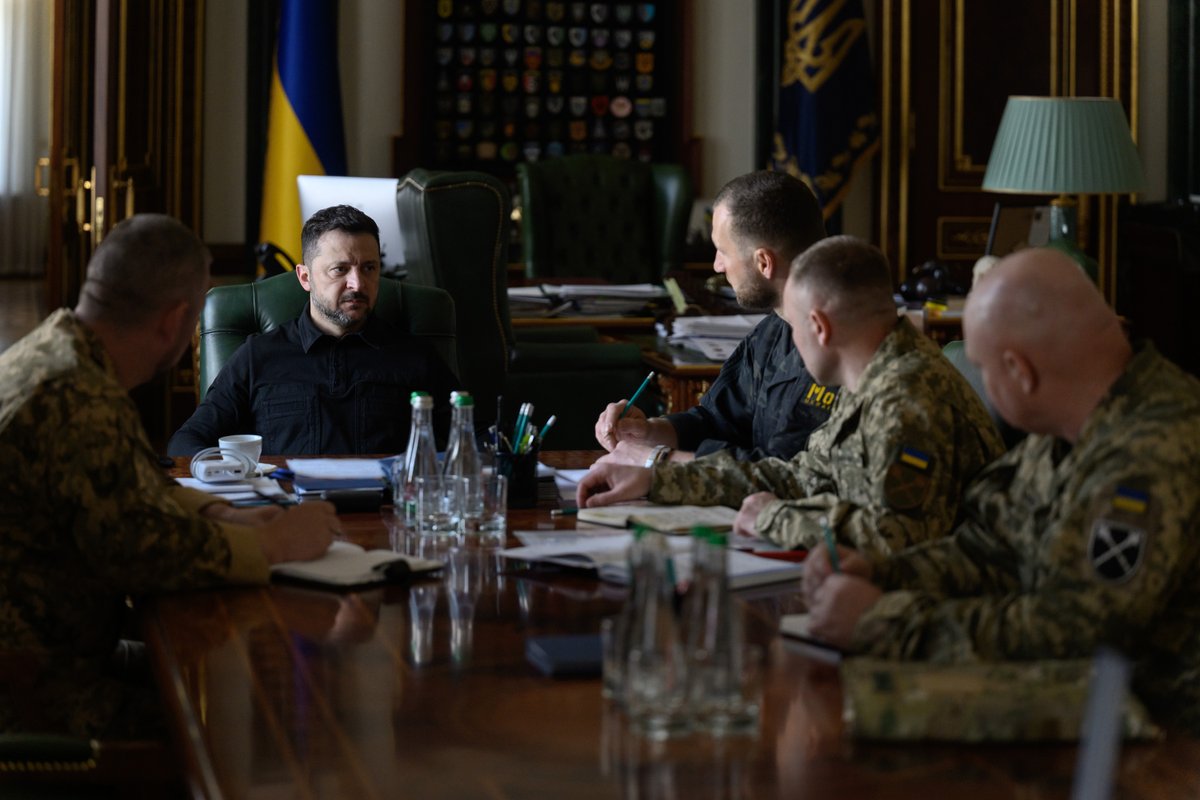
Briefing from Mykhailo Drapatyi, Ihor Skybiuk, Yevhenii Khmara, and Pavlo Palisa. We discussed in detail the challenges we are facing now because of Russia’s tactics of ballistic missile strikes, and our ability to counter this tactic, both at the military and diplomatic levels. We identified solutions and technological steps, as well as asymmetric measures that can give Ukraine greater protection.
There was a briefing on the situation at the front, primarily in the areas of Slovyansk and Kostiantynivka, and also on the situation with the maritime export corridor – what has already been done in this area and what action plan is still to be implemented. I am grateful to all the warriors and units involved in carrying out our plan of long-range sanctions against Russia for its war. Our mid-range strikes operation against Russian forces and positions in the temporarily occupied territory of Ukraine, including our Crimea, is ongoing. We updated the list of top priorities for mid-range strikes. I instructed the Commander-in-Chief of the Armed Forces of Ukraine to strengthen information-sharing and coordination with military leadership in the countries of our region. The teams at Ukraine’s Ministry of Defense and the Office will work with our partners in Europe who can help with the supply of air defense missiles.
The General Staff of the Armed Forces of Ukraine is preparing a number of systemic changes that will, among other things, allow for a clearer assessment of the situation on the front line, a more rapid response to changes in the situation, and greater opportunities for brigades to respond effectively to Russian assault activity. Thank you to all the units that are truly holding Ukraine’s positions and preventing the occupier’s army from achieving the objectives set for it by Russia’s political leadership. Glory to Ukraine!
— @ZelenskyyUa Jul 30, 2026
🇺🇦🇷🇺 BUDANOV: RUSSIA MUST WITHDRAW OR RISK REGIME COLLAPSE
“Russia will be forced to withdraw its troops from Ukrainian territory under Ukrainian military pressure, pressure from internal political processes in Russia and pressure from international diplomacy.
Russia will be forced to make this withdrawal soon. Otherwise, it will rapidly lead to the collapse of the Russian regime.
It has no other solution.” – Kyrylo Budanov 🇺🇦
Budanov’s strategy combines battlefield pressure, internal instability and international isolation to make Russia’s occupation impossible to sustain.
The Kremlin can delay withdrawal by sacrificing more troops and resources, but it cannot turn conquest into legitimacy.
Putin’s choice is narrowing: leave Ukraine or continue dragging his regime toward collapse.
— @WW3finalboss Jul 30, 2026
#Russia‘s Pivot #East: A Strategic Gamble
My Opinion: #Putin made the major strategic mistake: he turned Russia’s pivot to the East; it comes and goes in waves. It feels that this latest backward wave will be short lived; it contradicts the main trend of the latest several centuries. Putin will pay for this historical blunder.
Gemini:
share.gemini.google/7fI20Z9a…
AI Mode:
share.google/aimode/nrSeWE41…
share.google/aimode/OhMyRs8g…
Russia’s “pivot to the East” represents one of the most significant geopolitical shifts in modern history, sparking intense debate among historians and foreign policy analysts regarding its long-term viability.
Arguments for the “Historical Blunder” ViewCenturies of European Integration: Since Peter the Great in the early 18th century, Russia’s modernization, culture, and elite identity have been overwhelmingly tied to Europe.
Asymmetric Dependency: Analysts argue Russia is entering a subordinate partnership with China, trading European market diversification for a heavy reliance on a single economic superpower. [1, 2]
Infrastructure Constraints: Redirecting energy grids, pipelines, and supply chains from the West to Asia requires decades and immense capital, rendering the pivot economically inefficient in the short-to-medium term.Arguments for a Permanent Structural Shift
The Global Economic Gravity Shift: The rise of Asian economies (China, India, and Southeast Asia) makes a political and economic pivot a pragmatic alignment with 21st-century growth centers.
Irreversible Western Sanctions: The structural breakdown of political and economic ties with Europe since 2022 has forced permanent, institutionalized reorientations in Russian banking, trade logistics, and diplomacy.
Multipolar Alignment: Moscow views the pivot not as an isolated move, but as a integration into the “Global South” through expanding frameworks like BRICS.Whether this shift is a temporary detour from Russia’s historical European trajectory or a permanent realignment remains a defining question for global politics.
If you would like to explore this topic further, I can provide:Recent trade and energy data tracking Russia-Asia commerce.
Perspectives from Russian historians on past shifts between East and West.
Analysis of how China or India views this relationship.
–Pic.:
Putin’s Pivot: Why Russia is Looking East | Brookings
brookings.edu/articles/putin…— Michael Novakhov (@mikenov) Jul 30, 2026
#Russia‘s Pivot #East: A Strategic Gamble share.gemini.google/7fI20Z9a…
My Opinion:
#Putin made the major strategic mistake: he turned Russia’s pivot to the East; it comes and goes in waves. It feels that this latest backward wave will be short lived; it contradicts the main trend of the latest several centuries. Putin will pay for this historical blunder.
share.google/aimode/OhMyRs8g…— Michael Novakhov (@mikenov) Jul 30, 2026
An FT analysis of refinery layouts, photographs, satellite images and thermal-infrared data shows that damage at several major Russian refineries has persisted for weeks or even months after attacks ft.trib.al/sUI5jXU
— @FT Jul 30, 2026
🇺🇸 The USA has awarded a contract to Lockheed Martin for the procurement of PAC-3 MSE missiles for the Patriot air defense system worth ~51 billion €.
The contract allows the company to increase its workforce by an additional 650 personnel with the aim of reaching a yearly production capacity of 2.000 missiles by 2030.
— @Jeff21461 Jul 30, 2026