
Categories
Michael Novakhov - SharedNewsLinks℠

Russia agreed to restart trilateral talks. Peace in Ukraine is far off.

Michael_Novakhov shared this story.


On the surface, President Donald Trump’s friend and envoy Steve Witkoff left Moscow on Wednesday with a handful of winning talking points: a U.S. citizen released and on his way home; Russia’s agreement to resume trilateral talks with Ukrainian representatives; and a Russian ship carrying diesel set to depart for the United States this week.

But in the tangled mess that is the war in Ukraine, all of those gestures benefit Russia most — leaving a ceasefire, let alone peace, a distant prospect for besieged Ukrainians, and the Trump administration and U.S. Republicans still grappling with high diesel and gasoline prices ahead of the midterm elections.

To win effusive praise from Witkoff and announce a resumption in negotiations, Russian President Vladimir Putin had to do very little: release Stephen Hubbard, a detainee of little value, and then overcome an obstacle of Russia’s own making: professed grievances over Ukraine’s stepped-up drone and missile strikes that coincided with Russia’s parliamentary elections in September.

Ukrainian President Volodymyr Zelensky did not disguise his dismay — or his cynicism about the diplomatic developments — as he used the latest Russian strikes on Kyiv to throw shade at Witkoff for praising Putin as a “humanitarian.”

“Three waves of ballistic strikes were launched by Russian ‘humanitarians’ against Kyiv from the evening,” Zelensky said. “They used 21 missiles. Unfortunately, there is a significant number of hits and damages in the city: ordinary houses, energy facilities, infrastructure of one of the stations and the metro, shopping centers, and enterprises. Among the damaged objects is even a monastery.”

“Twelve of our regions were under Russian strikes this night,” he continued. “In Kyiv and the regions, 34 people were injured, including five children. As of now, two deaths are known.”

Zelensky added: “Essentially immediately after the latest negotiations, Russia delivered a demonstrative strike. This means that there are no real changes in its attitude towards everything that is happening. It is important to continue trying to find the right solutions to end this war.”

As Kyiv and Moscow maneuvered for Washington’s favor Wednesday, Zelensky reiterated his willingness to freeze the fighting along current battle lines — a proposal that Trump had made just over a year ago and that Russia rejected, insisting that Ukraine surrender the entirety of its eastern Donetsk region, including the so-called “fortress” cities that Russia has tried and failed to capture for years.

Following Witkoff’s visit to St. Petersburg on Wednesday, high-ranking Kremlin aide Yuri Ushakov said the U.S. envoy’s points were so convincing that Moscow reconsidered its opposition to meeting a Ukrainian delegation and was willing to send delegates to Abu Dhabi in mid-November for technical talks, the first since February.

Ushakov said that Witkoff had informed Putin of the results of his talks with Zelensky in Oslo, adding there was little “substance” to the “new elements” of Ukrainian and European proposals. Ushakov said that he did not know how close the war was to ending but that “it is heading that way.”

Experts and analysts, especially in Ukraine, were less convinced.

“As experience shows, the mere fact that negotiations are taking place does not mean that a peace agreement is likely to be reached anytime soon,” Ukrainian political scientist Volodymyr Fesenko said in an interview. “It is more likely that the war will escalate at the same time, particularly the air war against Ukraine.”

“Russia’s attacks on Kyiv and Ukraine will be used as a tool to exert pressure on the negotiations,” he continued. “This is Putin’s preferred method. That is why I say that negotiations and an escalation of the war will take place simultaneously.”

Meanwhile, Oleksandr Merezhko, a Ukrainian member of parliament and chair of the committee on foreign policy and interparliamentary relations, described the talks as “a charade.”

“Russia is using the negotiations as a propaganda tool — that’s all — while we are trying to work with the Europeans and have some discussions and so on,” he said. “But there are no results anymore, and there won’t be any, unfortunately.”

Tatiana Stanovaya, a political scientist and fellow at the Carnegie Russia Eurasia Center, wrote on X that while Witkoff’s readout generated little enthusiasm in Moscow, recent sanctions relief and Trump’s latest shift toward Russia “have given Putin sufficient grounds to agree to resume negotiations, particularly as doing so comes at little cost to Moscow.”

“It is prepared to engage in discussions for tactical gains, calculating that these, combined with the further deterioration of the Ukrainian state, may eventually produce a strategic shift in Russia’s favour,” Stanovaya wrote.

Other Russian officials have called the latest meeting with Trump’s envoys a sign that “Washington shares the assessment” about the lack of substance in what Kyiv and its European backers have proposed.

Russia has long sought Trump’s support for a negotiated end to the war that would deliver victory to Putin by allowing him to seize all of Ukraine’s eastern Donbas region.

“The talks … are undoubtedly a prelude to a potential diplomatic breakthrough,” Russian lawmaker Leonid Slutsky said. “The latest meeting has, in effect, brought the issue of a settlement in Ukraine back onto the negotiating track.”

The talks are set to include military officers and Putin aide Vladimir Medinsky, a former culture minister now known for his revisionist history books about Ukraine. Putin, meanwhile, will head to China, where he is working to set up a joint meeting with Trump and Chinese President Xi Jinping on the sidelines of the Asia-Pacific Economic Cooperation summit.

That’s a format that the Russian leader has long seemed to prefer, in which he can push to end the war on his terms while bypassing Ukraine and Europe.

The idea of such a big-power summit has alarmed Ukrainian officials, with Foreign Minister Andrii Sybiha writing on X: “A trilateral ‌meeting between ⁠the leaders of Ukraine, the US, and Russia could help end the war sooner. A trilateral meeting between the leaders of Russia, China, and the US would do only the opposite: encourage Putin to continue this war.”

During his meeting with Putin, Witkoff hailed the diesel deal Trump struck with the Russian leader as “another example of what we can achieve by working together.”

The deal, which removes sanctions from Russia in a reversal of long-standing U.S. policy, is intended to lower fuel prices ahead of the midterm elections.

Putin has claimed that it lowered global diesel prices by 5 percent to 6 percent, a figure energy experts dispute. The amount of diesel Russia is releasing is marginal compared with overall U.S. usage and hardly enough to address the global energy crisis set off by the U.S. war with Iran.

Russian Deputy Prime Minister Alexander Novak said the first tanker with diesel bound for the U.S. was set to depart Thursday, even though the contract for the supplies has yet to be signed.

“This tanker will have a capacity of 40,000 tons,” Novak said. “And, certainly, further shipments will follow.”

To ship diesel to the U.S., Russia had to lift its own export embargo, imposed after systematic Ukrainian drone strikes knocked out some of the country’s largest oil refineries, creating shortages and price spikes for Russians.

Those strikes forced Russia to prioritize its domestic market, ration fuel at home and even temporarily permit the sale of lower-grade fuels to stabilize domestic availability.

Novak hinted that production limits were still in place and that the destination for diesel shipments will depend on “what volumes we can supply — over and above the needs of the United States.”

Details aside, the deal has given Putin a basis to push one of his mainstay talking points: that the West is hurting itself by imposing economic sanctions on Russia and ultimately won’t be able to meet its own needs without resuming purchases of Russian fossil fuels.

For Putin, who is also aware that Trump may flip positions again after the midterm elections, the current thaw with Washington creates an opportunity to improve ties with the U.S. while pushing ahead with a plan to make winter the most miserable yet for Ukraine in the nearly five-year-long invasion.

The Kremlin seems to hope that will break Ukraine’s resolve and European support for Kyiv will collapse.

But for Russia, there is also a risk of overplaying its hand, said Vladimir Pastukhov, a Russian political scientist.

“The Putin regime will never have a more favorable opportunity to extricate itself from this war than it does right now,” Pastukhov said. “The frantic, restless way Putin is acting suggests he may, in part, grasp this. But hubris — the eternal nemesis of Russian emperors — stands in the way.”

Pastukhov said Trump appears to have moved away from a belief that freezing the fighting would be the best way to end the war quickly and is instead mulling a solution “in the manner of a gangland showdown.”

“In any case, I believe that this is no ordinary moment in the history of this war … but a true point of no return, a juncture where an intense struggle is underway over the terms of peace,” Pastukhov said.

“In all likelihood, this round of ping-pong will prove inconclusive; what happens next will depend on whether Trump is capable of moving from hints to action — that is, whether he will risk openly siding with Putin in this war, thereby forcing Europe — and, along with it, Zelensky — to capitulate.”

In Ukraine, trust in U.S. support has already evaporated.

After Trump cut off direct military and financial aid, the three key remaining areas of U.S. assistance — intelligence sharing, Starlink satellite internet service and arms sales — each proved vulnerable during the past week, as the White House seemed to pressure Kyiv.

Fesenko, the political scientist, cited “a crisis in bilateral relations.”

“This is evidenced by Trump’s very harsh, sometimes aggressive statements, including calls for a change of president in Ukraine,” he said. “The risks have therefore become apparent precisely in the remaining areas of cooperation.”

On Thursday, Ukrainian commanders were still reporting issues with Starshield, the military equivalent of Starlink, despite assertions by the Trump administration that service had been restored.

“Starshield continues to operate across all sectors of the front line, but with a speed limit of 160 km/h. This has created certain problems for us,” Andriy “Klima” Klymenko, commander of the 414th Unmanned Systems Brigade “Birds of Magyar,” told The Washington Post.

“The worst part is that nobody warned us that the restrictions were being introduced,” Klymenko said. “We found out about them in the middle of combat missions, when we started losing aircraft.”

“We have now adapted, but the problem has not gone away,” he added. “At lower speeds, our drones become easier targets for the enemy. This directly undermines the effectiveness of operations.”

Natalia Abbakumova contributed to this report.
Categories
Michael Novakhov - SharedNewsLinks℠

EXCLUSIVE | Leaked emails reveal former German intelligence chief’s Mossad links


Michael_Novakhov
shared this story
.

Former German intelligence chief August Hanning is accused of treason and spying for a foreign agency after allegedly obtaining about 2,000 classified BND documents and using them in dealings with intelligence officials from an unnamed foreign country.

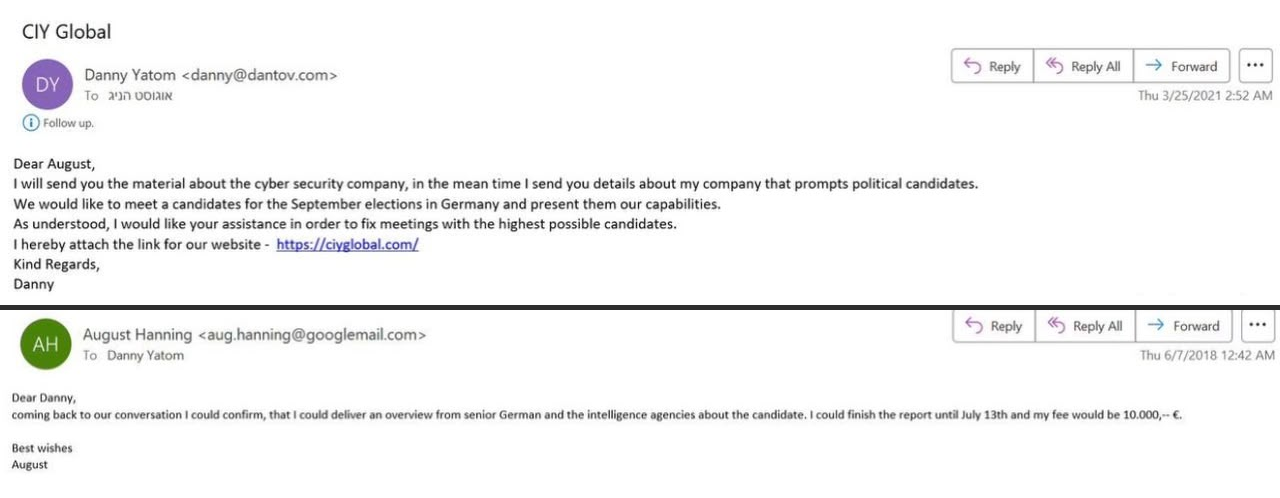
Berlin has not publicly named the recipient, but emails obtained by The Cradle reveal a relationship between Hanning and former Mossad director Danny Yatom.

August Hanning headed the BND from 1998 to 2005. He was arrested on 6 October on suspicion of espionage-related offenses. 

Prosecutors allege that Hanning obtained sensitive documents from Manfred D., a former BND employee. The documents reportedly included internal briefings prepared for senior German officials. 

The case has revealed how vulnerable Germany’s intelligence apparatus is to people who exploit their official positions and personal networks for private gain.

Emails between Hanning and Yatom provide a glimpse into those networks

In 2018, Hanning told Yatom he could provide “an overview from senior German and the intelligence agencies about the candidate.” He offered to complete the report by 13 July for €10,000. 

The email does not name the candidate, but the exchange sheds light on the nature of the relationship.

Three years later, Yatom approached Hanning about arranging meetings with senior candidates in Germany’s September 2021 federal election. 

The former Mossad chief wanted to show the candidates what his “political-campaign company”, CIY Global, could do. In the same email, he mentioned material he planned to send about a cybersecurity firm.

Although the emails concern separate matters, together they reveal the relationship: Hanning offered access to German intelligence and political circles, while Yatom built businesses around political influence and cybersecurity.

These were not two former officials who had simply gone their separate ways after leaving public service. Their correspondence reveals an ongoing relationship where intelligence contacts and commercial ambitions intersected.

Their business ties extended beyond political campaigning. Yatom was linked to World Health Energy Holdings, a cybersecurity company where Hanning reportedly served on the advisory side. 

The shadow network connected a former BND chief and a Mossad director through businesses where access to sensitive information and political decision-makers can be highly lucrative.

Israel has built a global market for surveillance, cyber-intelligence and political influence, partly staffed by intelligence veterans. These firms give capabilities developed in intelligence commercial cover and international reach.

Across Europe, impacts are evident. On 12 October, Polish prosecutors said data collected by the Pegasus spyware had been sent abroad and that Israel’s NSO Group retained technical access to parts of the system. 

Under Poland’s previous government, Pegasus targeted political opponents and others, exposing the risks of letting an Israeli company access infrastructure used to collect highly sensitive political and personal data.

In Spain, the 2022 CatalanGate investigation documented at least 65 people connected to Catalan politics and civil society who were targeted or infected with Pegasus or Candiru spyware. 

Those affected included politicians, lawyers, and civil society figures. Researchers at the University of Toronto’s Citizen Lab found strong circumstantial evidence linking the campaign to Spanish authorities.

Greece’s surveillance scandal involved targeting journalist Thanasis Koukakis and European Parliament member Nikos Androulakis, along with the use of Predator spyware linked to Intellexa, a company founded by former Israeli intelligence operative Tal Dilian. 

Across these cases, surveillance tools from Israeli-linked firms targeted people whose work and politics challenged those in power.

Israel has established itself as one of the world’s leading exporters of technologies for penetrating phones, monitoring political opponents and obtaining information that would otherwise remain private, while former intelligence personnel have turned their experience into profitable international businesses.

The Hanning affair raises the possibility that this same world of intelligence veterans, private ventures, and political access also played a role in handling Germany’s state secrets. 

The 2018 email shows Hanning offering intelligence-related reporting to Yatom for a fee. 

The 2021 email shows Yatom seeking Hanning’s help reaching senior German political candidates. 

Their cybersecurity business ties add another layer to the relationship. These facts do not establish where the documents at the centre of the espionage case ultimately went, but they give German investigators a concrete reason to examine whether interests linked to Israeli intelligence were involved.

Categories
Michael Novakhov - SharedNewsLinks℠

How 9/11 helped Israel sell its war on Palestinians to America


Michael_Novakhov
shared this story
from Al Jazeera – Breaking News, World News and Video from Al Jazeera.

For me, the New York City skyline was close to home. Quite literally. I grew up just across the Hudson River, with the famed skyline of America’s biggest city visible from my bedroom window. Being a Palestinian American living just outside of the world’s most famous city meant that I spent part of my summers as a tour guide for family visiting us from the Middle East, who, like so many people around the world, wanted to see the Big Apple that the movies and live broadcasts from Times Square on New Year’s Eve had made so famous.

I took visitors to the Statue of Liberty, the Empire State Building, Central Park and the World Trade Center. My last tour was in the final days of August 2001. We went to the observation deck of the World Trade Center known as “Top of the World”. Little did I know that two weeks later that deck, where we had stood looking out at the amazing metropolis below, would come crashing down along with the entire World Trade Center, killing thousands and instantly changing the world as we had known it.

By the time of the September 11 attacks, I was back in my dormitory at university in New England and huddled around a 10-inch television screen with floormates watching ABC’s Peter Jennings cover the horrific news as it was unfolding that Tuesday morning. Among the early reactions was one from Benjamin Netanyahu, then a former prime minister of Israel. Asked by The New York Times what the attack meant for relations between the United States and Israel, Netanyahu replied, “It’s very good.” Then he edited himself: “Well, not very good, but it will generate immediate sympathy,” adding that the attack would “strengthen the bond between our two peoples”. This was his response while ground zero was still smouldering after an attack that had killed nearly 3,000 people.

It immediately hit me that not only was the world about to change, but my life in the US as a Palestinian American was about to become far, far more complicated. The US was about to embark on military engagement in the Middle East, and Netanyahu was excited by the opportunity this presented Israel.

To better understand the impact this moment had on US-Israel relations, it is crucial to consider the preceding context. I have argued elsewhere that the period between the end of the Cold War and 9/11 was a complicated one for US-Israel relations. For most of the history of the US-Israel relationship, the Cold War was the defining paradigm in international relations. For Israel, this was an easy paradigm to navigate. It billed itself to Americans as a like-minded, US-aligned democracy confronting Soviet-backed satellite states in the Arab world.

But as the Cold War ended, the political landscape shifted. The Berlin Wall fell, democratisation swept Eastern Europe, and apartheid ended in South Africa, while Israel was brutally repressing the first Palestinian Intifada. Suddenly, Israel did not fit so comfortably in this new world order. It was during this period that the US made its greatest investments in Israeli-Palestinian peacemaking, however flawed, and used some leverage to press the Israeli government on settlement building.

September 11 and the ensuing global “war on terror” changed all of this. With the second Palestinian Intifada under way, the September 11 attacks on the US provided an opportunity to once again put Israel and the US on the same side of a new defining global divide. Instead of communism, the new global bad guy was radical Islam.

Netanyahu and his allies understood this very well, just as he made clear to The New York Times 25 years ago this week. A wounded America was primed for Islamophobic narratives, and pro-Israel voices were often happy to provide them, as they understood that an America obsessed with “counterterrorism” would have to stay close to Israel.

There are numerous areas where we see the impact of this over time: enhanced US-Israel intelligence collaboration, growing US financial support for Israel and legislative initiatives supported by Israel’s backers in the US that used broadened anti-terror authorities to crack down on Palestinians, to name a few.

The narratives that helped support these outcomes also went beyond simply linking Israel and the US through a common “terrorist threat”. Palestinians were also more easily turned into a “security problem” to American audiences. Instead of asking why Palestinians were resisting oppression, American audiences were pushed to see Israeli repression as self-defence similar to US behaviour. Muslims were often cast as one of two types in American discourse: moderate or extremist, and those criticising Israel were routinely placed in the latter category, which led to stigma and a chilling effect.

Israeli military practices could be cast as useful for America as well. Surveillance, counterinsurgency, targeted killings and other tactics Israel had used in the West Bank and Gaza, which had occasionally been criticised by Washington, were used by American forces in Iraq and Afghanistan and thus increasingly legitimised before American audiences.

Some of the greatest purveyors of the Islamophobic narratives that characterised much of the post-9/11 period in the United States included David Horowitz, who consistently sought to connect Palestinians with terrorism and called for profiling to make Palestinian identity itself a security concern; Daniel Pipes, who often characterised Muslim organisations as potentially or secretly militant, casting suspicion on Muslim advocacy; Steven Emerson, who sought to popularise infiltration narratives to try to turn mainstream Muslim organisations into security subjects; Brigitte Gabriel, who regularly framed Islamism as a civilisational threat, thus casting Israel as a front-line defender of the West; and David Yerushalmi, who sought to expand the threat narrative to Sharia law and Muslim political influence, thus casting Muslim political participation as potentially subversive.

The general logic of these narratives was that terrorism was effectively synonymous with all things Palestinian/Arab/Muslim and thus Israel’s security model should be seen as legitimate, if not ideal, by Americans.

It is important 25 years later to reflect on the dangerous political opportunism that spewed hate into American discourse to cast Israel and Israeli policy in a favourable light. A quarter-century later, the US is once again embroiled in a seemingly intractable quagmire, this time in Iran, a losing effort that has already cost Americans more than $100bn through higher petrol and diesel prices. Given all of this, Americans today should be quick to question Islamophobic narratives, the dangerous paths they lead down and the real motives of those who spread them.

The views expressed in this article are the author’s own and do not necessarily reflect Al Jazeera’s editorial stance.

Categories
Michael Novakhov - SharedNewsLinks℠

Europe’s biggest spy scandal since the Cold War centers on an octogenarian German suspect


Michael_Novakhov
shared this story
from POLITICO.

The former head of Germany’s foreign intelligence service built a lucrative second career trading on his security expertise. Now prosecutors accuse him of profiting from secrets belonging to the state.

By ANTOANETA ROUSSI

Photo-Illustration by Natália Delgado/POLITICO

August Hanning spent seven years at the top of Germany’s foreign intelligence service, the BND, with access to some of the country’s most closely guarded secrets. Then came a second act: private consulting, corporate intelligence and business stretching across Europe, into Russia and Asia.

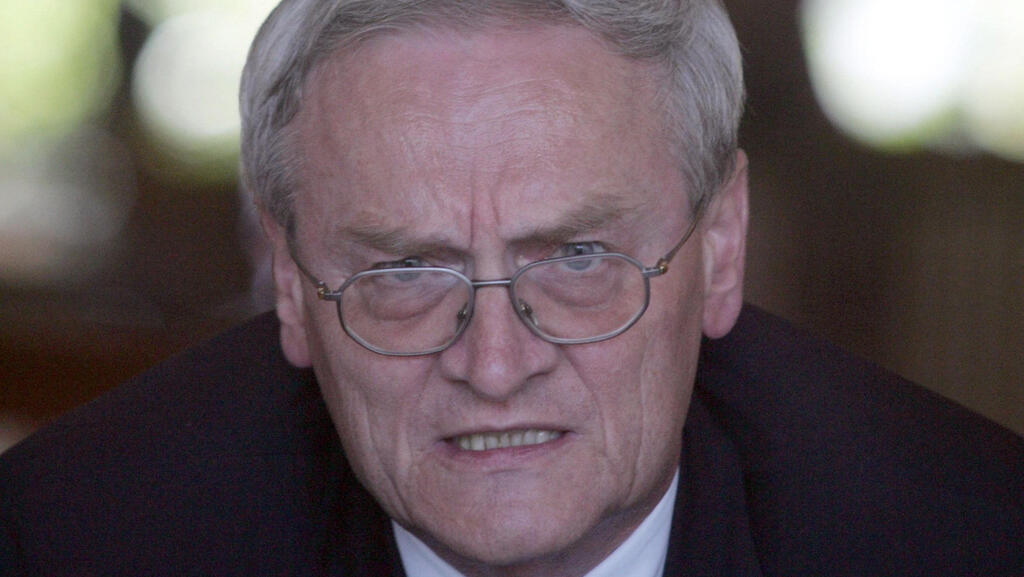
Now, the 80-year-old former spymaster is himself at the center of an espionage investigation, after German federal prosecutors arrested him Tuesday on suspicion of treasonous espionage, attempted treason and other espionage offenses. They allege he obtained a stream of secret intelligence from his former chief of staff and used the material to benefit his private consulting business.

“It’s catastrophic for Germany and for Western intelligence services. Everyone is in shock. The scale of it is enormous, especially at a moment like this,” said one EU intelligence official, who — like others in this report — was granted anonymity to discuss a clandestine arena. “And given that investigators stumbled across this while working on an entirely separate case, we’re likely to learn much more.”

For the BND, the case comes at an uncomfortable moment. Just last week, German parliamentarians began debating a new law proposed by Chancellor Friedrich Merz’s government to grant the agency sweeping new authority, as part of an effort to return Berlin’s foreign intelligence service to the top ranks of global espionage. The timing is equally awkward for European intelligence more broadly. With Russian hybrid attacks continuously targeting Europe, governments across the bloc are rewriting decades-old security laws to give their spy agencies greater powers and be taken more seriously.

Prosecutors say Hanning’s former chief of staff, identified under German privacy rules as Manfred D., supplied him with roughly 2,000 BND documents between 2010 and June 2022. Many contained classified information intended exclusively for internal intelligence work, including material used to brief senior German officials.

Former BND (Federal Intelligence Service) President August Hanning arrives for the Bundestag hearing on December 4, 2008 in Berlin, Germany. | Carsten Koall/Getty Images

In comments to German newspaper WELT, a lawyer representing Hanning said some of the allegations against the ex-spymaster were true but that he did not harm Germany.

“He was in possession of confidential documents. Incorrect, however, is the accusation that he had passed on information contained therein to the detriment of the Federal Republic of Germany — let alone [for] payment. Further investigations will show that,” he said.

In one case, prosecutors suspect Hanning used classified material to prepare an analysis for an employee of foreign intelligence service. They also allege he maintained a relationship with a representative of another foreign intelligence service for several years, passing along political information that was partly based on material obtained from Manfred D.

Prosecutors have not publicly identified either foreign service but German media has named Azerbaijan and Kazakhstan. Azerbaijan has denied any connection.

“In intelligence services, everything is logged — who accesses which documents and when. If an analyst working on right-wing extremism suddenly started looking at intelligence on China, that would raise red flags. But the position of chief of staff has access to virtually everything, so it wouldn’t look suspicious because of the seniority of the position,” said a second EU intelligence official.

Chiefs of staff often stay on when directors change, unless they don’t get along with the incoming boss, the official added.

“Every intelligence service will now be looking at what information it shared with the BND and assessing what damage may have been done,” he said.

Revolving door

Hanning led the BND from 1998 to 2005, before serving as state secretary at Germany’s interior ministry until 2009. Once out of government, he wasted little time entering the private sector.

In July 2010, Hanning and his wife established Hanning Consult. It was in the spring of that same year that Manfred D. agreed to provide him with intelligence from inside the BND in exchange for payment, according to the prosecutor’s statement. Hanning then used that information in his private consulting activities, they added.

Roderich Kiesewetter, a Christian Democrat lawmaker on the Foreign Affairs Committee in the German parliament, said that within Germany there is a “very widespread network” of people who use the contacts and knowledge acquired while they were in service to influence Berlin’s policy on behalf of foreign governments like Russia and China.

“It’s not only sad, it’s damaging the reputation of Germany,” Kiesewetter told POLITICO. “You could also say if you want to talk to Russia, take former members of the government or former members of the secret services.”

Hanning also became involved with Samuel Danilowitsch, a German businessman, who led the Swiss corporate intelligence consultancy, Pluteos. There, Hanning eventually became chairman and the two were listed as attending a 2019 Moscow gathering focused on Europe-Russia relations, attended by Russian political and business figures, where the annexation of Crimea was brought up as a “necessity” rather than a choice. Pluteos did not respond to a request for comment.

From around 2014, Hanning joined British consultancy G3 as a senior adviser, according to archived web pages seen by POLITICO. He later oversaw its work involving Russia and the former Soviet republics, according to German media outlet Correctiv. G3 did not respond to a request for comment.

In 2019, Hanning was invited as a “guest of honor” to a gathering organized by Russia’s Security Council of officials and experts from Arctic Council countries. It was chaired by former secretary of the Security Council of Russia, Nikolai Patrushev, one of the most powerful figures in President Vladimir Putin’s security orbit. As part of the cultural program, the group visited the remote Valaam Island monastery where Hanning was pictured next to Patrushev.

Delegates from Arctic Council countries visited the Valaam Island monastery. August Hanning stands on the far right of the front row, next to senior Russian security official Nikolai Patrushev. | Valaam monastery
Hanning has also publicly ventured into some of the more politically explosive questions surrounding Russia’s war on Ukraine.

In 2024, he told WELT TV that he considered it “very likely” that Ukrainian President Volodymyr Zelenskyy knew about the 2022 operation that destroyed the Nord Stream pipelines. Days later, Hanning went further, suggesting an agreement between senior Ukrainian and Polish figures was behind the attack. Germany has since charged a Ukrainian national it identified only as Serhii K., with his trial due to begin in Hamburg in October.

None of those business relationships, contacts or statements establishes a connection to the espionage case now facing Hanning, though they paint a picture of the influence he continued to amass after leaving the German government. Prosecutors have not accused him of spying for Russia.

The steakhouse heiress

Investigators got onto Hanning’s trail starting with an extraordinary custody dispute involving Christina Block, an heiress to a German steakhouse empire.

Block is accused by the Hamburg Public Prosecutor’s Office of orchestrating the abduction of her two youngest children from their father in Denmark. Prosecutors in that case say Block and two men commissioned an Israeli security team to seize her children, then aged 10 and 13, from their father, Stephan Hensel.

According to the indictment, masked men beat Hensel and took the children across the Danish-German border, to southern Germany. The children were reunited with their father in Denmark four days later, under a court order. Block denies knowing about the abduction.

In September 2025, Hamburg investigators searched Hanning’s home and business premises in connection with the Block case, according to local media. Prosecutors suspected Hanning and a retired police officer had accepted a contract worth more than €100,000 to intercept the children on their way to school in November 2022. The plan ultimately failed as their father noticed suspicious figures and alerted Danish police. 

German broadcaster Taggeschau reported that the investigators, in the search of Hanning’s premises, discovered around 2,000 digital BND documents that ultimately triggered scrutiny of his handling of sensitive government information. Federal prosecutors took over the resulting investigation in May 2026.

Manfred D. had been Hanning’s chief of staff at the intelligence service and subsequently served several of Hanning’s successors, remaining in a senior position until March this year. 

Both men are now in custody.

“He’s reflecting the Germany between 1998 and 2011, so he has not the feeling of having done something evil,” said Kiesewetter. “He was just mirroring [the] state policy of the center-right Christian Democratic and conservative political alliance.”

Hans von der Burchard contributed to this report. 

Categories
Michael Novakhov - SharedNewsLinks℠

Germany’s ‘traitor’ spy chief suspected of passing secrets to Russians


Michael_Novakhov
shared this story
.

Germany’s former foreign intelligence chief was accused of being a Russian spy before his arrest on suspicion of treason earlier this week.

August Hanning, 80, was arrested on Tuesday after being accused of passing highly classified information to a foreign intelligence agency in what would amount to Germany’s worst post-war spy scandal.

Weeks before his arrest, Mr Hanning, who ran the Federal Intelligence Service (BND) from 1998 to 2005, sent an angry letter to the current head of the agency, demanding answers about an investigation into him.

In the letter, dated Aug 17, Mr Hanning asked Martin Jäger 11 questions about why the BND had forwarded a dossier containing allegations about him to an investigative authority without consulting him.

The dossier contained allegations by a former intelligence agent who had called Mr Hanning a Russian spy. Mr Jäger did not respond to the letter at the time.

‘Close contact’ with former Chinese general

Mr Hanning has also been accused of remaining in “close contact” with a Chinese former army general.

He is said to have passed him confidential “political information” partly based on the BND files over several years.

The German public prosecutor’s office claims Mr Hanning maintained contact for several years with “a representative of another foreign intelligence service”, named by Der Spiegel as Wang Jianzheng.

Mr Wang, who works at the military-aligned China Institute for International Strategic Studies, spent 23 years as a military diplomat in Germany, Austria and Switzerland.

He was first posted to East Berlin from 1987 to 1990 and returned twice after its reunification, most recently from 2009 to 2013.

Mr Hanning appears to have met Mr Wang – considered one of the foremost experts on Germany in China – at conferences and the latter thanked him for his “hints and explanations” in the foreword to a book published in 2007.

The pair also sat on a board of advisers for a German-Chinese eco park in Qingdao, a port city in eastern China.

Investigators believe Mr Hanning obtained secret information from the BND for years after finishing his career in the civil service, and passed it on while working as a commercial consultant.

It is alleged he received information from Manfred Dankesreiter, 64, his former chief of staff.

Mr Dankesreiter is suspected of passing on around 2,000 documents in return for payment, including classified files such as briefing papers for the BND’s leadership before weekly intelligence briefings in the chancellery – meetings during which important world issues such as the Ukraine war and Iran’s nuclear programme are discussed.

It has also been reported that investigators suspect Mr Hanning of supplying information to Azerbaijan’s intelligence service.

Mr Hanning appeared on the participant list of a human rights forum in Baku in 2011, and later became a board member of the German-Azerbaijani Forum, a lobbying association.

His lawyer has denied the allegations against his client. He told Der Spiegel that, while Mr Hanning had confidential documents, it was untrue he passed on “information to the detriment of the Federal Republic of Germany”, let alone in return for payment.

Categories
Michael Novakhov - SharedNewsLinks℠

German Officials Arrest Former Spy Chief on Espionage Charges


Michael_Novakhov
shared this story
.

Europe|German Officials Arrest Former Spy Chief on Espionage Charges

<a href=”https://www.nytimes.com/2026/10/06/world/europe/germany-spy-chief-hanning-arrested-espionage.html” rel=”nofollow”>https://www.nytimes.com/2026/10/06/world/europe/germany-spy-chief-hanning-arrested-espionage.html</a>

August Hanning is accused of helping foreign governments. His arrest shook the German political world and had roots in a steakhouse-heiress kidnapping plot.

August Hanning in 2007, after he left the German intelligence service. Credit…Abdelhak Senna/Agence France-Presse — Getty Images

The federal police in Germany arrested a former head of the nation’s intelligence services on Tuesday on suspicion of “treasonous espionage” and other spying charges, including attempting to pass state secrets to foreign governments.

The federal prosecutor’s office announced it had detained the former spy chief, August Hanning, 80 — who led Germany’s Federal Intelligence Service, or BND, from 1998 to 2005 — but did not say which foreign countries he was accused of helping.

The prosecutors said they had also arrested a former chief of staff to Mr. Hanning at the agency, who they said sold 2,000 government documents to Mr. Hanning — many of them classified — in the years after Mr. Hanning left his post and worked as a consultant, joining several corporate boards.

Mr. Hanning, the prosecutors said, had used some of the classified information to create an analysis for a foreign intelligence officer. He also supplied a representative of a separate foreign intelligence service with information over the years, the prosecutors said.

The arrest of a former spy chief, at a time of increased tension between Germany and rival foreign powers like China and Russia, shook the German political establishment.

Adding to the drama was the revelation, from prosecutors, that the investigation had origins in a separate, high-profile investigation into an alleged attempt by a German steakhouse heiress to kidnap her children from her estranged husband. The prosecutor’s office searched Mr. Hanning’s office in September 2025 as part of its investigation into that heiress, Christina Block, and discovered material that initiated the examination of Mr. Hanning.

The German news media has reported that Mr. Hanning has struggled financially in recent years, and his consulting business has drawn scrutiny. Der Spiegel, one of Germany’s leading news outlets, reported in 2023 that he had lost much of his pension in the fallout from his role in a failure of a Latvian bank in 2019.

Mr. Hanning appears to be the first former head of the intelligence service to be accused by prosecutors of espionage. But the agency has been rocked by other spying scandals in recent years.

In 2023, prosecutors arrested a manager at the agency, Carsten Linke, and accused him of selling highly classified material to Moscow even as Russia waged war on Ukraine.

Mr. Linke was charged with high treason and put on trial. The proceedings, which have been underway for more than three years, are expected to last at least until January. Mr. Linke could face life imprisonment if convicted.

Christopher F. Schuetze contributed reporting from Magdeburg, Germany.

Jim Tankersley is the Berlin bureau chief for The Times, leading coverage of Germany, Austria and Switzerland.

Related Content

Advertisement

SKIP ADVERTISEMENT

Categories
Michael Novakhov - SharedNewsLinks℠

Former German spy chief arrested over Iran nuclear, Russian military files


Michael_Novakhov
shared this story
.

Prosecutors say August Hanning received about 2,000 classified BND documents from a former aide, used them in private consulting and drafted an analysis for a foreign intelligence officer; Bild says the case grew from a separate kidnapping probe

Germany’s former foreign intelligence chief August Hanning was arrested Tuesday on suspicion of treasonous espionage and other offenses in an investigation involving the alleged transfer of roughly 2,000 intelligence documents, federal prosecutors said.

Hanning, 80, headed Germany’s Federal Intelligence Service, or BND, the country’s counterpart to Israel’s Mossad, from December 1998 until November 2005. Prosecutors said he is strongly suspected of treasonous espionage, spying out state secrets, attempted treason and espionage.

אוגוסט האנינג ראש שירות הביון הזא לשעבר של גרמניה שנעצרא

אוגוסט האנינג ראש שירות הביון הזא לשעבר של גרמניה שנעצרא

Former German foreign intelligence chief

(Photo: AFP)

A former aide, identified only as Manfred D. under German privacy rules, was also arrested Tuesday. Hanning was detained in the Bad Tölz-Wolfratshausen district in southern Germany, while Manfred D. was arrested in Steinfurt in western Germany.

MAKE ynetGlobal MY TRUSTED SOURCE

Prosecutors said Manfred D. had served as Hanning’s chief of staff and later worked as chief of staff for several subsequent BND presidents from March 2012 until March 2026, giving him access to confidential information.

According to the investigation, the two men agreed in spring 2010 that Manfred D. would continuously provide Hanning with valuable BND intelligence in exchange for payment. Prosecutors said he eventually supplied Hanning with approximately 2,000 documents, many containing classified information intended exclusively for internal BND use, including executive intelligence briefings.

Hanning allegedly used the material in his private consulting activities after leaving the intelligence service. Prosecutors said that on one occasion he used classified information supplied by Manfred D. to prepare an analysis for an officer of a foreign intelligence service. They did not identify the country involved and said it remains unclear whether the material reached its intended recipient.

Bild reported additional details surrounding the investigation, saying the case initially grew out of suspicions that Hanning was involved in an attempted kidnapping of the children of German heiress Christina Block, an affair in which former Mossad operatives were also reportedly involved.

According to Bild, investigators subsequently uncovered indications that information had been leaking from the BND. A search of Hanning’s home last year reportedly turned up a storage device containing classified material.

Authorities are also examining whether Hanning passed intelligence to China or Russia, countries with which Bild said he maintained direct contacts. The newspaper reported that highly sensitive documents concerning Iran’s nuclear program and the Russian military were among the materials found in his possession.

Manfred D. is suspected of aiding and abetting attempted treason and treasonous espionage.

Authorities searched premises linked to both men on Tuesday as the investigation continued.

Read More

Categories
Michael Novakhov - SharedNewsLinks℠

Former German spy chief arrested on suspicion of attempted treason, obtaining state secrets


Michael_Novakhov
shared this story
.

Item 1 of 3 August Hanning, state secretary at the German Interior Ministry and former head of Germany’s Federal Intelligence Service (BND), attends a parliamentary committee of investigation in Berlin, Germany, November 30, 2006. REUTERS/Fabrizio Bensch/File Photo

[1/3]August Hanning, state secretary at the German Interior Ministry and former head of Germany’s Federal Intelligence Service (BND), attends a parliamentary committee of investigation in Berlin, Germany, November 30, 2006. REUTERS/Fabrizio Bensch/File Photo Purchase Licensing Rights, opens new tab

BERLIN, Oct 6 (Reuters) – Former German foreign intelligence chief August Hanning was arrested ​on Tuesday on suspicion of attempted treason for allegedly paying to access secret ‌documents and using them to prepare an analysis for a foreign spy service, federal prosecutors said.

Prosecutors did not identify the foreign intelligence service, and it was not immediately clear whether the analysis reached its intended recipient.

Get a look at the day ahead in U.S. and global markets with the Morning Bid U.S. newsletter. Sign up here.

“Hanning is strongly ​suspected of treasonous espionage, obtaining state secrets, attempted treason and espionage,” the prosecutor’s office said ​in a statement.

Five years after his seven-year tenure as head of the BND ⁠intelligence service ended in 2005, Hanning agreed with a former BND office manager to receive confidential ​intelligence information in exchange for payment, according to prosecutors.

The office manager, identified as Manfred D. in line ​with privacy rules, was also arrested on Tuesday and both were due to appear before a judge at the Federal Court of Justice.

‘NO COMPROMISES’

Prosecutors said D. is suspected of having supplied around 2,000 documents over the years, including ​classified material intended solely for internal use within the BND and senior-level intelligence briefings at the ​chancellery.

According to prosecutors, Hanning used classified information supplied by D. to prepare an analysis for an officer of a ‌foreign ⁠intelligence service and for years shared political information with a representative of the spy agency.

According to information obtained by the SZ newspaper, the case does not involve Russia.

BND President Martin Jaeger said the agency had launched extensive internal investigations as soon as suspicions emerged, adding that “there can be no compromises ​on internal security.”

Hanning did ​not respond to a ⁠request for comment from Reuters. The chancellery declined to comment.

PAST SPY SCANDALS

Hanning’s arrest is the latest in a series of notorious espionage scandals in Germany.

West ​German Chancellor Willy Brandt was forced to resign in 1974 after it ​was revealed ⁠that an East German spy had worked as his close aide for nearly two years. In 1990, a senior West German counter-intelligence official was exposed for spying for East Germany throughout the 1980s and was ⁠later ​convicted of treason.

More recently, former domestic intelligence chief Hans-Georg Maassen ​said in 2024 he was now being monitored by the security agency he once ran over alleged right-wing political extremism, which ​he denied.

Adds quote from prosecutors’ statement in paragraph 3, BND statement in paragraph 9, background on past spy scandals in paragraph 11

Reporting by Friederike Heine, additional reporting by Andreas Rinke; editing by Linda Pasquini and Alexandra Hudson

Our Standards: The Thomson Reuters Trust Principles., opens new tab

Categories
Michael Novakhov - SharedNewsLinks℠

Germany’s ex-spy chief arrested for espionage and treason


Michael_Novakhov
shared this story
.

Police have arrested the former head of Germany’s BND foreign intelligence agency, August Hanning, on suspicion of espionage, the federal prosecutor’s office announced Tuesday.

Hanning served as the agency’s chief from December 1998 to November 2005, before moving to the Federal Interior Ministry where he worked as state secretary until November 2009. 

According to a statement from the prosecutor’s office, he is facing charges including alleged espionage, disclosure of state secrets, attempted treason, and working as a secret service agent.

The statement added that another former high-ranking employee of the BND had also been arrested on suspicion of providing Hanning with hundreds of classified documents in exchange for payment.

DW’s chief political editor Michaela Küfner, reporting from a government press briefing on the arrest, described the case as Germany’s “biggest espionage scandal of the century unfolding in real time.”

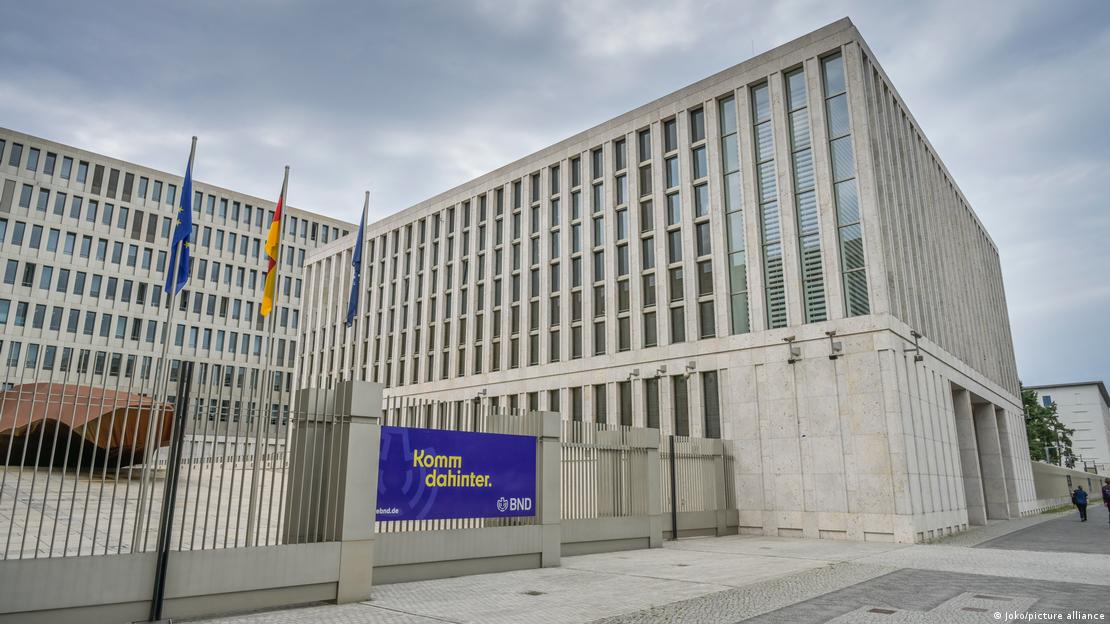
The BND building in Berlin

Hanning’s alleged informant worked as chief of staff for multiple BND headsImage: Joko/picture alliance

What else do we know about the investigation?

Police arrested Hanning early Tuesday at his home in Nordwalde near the western German city of Münster, according to information from WDR, NDR and the Süddeutsche Zeitung.

Hanning’s alleged accomplice, who was identified only as Manfred D. in line with Germany’s privacy laws, was taken into custody in Bavaria.

Authorities were conducting searches at both suspects’ properties, as well as in Berlin, the prosecutor said.

During Hanning’s tenure as spy head, D. served as his chief of staff. He also subsequently worked under Hanning at the Interior Ministry until 2009.

He is facing charges of “aiding and abetting attempted treason and espionage against the state.”

Marc Henrichmann, who chairs the German parliament’s intelligence oversight committee, said following the arrests that Germany “will not tolerate the betrayal of secrets.”

“Whoever allies themselves with the enemies of our liberal democracy will be found out,” he said in comments to the AFP news agency.

The investigation in Hanning reportedly began due to his connection to a high-profile trial involving businesswoman Christine Block.

2,000 documents allegedly handed over to Hanning

The prosector’s office said Hanning and Manfred D. are believed to have come up with their arrangement in 2010.

From 2012 to March 2026, D. served as chief of staff to Hanning’s successors at the BND spy agency, where he had access to a wealth of classified documents, according to the prosecutor’s statement.

“The current findings suggest that, over the years, Manfred D. provided Hanning with approximately 2,000 documents, many of which contained classified information to be used exclusively by the Federal Intelligence Service for internal purposes,” the statement said.

It added that D. is alleged to have provided Hanning with information until at least mid-2022, and that Hanning used that information in his private consulting work.

Hanning is also accused of being “in close contact with a representative of another foreign intelligence service, to whom he passed on political information, partially based on material provided by Manfred D., for several years,” the statement said.

The prosecutor’s office did not say which foreign intelligence service was involved.

The two suspects are expected to appear before an investigating judge on Tuesday and Wednesday.

Edited by: Elizabeth Schumacher

Don’t let the algorithm hide the news. If you rely on our team for trusted reporting, please take a moment to select us as your Preferred Source on Google, so you’ll always see our verified news first.

Categories
Michael Novakhov - SharedNewsLinks℠

FBI gives employees a classified ‘Patel Report’ about times the agency ‘fell short’


Michael_Novakhov
shared this story
from PBS News Hour – The Latest.

WASHINGTON (AP) — The FBI has released a classified report to its workforce examining what it says are chapters from the bureau’s history “where this institution fell short,” according to an internal message obtained Friday by The Associated Press.

It was unclear what episodes from the FBI’s past are chronicled in the new “Patel Report.” But the document’s existence is in keeping with Director Kash Patel’s vocal criticism of the leaders who preceded him and with his determination to rid the FBI of agents he contends have politicized the bureau in the past. Patel’s critics say he is the one who has weaponized the FBI and that his scrutiny of his predecessors and their decision-making is part of an effort to rewrite history in favor of President Donald Trump.

READ MORE: 3 FBI agents fired over Trump investigation get broad backing in lawsuit against administration

Patel pledged at his confirmation hearing last year that he would not look “backward,” but as director, he has encouraged investigations of former senior officials and presided over sweeping terminations, including of employees who participated in years-old investigations of Trump, were photographed taking a knee during a 2020 racial justice protest and contributed to a disputed analytical memo about Catholic extremism.

Educate your inbox

Subscribe to Here’s the Deal, our politics
newsletter for analysis you won’t find anywhere else.

“The Patel Report looks backward because accountability demands it,” says a message to the workforce signed by the FBI’s co-deputy directors, Christopher Raia and Andrew Bailey. The message describes the report as marking the “closing of one chapter in our history and the beginning of another complete with a brighter future ahead.”

Bailey announced his resignation earlier this week, and his last day is Friday. The FBI declined to comment on the report.

The message also says: “We cannot change what happened before we arrived. But we can confront it honestly. We can recognize failures instead of protecting them. We can hold people accountable. We can fix what was broken. And we can build safeguards strong enough to ensure the mistakes of the past are never allowed to define this institution again. These steps are consistent with any institution of excellence that is constantly striving for improvement.”

It was unclear if the report made recommendations or demanded any action to address what the FBI now regards as past shortcomings.

The FBI message says the report is meant to “promote fierce organizational accountability” and rebuild “public trust.” But Patel’s critics say the politically charged investigations into perceived adversaries of Trump that the FBI has embarked on under his watch, as well as the punishment of agents who participated in investigations into the Republican president to which they were assigned, have eroded faith in the nation’s premier federal law enforcement agency.

A free press is a cornerstone of a healthy democracy.

Support trusted journalism and civil dialogue.
