
Ukraine’s New Missile Defense Strategy share.gemini.google/gL4DKQz0…
As of August 2026, Ukraine is undergoing a major pivot in its missile defense strategy. Driven by plummeting interception rates and dwindling Western stockpiles of high-end interceptors, Kyiv has shifted from a purely reactive posture to a hybrid strategy combining preemptive “active defense” with the accelerated development of sovereign and pan-European anti-ballistic architectures.
Here is an analysis of Ukraine’s new strategic framework, along with expert assessments and predictions for the 2026–2027 timeline.
The “Lethal Math” Forcing the Shift
The catalyst for this new strategy is a severe disparity in production and interception mathematics.
According to recent analyses, Russia has significantly ramped up its ballistic missile production, currently holding around 600 to 630 in reserve and aiming to produce up to 1,300 annually (roughly 100 per month). Simultaneously, Ukraine’s stocks of Patriot (PAC-2/PAC-3) interceptors have run dangerously low. As a result, the interception rate for Russian ballistic missiles has dropped dramatically to just 10.2% in 2026, down over 200% from the war’s outset.
To survive, Ukraine cannot afford to simply wait and shoot down incoming fire.
Three Pillars of the New Strategy
1. Active Defense: “Hunting the Launchers”
Instead of relying on scarce interceptors to shoot down missiles mid-air, Ukraine has initiated a new operational phase focused on preemptively destroying the launch platforms themselves.
The Tactic: Utilizing deep-strike capabilities and expanded intelligence sharing, Ukrainian forces are actively hunting Russian mobile erector-launchers (like the Iskander systems) positioned in border regions such as Bryansk and Kursk.
Recent Success: On August 22, 2026, President Zelenskyy confirmed a successful strike on an Iskander launcher, validating this “active defense” doctrine aimed at disrupting large-scale Russian salvos before they are fired.2. Project FREYJA: A Sovereign European Shield
Recognizing that reliance on non-European (primarily US) systems is a critical vulnerability, Ukraine is spearheading Project FREYJA, formally launched in Paris in July 2026.
The Coalition: The initiative includes 10 European nations (including the UK, France, Germany, and Sweden), with Ukraine acting as the system integrator.
The Goal: The coalition aims to bypass operational bottlenecks—such as microelectronic supply chain issues—to build a pan-European, multilayered anti-ballistic missile architecture. A working prototype of the FREYJA interceptor shield is targeted for the first half of 2027.3. Domestic Production & Bridging the Gap
While FREYJA develops, Ukraine is bridging its immediate vulnerabilities through a mix of domestic manufacturing and stopgap European procurement:
Domestic Ballistics: Ukraine has accelerated its native defense-tech sector (working with clusters like Brave1), aiming to roll out its own domestic anti-ballistic systems and ballistic capabilities by 2026–2027.
European Procurement: To cover the immediate shortfall, Ukraine recently secured an agreement with Germany for 600 PAC-2 missiles to be delivered across 2027–2028, and expects new radar systems and a SAMP/T battery from France this fall.Assessments and Predictions for 2026–2027
1. A Vulnerable Winter Ahead
Despite the strategic shift, the winter of 2026–2027 is predicted to be exceptionally difficult. Ukraine’s energy infrastructure has been heavily degraded, and spare equipment is finite. Because FREYJA and domestic anti-ballistic systems will not yield operational results until mid-to-late 2027, Russia will likely exploit the current 10% interception rate to continue pounding power grids and logistical nodes.
2. Escalation of Deep-Strike WarfareAnalysts predict the war will move further away from massive mechanized land maneuvers and heavily toward deep-strike warfare. Ukraine will increasingly use AI-guided drone swarms, cyber warfare, and long-range strikes to hold Russian oil, gas, and military manufacturing facilities at risk. This asymmetric pressure is intended to force Moscow to pull air defenses deeper into Russian territory, thereby easing the pressure on the frontline.
3. Integration into the European Defense BaseBy 2027, Ukraine is predicted to fundamentally shift its defense posture away from US dependency. Through Project FREYJA and licenses to manufacture French and other European weaponry domestically, Ukraine is positioning itself as the central testing ground and manufacturer for Europe’s next generation of continental air defense.
— Michael Novakhov (@mikenov) Aug 23, 2026
Ukraine’s New Missile Defense Strategy –
Gemini / GS
share.gemini.google/ZgoAqVd7…Ukraine has recently shifted its defensive tactics toward directly hunting down and destroying Russian ballistic missile launchers, rather than solely relying on intercepting the missiles in the air. This shift is primarily driven by a shortage of air defense interceptors, such as Patriot missiles, and an unprecedented surge in Russian ballistic missile attacks.
President Volodymyr Zelenskyy confirmed this approach on August 22, 2026, following a successful strike on a Russian Iskander launcher near the border.
The “Archer vs. Arrow” Strategy
Military analysts describe this approach using an “archer and arrow” analogy: instead of expending limited, expensive interceptor missiles to shoot down every incoming “arrow” (the missile), it is more effective to destroy the “archer” (the mobile launcher) before it can fire.
Here is a breakdown of why this strategy has been implemented and how it works:
Interceptor Shortages: Ukraine is facing a severe shortage of Western-supplied anti-ballistic missile systems, making it difficult to maintain a purely defensive posture against incoming strikes.
Record Attacks: Russia launched nearly 200 ballistic missiles (including S-400s, Zircons, and Oniks) at Ukraine in July 2026 alone—the highest monthly total since the full-scale invasion began.
Targeting Mobile Launchers: Russia relies on an estimated 100 to 150 mobile launch units for these strikes. By systematically hunting down these specific vehicles, Ukraine aims to permanently degrade Russia’s capacity to launch mass barrages.
Deep Strike Capabilities: To execute this, Ukraine is utilizing complex strike operations, which include the use of advanced kamikaze drones capable of striking targets deep inside Russian territory or near the border. There are also ongoing discussions about equipping long-range drones with Starlink for better navigation and control during these specific hunt-and-destroy missions.Zelenskyy has described this effort as a “separate, more difficult tactic” and a dedicated operation that the Ukrainian Defense Forces are actively prioritizing to protect strategic infrastructure.
–
GS
Ukraine’s new missile defense strategy shifts from a purely reactive model to an active blend of domestic manufacturing, pan-European defense cooperation, and offensive counter-strikes against enemy launch sites, designed to bypass critical shortages of Western-supplied Patriot interceptors. [1, 2, 3]
Domestic Ballistic and Interceptor ProgramsFire Point Development: Ukrainian defense tech firm Fire Point is fast-tracking domestic tactical missiles, including the FP-7 (short-range) and the longer-range FP-9, aiming to repurpose low-cost domestic propulsion and guidance for anti-ballistic interception.
Independent Production Lines: Ukraine is securing component agreements across European nations—such as Norway and Germany—for tracking and guidance systems while manufacturing rocket bodies and payloads locally. [6]The Pan-European “Freyja” Project
Multinational Coalition: Formed alongside roughly 10 European countries and major defense contractors (including Thales, Saab, and Eurosam), the joint initiative aims to develop the Freyja anti-ballistic missile system.
Open Architecture: The program integrates Ukrainian operational expertise with European radar, sensor, and command-and-control frameworks to achieve a minimal viable interceptor product by mid-2027. [7, 8]Active Counter-Offensive Operations
Hunting Launch Sites: Faced with depleted stockpiles of foreign interceptors, Ukraine has initiated direct military operations to locate and strike mobile Russian ballistic launchers (such as Iskander systems) stationed inside border regions before they can fire.
Bridging the Gap: Alongside active ground strikes on launch infrastructure, Kyiv continues negotiations for supplementary European systems like SAMP/T and hundreds of legacy PAC-2 missiles to sustain immediate airspace protection. [3, 9]AI responses may include mistakes.
[1] kyivindependent.com/we-are-h…
[2] defensenews.com/global/europ…
[3] yahoo.com/news/world/article…
[4] politico.eu/article/ukraine-…
[5] youtube.com/watch?v=5akkpuvu…
[6] youtube.com/watch?v=CiWKZQc6…
[7] youtube.com/watch?v=I2eT-p_l…
[8] mezha.net/eng/bukvy/2461b8a5…
[9] newsukraine.rbc.ua/news/zele…
–— Michael Novakhov (@mikenov) Aug 23, 2026
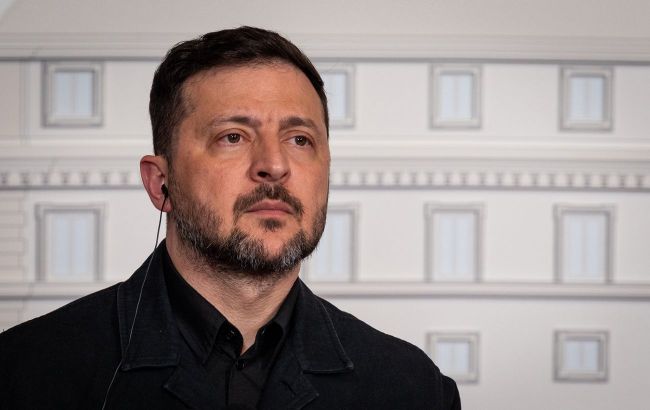
Ukrainian forces have launched a hunt for Russian ballistic missile launchers, with the destruction of one Iskander system confirmed.
“Today we have another success. We cannot provide many details because of the sensitivity of the operation, but the fact remains. We struck an Iskander launcher near our borders. I am grateful to our soldiers carrying this out. This is our operation to hunt down their systems deployed nearby,” Zele
 |
Michael_Novakhov shared this story from |
“Today we have another success. We cannot provide many details because of the sensitivity of the operation, but the fact remains. We struck an Iskander launcher near our borders. I am grateful to our soldiers carrying this out. This is our operation to hunt down their systems deployed nearby,” Zelenskyy said.
According to him, the operation is one way to respond when Ukraine has limited access to anti-ballistic missiles.
“There is another tactic, and it is more difficult. We developed it ourselves — hunting down their nearby launch sites from which ballistic missiles are fired. This is a separate effort, a separate program, a separate operation. And today we managed to do it. Our Defense Forces did an outstanding job,” the president added.
Russian forces have recently stepped up their use of ballistic missiles against Ukraine, particularly Kyiv. On the night of August 20, Russia launched a massive attack on Kyiv and the surrounding region involving dozens of ballistic missiles, Kalibr cruise missiles and attack drones.
According to Kyiv Mayor Vitali Klitschko, 15 people were killed in the attack, while dozens more were injured. The Solomianskyi district suffered the highest number of casualties. A high-rise building, a school and a children’s hospital were also damaged there.
Ukraine is also working on its own anti-ballistic missile program. Earlier, Ukrainian defense company Fire Point announced when it expects the first ballistic missile interception under its Freyja project and provided an update on the development.
Ukraine targets Russian missile launchers in a new approach to ballistic defense | RBC-Ukraine newsukraine.rbc.ua/news/ukra…
— Michael Novakhov (@mikenov) Aug 23, 2026
‘Hunting their launch sites’ — Zelensky reveals new details about Ukraine’s ballistic missile defense kyivindependent.com/we-are-h…
— Michael Novakhov (@mikenov) Aug 23, 2026
Listen to this article or download for later This audio is created with AI assistanceUkraine has launched a new operation targeting Russian ballistic missile launchers near its borders, President Volodymyr Zelensky said on Aug. 22, as Kyiv faces a shortage of missiles capable of intercepting ballis
|
Michael_Novakhov shared this story from  The Kyiv Independent. |
Listen to this article or download for later
This audio is created with AI assistance
Ukraine has launched a new operation targeting Russian ballistic missile launchers near its borders, President Volodymyr Zelensky said on Aug. 22, as Kyiv faces a shortage of missiles capable of intercepting ballistic weapons.
Zelensky said that Ukrainian military struck an Iskander ballistic missile launcher near Ukraine’s borders on Aug. 22, without providing further details.
The strike was part of a separate operation to hunt down Russian missile systems positioned near Ukraine, which Zelensky described as an alternative tactic amid the dire lack of of anti-ballistic missile interceptors.
The Iskander is Russia’s main surface to surface tactical ballistic missile system, with a stated range of around 500 kilometers.
Complemented with North Korean KN-23 ballistic missiles and advanced Zircon cruise missiles, the Iskander has been the workhorse of combined mass attacks again Ukrainian targets in recent months.
When attacking Kyiv and other targets inside Ukraine, Iskanders are launched from mobile erector-launcher systems inside Russian territory, usually in border regions like Bryansk or Kursk oblasts.
With Ukraine’s stocks of Patriot ballistic missile interceptor at or near empty, strikes against Iskander launchers have long been proposed as an alternative method of fighting the Iskander threat, but Ukraine has lacked options for quickly detecting and hitting launch sites.
“At one point (the Russians) were planning to launch an attack, but didn’t go through with it. This is no coincidence,” Zelensky told journalists.
“In other words, we’re working to prevent them from carrying out large-scale missile attacks. These are individual, complex operations, and we’re now starting to see the first results.”
Zelensky said Russia could potentially produce up to 1,300 ballistic missiles annually and currently has around 600–630 in stock. Moscow could eventually aim to produce around 100 ballistic missiles per month, he said, although it has not yet reached that rate.
Ukraine is also seeking more Patriot interceptors ahead of winter, Zelensky said, revealing that Ukraine had only received 264 missiles for the advanced surface-to-air system this year so far.
The Air Force has requested 360 missiles, up from an initial target of 300. According to the president, Kyiv hopes to secure 5–10% of U.S. stocks, with Ukraine prepared to pay for the missiles.
Zelensky also said Germany had agreed to provide 600 PAC-2 missiles for Patriot systems in 2027–2028, while negotiations with Washington over additional supplies continue.
Longer-term alternatives to the Patriot are also moving ahead, the president said, referring specifically to the Freyja project, a joint effort by European and Ukrainian defense companies to produce a new anti-ballistic missile system.
The project has moved from political discussions to the technical stage, with companies now beginning practical work, Zelensky said.
Zelenskyy rejects election call from fired defence minister ft.trib.al/eXyeFhL
— @FT Aug 23, 2026