Categories
Michael Novakhov - SharedNewsLinks℠

Russia – Ukraine war news today – 10:30 AM


Michael_Novakhov
shared this story
from The News And Times.

#Russia#Ukraine #War
https://share.gemini.google/QQPGw6C3xa0R
Russia-Ukraine War Updates – Gemini
Here are the latest developments in the Russia-Ukraine war for today, August 22, 2026 – 10:30 AM :
Russian Attacks on Ukraine
Missile Barrage on Kyiv: Explosions were heard in Kyiv early this morning as Russia launched a series of ballistic missiles at the Ukrainian capital, triggering air raid alerts and emergency responses.
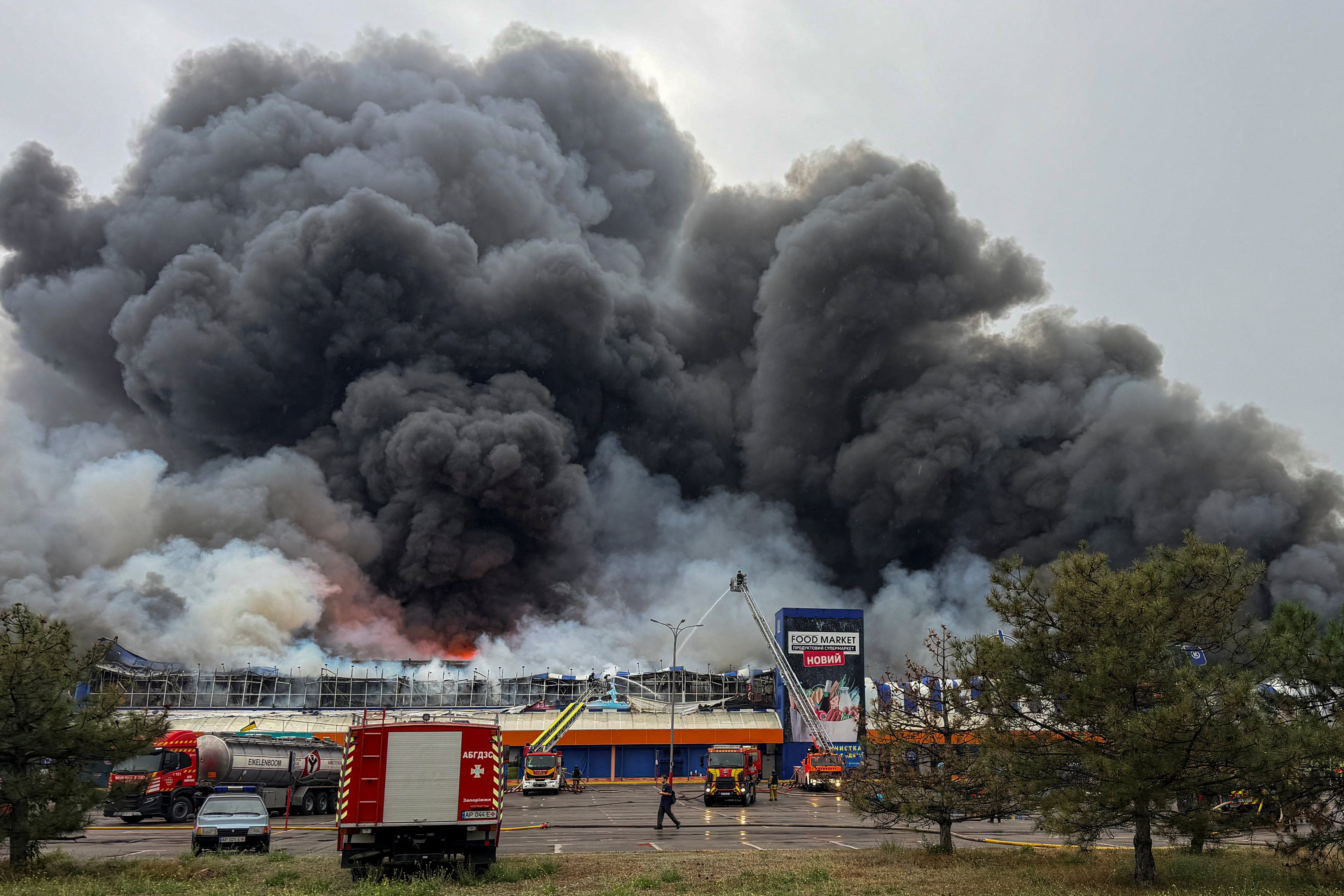
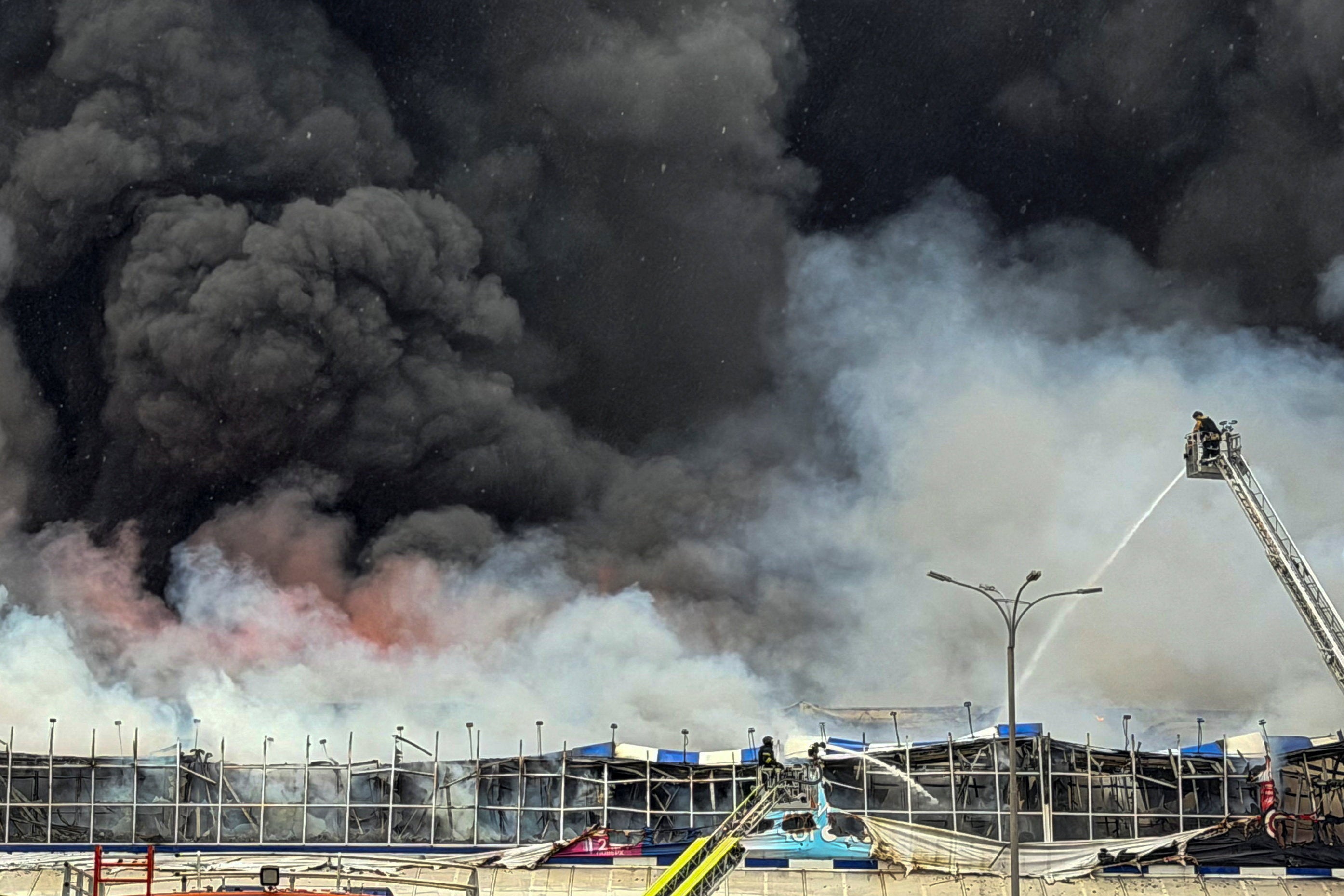
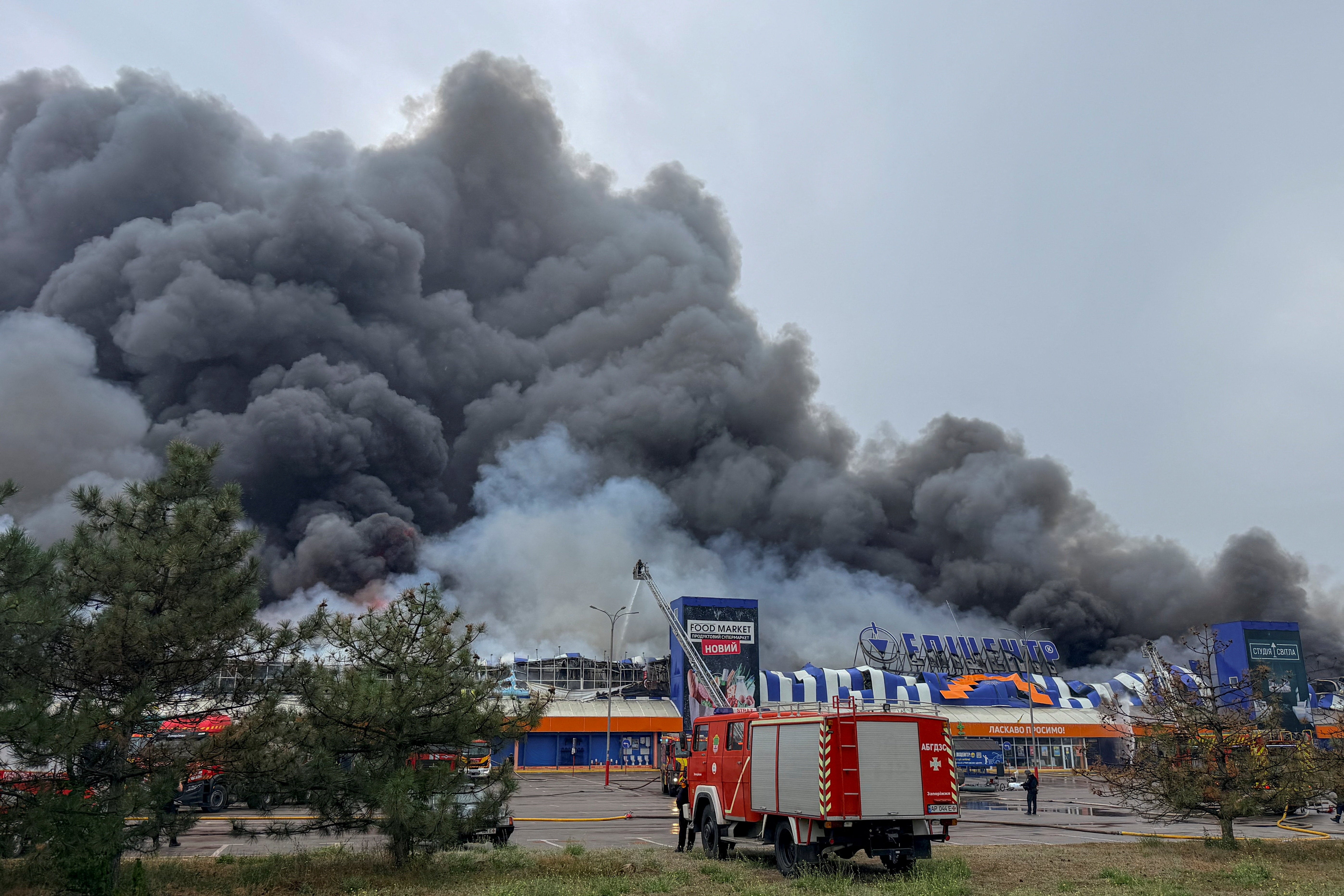
Strike in Kryvyi Rih: The death toll from a Russian “double-tap” strike on a shopping center in Kryvyi Rih has risen to at least 16 people killed and 130 injured.
Nationwide Casualties: Across Ukraine, Russian attacks over the past 24 hours have killed at least 7 people and injured 31. This included a strike on a border crossing with Moldova.

Ukrainian Strikes Inside Russia

Drone Attacks on Industrial Targets: Ukraine launched strikes deep into Russian territory, including an attack that set a major oil refinery in Perm ablaze.
Ozon Warehouse Fire: Ukraine struck a warehouse belonging to Ozon (Russia’s second-largest online marketplace) in the Samara Oblast, causing a fire that forced the evacuation of over 500 employees.
Air Base Hit: A Ukrainian attack on the Akhtubinsk air base—home to Russia’s 929th State Aircraft Test Center—reportedly damaged a Russian Su-34 bomber.

Espionage Claims and Detentions

Arrests in Moscow Region: Russian authorities, citing the Federal Security Service (FSB), announced the arrest of eight individuals accused of planning an attack on a “strategic defense enterprise” in the Moscow region. The FSB claims the group was operating on behalf of Ukrainian special services and possessed 35 drones equipped with explosives smuggled from the EU.
Detention in Murmansk: A foreign national was detained in the northwestern Murmansk region while allegedly attempting to cross the border into Norway. Russian authorities suspect the individual of scouting petroleum transport trains and administrative buildings in Moscow.

Diplomatic and Political Developments

U.S. Delegation in Odesa: Former U.S. envoy Keith Kellogg led a delegation to Odesa to inspect damage to port infrastructure from Russian strikes and review measures to maintain operations.
Election Interference Charges: In Russia, a Communist politician was fined over a photograph involving the late opposition leader Alexei Navalny, a move that is likely to bar him from participating in upcoming elections.

Russia – Ukraine war news today
– AI Mode – 10:30 AM
Russian forces have intensified heavy aerial bombardments across Ukraine, launching devastating missile and drone strikes that have caused severe civilian casualties in Kyiv and Kryvyi Rih. Meanwhile, Ukrainian long-range drones have retaliated by striking major economic and energy infrastructure deep within Russian territory. [1, 2, 3]
🔴 Deadly Strikes in Ukraine

Shopping Mall Attack: A Russian “double-tap” drone strike targeted a busy shopping center in Kryvyi Rih—the hometown of President Volodymyr Zelenskyy—killing 16 people and injuring 130 others. [2, 4, 5]
Kyiv Infrastructure Blitz: Russian ballistic and cruise missile salvos bombarded the capital city, killing at least 16 people. An overnight strike on the capital’s railway network killed a national rail operator employee. [1, 3, 6]
Airspace Incursions: The massive aerial campaign saw Russian drones penetrate the airspace of NATO neighbors Moldova and Romania, destroying a drone near a Romanian natural gas platform. [7]

🔵 Ukrainian Retaliation & Drone Strikes

Oil Refinery Hit: Ukrainian forces launched a successful overnight drone counter-attack against an oil refinery in Russia’s Samara region, sparking a massive fire. [2]
Retail Supply Hubs: For the first time, Ukraine targeted a warehouse belonging to Ozon (Russia’s second-largest online retailer) in Samara. This follows previous Ukrainian logistics strikes against Wildberries hubs aimed at disrupting funds financing the war. [2]
Cross-Border Casualties: Russian officials reported downing 457 Ukrainian drones overnight. Local governors stated that cross-border strikes killed two children in Krasnodar and two people in the Belgorod region. [2]

🌐 Diplomacy and Geopolitics

Stalled Peace Talks: Russia announced it remains open to “new ideas” but reiterated Vladimir Putin’s strict demands. Ukraine must fully surrender the eastern Donbas region, demilitarize, and drop its NATO ambitions. [8]
U.S. Mediation: Following stalled Geneva negotiations earlier this year, President Zelenskyy stated his diplomatic team is preparing “new approaches” to revive peace talks with U.S. mediators. [8, 9]
Intel Espionage: In international news, Australian police arrested and charged a man for attempting to share sensitive Ukrainian military intelligence with Russian agents. [5]

Would you like to set up an information agent to monitor daily updates on the frontline positions or the progress of the U.S.-brokered peace negotiations?

Categories
Michael Novakhov - SharedNewsLinks℠

Return of Harry and Meghan to U.K. Renews Questions About Their Security Fears


Michael_Novakhov
shared this story
.

The couple lost their publicly funded security after deciding to leave Britain in 2020, deepening their split with the royal family.

Prince Harry with a security detail as he arrived at Britain’s High Court last year for a hearing over the downgrading of his personal security during visits to Britain.Credit…Henry Nicolls/Agence France-Presse — Getty Images

Before they left Britain in 2020, Prince Harry and his wife, Meghan, weathered a storm of threats and digital abuse. A former top police official once described their safety risks as “disgusting and very real.”

Such threats made security a paramount issue for the couple once they announced this week that they are returning to live in Britain. Their safety had been at the heart of the fallout from their original decision to leave the country, when the government withdrew their publicly funded, armed security after they stepped down from their royal roles.

The pair have said the decision put them in danger, and it became a bitter flashpoint in their rupture with the royal family. Harry at one point even claimed the move was a plot to keep him in Britain.

The couple have not said what kind of arrangements they have made for their protection upon their return, expected this month. But the kind of security they had access to while living in California for the past few years is not possible in Britain without government resources.

While armed private security is legal and ubiquitous in the United States, guns are tightly restricted in Britain. Even top American law enforcement officials such as F.B.I. agents must get permission from the government to carry firearms in Britain.

Still, an unarmed detail is relatively common among Britons who use private security, said Chris Phillips, a former senior British counterterrorism official.

“There are lot of people over here that have security, and they are not armed,” he said.

As for Harry, he added, “There are going to be threats to him. There is no doubt about it.”

Harry’s and Meghan’s return to Britain comes at a time when they are unpopular with the British public, and news coverage of their security has emphasized comments from Britons saying they do not want the government to pay for it.

The armed details that the government provides are stretched thin, officials have warned, in part because of a high number of protectees. Britain has a record nine living former prime ministers who get round-the-clock security.

Prime ⁠Minister Andy Burnham refused to wade into the royal saga on Thursday when questioned by reporters, declining to say who would foot the bill for protecting Harry, Meghan and their two children, Archie, 7, and Lilibet, 5.

“This is a private matter,” Mr. Burnham said. “It’s a ⁠matter for Harry and ⁠for Meghan, and ⁠we wish ⁠them well in the moves that they are ⁠making.”

As Harry and Meghan split with the royal family in 2020, questions over their safety arose as part of a larger debate over their expectations about a post-royal life.

Image

King Charles with Prince Harry during the funeral of Queen Elizabeth II in 2022.Credit…Pool photo by David Rose

At the time, a committee responsible for some security decisions in Britain decided that the couple would no longer be eligible for the police protection typically given to royal family members.

The committee, known as Ravec, is made up of government and police officials and members of the royal household. It is responsible for making security arrangements for the royal family and other figures put at risk by terrorism or other threats.

Harry challenged the decision, and at a hearing in 2022 said he would reimburse or proactively finance the cost of the security measures.” But Ravec decided it was not right for wealthy people to be able to rent armed police from the government.

Harry has said that his family needed full-time armed protection when visiting Britain, where his father, King Charles III; brother, William, next in line for the throne; and other relatives live. In court, his lawyers revealed threats to his safety and described “additional layers of racism and extremism” that they said were fueling the abuse.

Harry lost part of that legal challenge in 2023, and a judge dismissed his case the following year, but he appealed. In April 2025, Harry’s lawyers argued before England’s Court of Appeal that the decision to withdraw protection violated official policy. The court ruled against him.

Separately, the Ravec committee had planned to review security arrangements in Britain for the family. The panel is independent but overseen by the Home Office. A decision has been delayed because the government had to deal with protecting an “unprecedented nine former prime ministers at once,” The Times of London reported last month.

The Home Office said in an emailed statement on Thursday, “It is our longstanding policy not to provide detailed information on those arrangements, as doing so could compromise their integrity and affect individuals’ security.”

In a BBC interview in May 2025, Harry said that he hoped to finally reconcile with his family. He and the king had fallen out over the security withdrawal. Charles was diagnosed with cancer in 2024.

But Harry was clear about the dangers to his family. “I can’t see a world in which I would bring my wife and children back to the U.K. at this point,” he told the BBC.

He said the last “sticking point” in a return to Britain was security, spurring questions about the turnaround and whether the contentious issue has since been resolved.

Adam Goldman is a London-based reporter for The Times who writes about global security.

Related Content

Advertisement

SKIP ADVERTISEMENT

Categories
Michael Novakhov - SharedNewsLinks℠

Trump Threatens Defamation Suit Over National Guard Report, Aiming to Intimidate a Critic


Michael_Novakhov
shared this story
.

It was the latest example of President Trump’s bid to use the legal system against those who voice unflattering facts and opinions generally protected by the First Amendment.

A report by the Center for American Progress determined that there was “no evidence” that President Trump’s deployment of the National Guard to cities across the country had affected the crime rate.Credit…Tierney L. Cross for The New York Times

President Trump has opened a new front in his campaign to intimidate political foes, threatening a prominent liberal think tank with a $5 billion defamation lawsuit over a report concluding that his deployment of the National Guard to cities across the country has had little effect on reducing violent crime.

The threats against the think tank, the Center for American Progress, were Mr. Trump’s latest effort to use the legal system to punish critics for voicing unflattering facts and opinions generally protected by the First Amendment. And while it is unclear how far any suit the president might ultimately file will get in court, it could force the organization to spend money fighting it off and make it even more of a target of his allies and supporters.

On Monday, one of Mr. Trump’s personal lawyers, Alejandro Brito, wrote a letter to the center warning that he would file the suit if the group did not fully retract the report, which was published on its website on July 13. The letter, viewed by The New York Times, was addressed to the group’s president and chief executive, Neera Tanden, a longtime Democratic official who served as a senior adviser to President Joseph R. Biden Jr., and to several of its board members.

Mr. Brito claimed that the report about the National Guard was full of malicious and false statements. He gave Ms. Tanden and members of her board until 5 p.m. on Friday to retract it and apologize to Mr. Trump.

Ms. Tanden pushed back, saying in a statement that the center would “neither cower nor bend in the face” of legal action. She also defended the report, asserting that while its findings might have been “inconvenient to the Trump administration,” they were “grounded in rigorous, evidence-based research and analysis.”

“This threatened lawsuit’s attack on facts and evidence is baseless,” she added. “A fundamental protection of the First Amendment is to allow for the publication of facts and analysis that is contrary to the arguments and claims of any administration. A lawsuit is a transparent attempt to silence us.”

Image

Neera Tanden, the president and chief executive of the Center for American Progress, said that the center would “neither cower nor bend in the face” of legal action.Credit…Jason Andrew for The New York Times

Mr. Trump has often lashed out at scholars and commentators for reproaching or critiquing him in the news media. And since winning re-election, he has filed a flurry of lawsuits against news organizations like the BBC and The Times, claiming they defamed him. He has even filed suit against the Des Moines Register, arguing that a poll the paper published before the 2024 election indicating that he would lose the vote in Iowa amounted to consumer fraud and election interference.

(The Times has filed its own suits against the administration, including two seeking increased access for its reporters at the Pentagon.)

The president has repeatedly claimed that his administration is the most transparent in American history. But he and his aides have used lawsuits and executive actions to go after law firms, universities and television networks. They have also used criminal tactics such as search warrants and grand jury subpoenas in an effort to pry loose sensitive information from reporters.

Many of these efforts have faltered once they reached court and faced judicial scrutiny. Mr. Brito himself has filed multiple failed suits on behalf of Mr. Trump. Last month, a federal judge in Florida referred Mr. Brito for potential disciplinary proceedings after ruling that a suit he filed for the president against the Internal Revenue Service amounted to an improper exercise in self-dealing.

The Center for American Progress report accused Mr. Trump of seeking to take credit for a nationwide decline in violent crime that began before he returned to the White House. The report determined that there was “no evidence” that the National Guard deployments had affected the crime rate, adding that they were poised to cost taxpayers more than $1.7 billion if they continued through the end of 2026.

The report asserted that the “primary goal” of the deployments was “never to stop crime.” Instead, it said they amounted to “a dangerous power grab by the Trump administration.”

The team that put the report together used an analysis based on homicide, violent crime and gun victimization data in cities where the National Guard was deployed — Washington, Los Angeles and Memphis — over the period from January 2023 to this February.

“This approach was employed to identify any statistical changes in crime trends associated with the deployment of the National Guard in specific cities,” its authors wrote.

Mr. Trump referred to the report on social media last week after watching a television segment about the report, which he described as “another Radical Left SCAM.” In the post, he threatened to sue the center and several of its funders, including the liberal financier George Soros, who has long served as a boogeyman for the administration.

A week later, Mr. Brito’s letter arrived at the center, saying that the president would sue if Ms. Tanden and her colleagues did not retract the report, issue an apology and give Mr. Trump unspecified financial compensation.

The letter ended with an all-caps salutation: “PLEASE GOVERN YOURSELVES ACCORDINGLY.”

On Friday, a lawyer for the center fired back in a letter of his own, deriding Mr. Trump’s accusations that he had been defamed.

“This is utterly absurd,” the lawyer, Kevin H. Metz, wrote to Mr. Brito. “Truth is not and cannot be defamation.”

Mr. Metz went on to say that the center welcomed the opportunity to make its case in court and receive more information on the National Guard deployments through the process of discovery.

Other think tanks of various political stripes have rallied to the center’s side.

“Independent organizations across the ideological spectrum must be free to express their analysis and opinions, and to challenge those in power without fear of political retaliation or legal intimidation,” said Peter Goettler, the president and chief executive of the libertarian Cato Institute. “Disagreements on matters of policy should be settled through open inquiry, evidence, and debate — not threats designed to silence criticism.”

Alan Feuer is a reporter for The Times who covers the effects President Trump has had on the courts, the Justice Department and the broader rule of law.

Related Content

Advertisement

SKIP ADVERTISEMENT

Categories
Michael Novakhov - SharedNewsLinks℠

Ukraine has been actively seeking permission to use Elon Musk’s Starlink satellite network


Michael_Novakhov
shared this story
from The News And Times.


Ukraine has been actively seeking permission to use Elon Musk’s Starlink satellite network to guide long-range drones in striking military targets inside Russia, specifically focusing on mobile ballistic missile launchers.


Here is the current operational and political status of these efforts:

The Strategic Objective

Ukrainian officials want to equip long-range drones with Starlink terminals to strike targets up to 200 kilometers (124 miles) inside Russian territory. The primary goal is to hunt down mobile ballistic missile launchers and command infrastructure before they can be deployed against Ukrainian cities.

This tactical shift aims to compensate for Ukraine’s dwindling supply of Patriot air defense interceptor missiles ahead of the winter season, when Moscow is expected to intensify attacks on energy infrastructure. Starlink’s highly directional signals and fragmented network architecture would help protect these drones from Russian electronic warfare jamming while maintaining a stable, encrypted link to operators during the strikes.

Current Access Restrictions

Elon Musk has consistently restricted the use of Starlink for offensive operations deep inside Russian territory. While SpaceX allows the Ukrainian military to use Starlink within Ukrainian-controlled and Russian-occupied territories (including Crimea), it currently blocks the network’s functionality across the Russian border. Musk has previously expressed concerns that enabling strikes deep into Russia could trigger nuclear escalation.

Consequently, Ukrainian long-range drones currently rely on alternative navigation systems, including AI-based technology, when operating in Russian airspace.

Diplomatic Interventions

The issue has escalated to the highest political levels. During a meeting at the White House in July 2026, Ukrainian President Volodymyr Zelenskyy reportedly asked U.S. President Donald Trump to intervene and persuade Musk to lift the geographic restrictions. Kyiv hoped that capping the strike range at 200 kilometers might incentivize Musk to approve the request.

However, Trump reportedly rejected the request to intervene and did not support the proposal. Zelenskyy also reportedly sought a direct meeting with Musk during his U.S. visit, but the billionaire declined. 
Categories
Michael Novakhov - SharedNewsLinks℠

Ukraine Political Shakeup: Mudra, Fedorov


Michael_Novakhov
shared this story
from The News And Times.

Ukraine Political Shakeup: Mudra, Fedorov


Here is an analytical breakdown of the recent structural shifts within Ukraine’s government, focusing on the dismissals of Mykhailo Fedorov and Iryna Mudra and their implications for the country’s security and political apparatus.


The Ousting of Mykhailo Fedorov

Mykhailo Fedorov was dismissed from his position as Minister of Defense in mid-July 2026 after a six-month tenure, as reported by . Known as a digitally savvy modernizer, Fedorov was heavily credited with integrating innovative open-source and drone technologies into the military and pushing for structural budget reforms.


  • The Public Fallout: His sudden removal sparked significant street protests in Kyiv. Supporters and defense analysts argued that his departure could slow ongoing defense technology procurement and military modernization efforts, according to coverage by .


  • Call for Elections: On August 18, 2026, Fedorov released a video address directly challenging President Volodymyr Zelenskyy by breaking a wartime taboo and calling for presidential elections. According to , Fedorov argued that democracy cannot be sidelined by the conflict and criticized government appointments based on personal loyalty over structural professionalism.


  • Defense Succession: Following Fedorov’s departure, lawmakers approved the appointment of Maj. Gen. Yevhenii Khmara—a former special operations expert and acting head of the state’s security service—as the new Minister of Defense.


The Dismissal of Iryna Mudra

The political shakeup extended into the presidential administration with the dismissal of Iryna Mudra, the deputy head of the presidential office.


  • Anti-Corruption Probe: According to , Mudra’s dismissal occurred as a major anti-graft investigation reached senior figures in the Ukrainian political establishment. Authorities reportedly searched several locations linked to her, though they have not formally named her as a suspect.


  • Broader Context: Her removal coincided with the broader cabinet reshuffle. noted that anti-corruption authorities announced charges related to an alleged $3 million money-laundering scheme involving a deputy chief of Zelenskyy’s office just hours before the new defense minister was formally appointed.


These dual developments represent a complex stress test for Ukraine’s wartime leadership apparatus, as the government attempts to balance strict anti-corruption oversight with the operational continuity of its defense technology and military structures. 


Here is your daily briefing, focusing on key global security dynamics, geopolitical shifts, and major domestic developments.


Global Security & Geopolitical Developments

  • U.S.-Iran Economic Tensions Escalate: Iranian Foreign Minister Abbas Araghchi publicly dismissed recent threats of “crushing economic measures” from the U.S. administration. U.S. Treasury Secretary Scott Bessent has warned of secondary sanctions targeting nations and companies that continue to do business with Iran, signaling an attempt at unprecedented economic isolation.


  • Major Drone Offensive on Russian Territory: Ukraine launched a massive wave of nearly 800 domestically produced long-range drones targeting multiple Russian regions, including Moscow. While Russian air defenses intercepted a large number of them, the operation marks one of the most significant attacks since the summer began. In a separate incident, a Russian missile strike on a village in Ukraine’s Kharkiv region killed 10 civilians.


  • North Korean Missile Barrage: North Korea fired a series of ballistic missiles into the sea on Thursday, reportedly dismissing recent diplomatic overtures from Washington.


  • West Bank Settlements: European nations and Canada have issued condemnations regarding Israeli plans for new settlements in the West Bank.


U.S. Politics & Domestic Affairs

  • California Special Election Concludes: State lawmaker Aisha Wahab won the California special election to fill the House seat vacated by former Representative Eric Swalwell, overcoming significant outside spending.


  • Ex-Rep. Swalwell Investigated: Federal agents recently raided the home of former U.S. Representative Eric Swalwell in connection with an ongoing sexual misconduct probe.


  • FBI Headquarters Relocation Halted: A federal judge has blocked the current administration’s attempt to move the FBI headquarters out of Maryland and into a Washington D.C. office building.


  • National Debt Approaches $40 Trillion: The U.S. national debt is nearing the $40 trillion threshold, renewing debates in Washington over borrowing, spending, and economic stability.


Health & Science

  • Ebola Response in Central Africa: The Democratic Republic of the Congo is preparing to receive 70,000 doses of the Ervebo vaccine to combat a deadly surge in Ebola infections.


  • Melanoma Vaccine Breakthrough: A landmark clinical trial has demonstrated that a new cancer vaccine is highly effective at preventing deadly melanoma from returning or spreading.
Categories
Michael Novakhov - SharedNewsLinks℠

Federal agents seize devices from ex-Rep. Eric Swalwell in sexual misconduct probe, AP source says


Michael_Novakhov
shared this story
from NPR Topics: Politics.

FILE – Rep. Eric Swalwell, D-Calif., appears at a town hall meeting in Sacramento, Calif., April 7, 2026.

Rich Pedroncelli/AP


hide caption

toggle caption

Rich Pedroncelli/AP

WASHINGTON — Federal agents seized electronic devices from former Rep. Eric Swalwell and searched his Washington home as part of an investigation into allegations of sexual misconduct by the ex-Democratic congressman from California, according to a person familiar with the matter.

Swalwell’s devices were seized at the San Francisco airport on Saturday and agents executed a search warrant at his home a day later, said the person, who was not authorized to publicly discuss an ongoing investigation and spoke on the condition of anonymity.

A message seeking comment was left Thursday with an attorney for Swalwell, who has denied allegations of sexual assault and misconduct. The Daily Mail first reported the seizure of Swalwell’s devices on Thursday.

Swalwell announced his resignation from Congress in April following allegations that Swalwell had sexually assaulted a woman twice, including when she worked for him. The San Francisco Chronicle, followed by CNN, first reported the allegations. CNN also reported that three other women alleged various kinds of sexual misconduct by Swalwell, including sending them unsolicited explicit messages or nude photos.

The seven-term lawmaker had been seen as one of the leading candidates in California’s gubernatorial race before dropping out after the allegations surfaced.

The office of Manhattan District Attorney Alvin Bragg confirmed in April that it was investigating Swalwell after a former staffer told CNN and the Chronicle that Swalwell raped her at a hotel while he was in New York City for a charity gala in 2024. In a statement, Bragg’s office encouraged “survivors and anyone with knowledge of these allegations to contact our Special Victims Division.”

A lawyer representing Lonna Drewes, a California woman who in April said she had been raped in 2018 by Swalwell, said his team was cooperating with all law enforcement agencies investigating the former congressman.

“We are encouraged to learn about the escalation of the FBI’s investigation into the allegations against Eric Swalwell,” attorney Arick Fudali said in a statement.

Drewes spoke of the assault at a news conference days after Swalwell dropped out of the California governor’s race. She said it occurred at a hotel in Southern California. Swalwell denied that assault.

Swalwell, an Iowa native, was elected in 2012 and represented a House district east of San Francisco. He launched a presidential run in April 2019 but ended it a few months later after failing to catch on with voters.

He was one of Republican President Donald Trump’s top Democratic antagonists in Congress. He was a prominent member of the House Judiciary and Intelligence committees during Trump’s first term and served as one of several Democratic prosecutors for Trump’s second impeachment after the Jan. 6, 2021, attack on the Capitol.

Swalwell was removed from the Intelligence Committee by then-House Speaker Kevin McCarthy, R-Calif., in 2023 based on Swalwell’s contact with a suspected Chinese spy, Christine Fang.

Fang was reported to have come into contact with Swalwell’s campaign as he was first running for Congress in 2012 and to have participated in fundraising for his 2014 campaign.

Federal investigators alerted Swalwell to their concerns and briefed Congress about Fang in 2015, at which point Swalwell says he cut off contact with her. He was not accused of wrongdoing and a House Ethics Committee investigation that was opened in 2021 closed two years later without any action.

California lawmaker Aisha Wahab secured victory Thursday in a special election to serve the rest of Swalwell’s House term, which ends in January. She will run again in the November election to represent the district for a full two-year term.

Categories
Michael Novakhov - SharedNewsLinks℠

Amid intense backlash, people are vandalizing Flock surveillance cameras


Michael_Novakhov
shared this story
from NPR Topics: Law.

Brady O’Rourke in Crystal, Minn., holds a sign he made to block the view of a Flock camera, which tracks vehicles driving along the road. It’s one of several actions Americans are taking to oppose this police surveillance technology.

Meg Anderson/NPR


hide caption

toggle caption

Meg Anderson/NPR

A few times a week, Brady O’Rourke walks to the busiest street near his house in Crystal, Minn., carrying a long metal pole with a bright yellow sign taped to the end.

It’s a roof rake, normally used to scrape snow off a house, but O’Rourke has different plans for this one. At the intersection, he stops at a Flock camera, an automated license plate reader that police use to track vehicles.

Normally, this camera records everyone who drives down this street. But not right now: O’Rourke lifts his rake into the air and blocks the camera with his sign. He waves at passing cars. Some drivers smile and wave back. A few people honk their horns.

“I don’t want to pay to be surveilled,” O’Rourke says. “My tax dollars are funding cameras at the end of my block. I don’t want to live like that. I don’t think anybody should have to live like that.”

O’Rourke, inspired by a man in Florida who used a pool skimmer to do the same thing, is part of a growing movement against automated license plate readers like Flock.

What Flock cameras do

This week, Flock Safety, the Atlanta-based maker of the cameras, held its annual conference amid intense backlash.

According to the company, more than 5,000 law enforcement agencies use its technology. More broadly, there are more than 130,000 AI-powered automated license plate readers on American streets, according to DeFlock, an advocacy group that tracks the cameras.

A Flock license plate reader is seen along a public road last year in Houston.

David Goldman/AP


hide caption

toggle caption

David Goldman/AP

Every month, those cameras capture billions of license plates and other details about cars, including makes, models, colors and any alterations. That allows police to see where drivers have been over time.

“They monitor, quite simply, when we go to and from work, where we go to the doctor, where we drop our kid off at daycare. What we’ve enabled in practical reality is law enforcement to go back and look at where any of us was at any given point in time,” says Clare Garvie, deputy director of technology law and policy at New York University’s Policing Project.

Police leaders say Flock cameras help them locate stolen vehicles and missing people, and a recent preliminary study suggests that Flock cameras can deter car theft.

“There’s no question that license plate readers can be very helpful tools for law enforcement,” says Jeff Potts, executive director of the Minnesota Chiefs of Police Association.

But the expansion of the technology — combined with advancements in AI and the centralization of data in cloud networks — has increased the risk of abuse, says Jay Stanley, senior policy analyst with the Speech, Privacy and Technology Project at the ACLU.

And the technology has been misused: Some police officers, for instance, have used it to stalk ex-partners, or accessed the data for immigration enforcement purposes without a local government’s consent. A sheriff’s office in Texas used it to track a woman who may have had an abortion.

“The potential for police fishing expeditions is unlimited,” says Stanley. “What a lot of these AI, big data techniques do is they try to boil the ocean, to reduce huge amounts of data down to various people who they think could be involved. The problem with that, of course, is it sweeps up potentially enormous numbers of innocent people.”

And sometimes, the data is wrong: A 2024 analysis by a police department in California found Flock misread license plates in 71% of the alerts it sent to police.

The indiscriminate nature of the data collection, Garvie says, also raises concerns that the cameras violate the Fourth Amendment, which protects people from being searched unreasonably.

“We did not set up a system of governance in this country that says, ‘Just don’t do anything wrong and you won’t have anything to worry about.’ What we said is, ‘No, actually, law enforcement is affirmatively restricted against getting up in our business as we go about our daily lives,'” she says.

Garvie says she wants to see more oversight of the technology from lawmakers.

Last week, Flock changed some of its features to help prevent abuse, including shortening how long it recommends data be stored and cutting off access to officers who appear to be misusing the tool.

“We are so transparent about the business. We don’t own this data. We don’t sell this data. Cities have control over how long it’s stored. And who it’s shared with,” Garrett Langley, the CEO of Flock, told NPR.

Flock camera vandalism across dozens of states 

An increasing number of people are combating the technology in both legal and illegal ways. According to an NPR review of local news reports, Flock cameras have been vandalized in at least 36 states.

People have stolen the cameras, sawed them down, crashed into them with cars, covered them in paint and stickers, and shot at them.

Someone vandalized this Flock camera near Washington Avenue and Westcott in Houston.

Raquel Natalicchio/Houston Chronicle via Getty Images

hide caption

toggle caption

Raquel Natalicchio/Houston Chronicle via Getty Images

Social media is filled with tongue-in-cheek how-to videos, instructing viewers on things like how to discreetly saw through a metal pole.

The comments on Facebook posts from local news stations about the vandalism are rife with snark: “Not all heroes wear capes,” one commenter wrote.

“These are people being amped up to go do something. And I don’t think they’re being given the level of information they should that they’re also committing a felony,” Langley says.

Langley says if people have concerns with his company’s technology, they should take it up with their city council.

And many people have. According to DeFlock, at least 100 cities have deactivated the cameras or canceled contracts with Flock or similar companies.

Stanley, of the ACLU, says there’s a deep well of dislike in the U.S. for the notion of being surveilled by the government.

“We’re seeing opposition from the left. We’re seeing opposition from MAGA Republicans. We’re seeing opposition from mainstream Republicans, from centrists. And so it really is a nonpartisan issue,” he says. “This grassroots uprising is just really remarkable. At the end of the day, it’s not like anything I’ve seen in my 20-plus years as a privacy advocate.”

Organizers with DeFlock are holding a National Week of Action through Saturday. They say more than 25,000 people are registered for events around the country — things like protests and education sessions — that offer people a legal way to use their voice.

Categories
Michael Novakhov - SharedNewsLinks℠

The Russia Exception – Tablet Magazine


Michael_Novakhov
shared this story
.

When Israeli Prime Minister Benjamin Netanyahu and Ukrainian President Volodymyr Zelenskyy briefly spoke to each other at the funeral of Sen. Lindsey Graham on Tuesday, ahead of their separate meetings with President Donald Trump, the conversation was reportedly cordial. The men smiled and shook hands. The last time they had met in person was three years ago. No other meeting was arranged during their U.S. stay. According to an unnamed Israeli official, the two leaders spoke about drone technology: “We both share an issue, and that is drones.” Israeli Foreign Minister Gideon Sa’ar echoed this comment after his own conversation with his Ukrainian counterpart: “We discussed the challenges facing our nations, including the threat posed by Iran.” Three days earlier, Ukraine had sunk an Iranian ship in the Caspian Sea.

So why the tepidness, then, despite this shared interest? The short answer is Israel’s delicate balancing act with Russia.

The mass immigration of post-Soviet Jews in the 1990s created a significant Russian-speaking electorate in Israel. Its votes were spread between several parties; its most explicit political vehicle was Natan Sharansky’s Yisrael BaAliyah, and, a few years later, the more nationalist Yisrael Beiteinu, founded by Avigdor Lieberman in 1999. Still, by the end of the decade, the new base had become capable of influencing roughly 15 seats in the Knesset. But the weight of this new constituency was not merely electoral. The post-Soviet immigration wave brought tens of thousands of engineers, scientists, physicians, and other highly trained professionals into an economy just beginning its transformation into a technology power. Tens of thousands of Soviet-trained engineers and technologists arrived during the 1990s, more than doubling Israel’s existing engineering workforce, even if many initially struggled to find work commensurate with their qualifications.

In the decades that followed, Jewish post-Soviet oligarchs, including Vladimir Gusinsky, Leonid Nevzlin, Mikhail Fridman, and Roman Abramovich, deepened those connections through residence, investment, philanthropy, and involvement in Israeli public life. The Soviet collapse had therefore tied Israel to the Russian-speaking world through votes, skills, capital, and personal networks before Vladimir Putin ever entered the Kremlin.

When Ariel Sharon became foreign minister in 1998, he treated that demographic transformation as a potential instrument of foreign policy: Israel’s large Russian-speaking population gave it a natural constituency for closer relations with Moscow. Sharon began advocating warmer ties before Putin had fully consolidated power. After becoming prime minister, Sharon visited Putin in Moscow in September 2001, where the two leaders emphasized a shared struggle against Islamic terrorism during the heights of the Second Intifada and the Second Chechen War.

The Iran wars of 2025 and 2026 became a controlled experiment in what the relationship was worth to each side once little structural support remained.

The relationship crested under Benjamin Netanyahu, whose personal rapport with Putin was less one of friendship than of mutual professional respect between two men who intended to stay in power for a long time. Between Netanyahu’s 2009 return to office and his 2021 ouster, he met with Putin roughly 20 times, about twice as often as he met with any U.S. president, Israel’s most important ally.

The load-bearing structure underneath it all was Syria. When Russian forces entered the Syrian Civil War in 2015 to save the nearly toppled Assad regime, Moscow and Jerusalem quietly built a deconfliction line between their militaries: Russia would not interfere with Israeli strikes on Iranian and Hezbollah targets, and Israel would not treat Russian assets as fair game. “We don’t interfere with them and they don’t interfere with us,” as former Israeli Defense Minister Moshe Yaalon put it. It held for the better part of a decade, surviving the accidental 2018 downing of a Russian aircraft by Syrian air defenses and years of routine Israeli airstrikes.

But it wasn’t Netanyahu’s rapport alone. His foreign minister and later defense minister, Avigdor Lieberman, the Moldovan-born, Russian-speaking leader of Yisrael Beiteinu, pursued a Russia policy that was often warmer than Netanyahu’s. In 2011, he called Russia’s parliamentary elections “fair, free and democratic,” even as then Secretary of State Hillary Clinton and international observers raised concerns about manipulation and ballot-box stuffing in favor of Putin’s party, United Russia. After Russia annexed Crimea in 2014, Israel conspicuously failed to participate in the U.N. General Assembly vote affirming Ukraine’s territorial integrity and declaring the Crimean referendum invalid, an absence officially attributed to a strike by Israeli diplomats, but one that nonetheless spared Moscow an Israeli vote against it.

The two men were also, at times, competing for the same Russian-speaking constituency rather than working in tandem. In September 2019, days before an Israeli election, Lieberman mocked Netanyahu after reports emerged of Putin keeping him waiting for nearly three hours in Sochi. “In Russia, nothing is by happenstance,” he said. “Everything there is planned to the smallest detail.” He called Netanyahu’s visit “purely electoral,” suggesting the trip was a waste of government funds and an attempt to peel Russian-speaking voters away from Yisrael Beiteinu.

Alongside the military arrangement, Putin built a warmer register than pure realpolitik required. He often called Israel “a Russian-speaking state” and even told a Moscow audience in 2019 that “citizens of Russia and Israel are connected by ties of family, kinship and friendship. … Our nations are united by common and often tragic pages in history.” During a 2005 visit to Israel, Putin also reunited with his former German teacher, Mina Yuditskaya-Berliner, a Jewish émigré living in Tel Aviv, and arranged for her to receive an apartment there, although later financial records showed that Roman Abramovich had supplied the purchase money. In 2012, he personally donated to and visited Moscow’s Jewish Museum and Tolerance Center, a $50 million monument to Jewish life in Russia built with Chabad, and told its founding rabbi that its opening was “another step in quelling antisemitism in Russia.” At the museum’s opening, Shimon Peres praised Putin as a leader who “knows how to fight evil,” a judgment that would age with extraordinary irony.

Russia’s full-scale invasion of Ukraine in February 2022 should have forced a reckoning in Jerusalem. It never fully did, and the reasons revealed how transactional the Israeli-Russian relationship had remained. Israel condemned the invasion and, unlike after Russia annexed Crimea in 2014, voted for the U.N. General Assembly resolution demanding that Moscow withdraw its forces. It supplied Ukraine with humanitarian aid and nonlethal protective equipment but resisted President Zelenskyy’s repeated appeals for weapons and air-defense systems. The policy was controversial at home: Israeli public opinion strongly favored Ukraine, and thousands of Israelis, many of them with roots in Ukraine, protested what they regarded as Jerusalem’s inadequate response, although the public remained divided over supplying weapons.

At first, Israel’s ambiguous position appeared to offer diplomatic leverage. On March 5, 2022, then Prime Minister Naftali Bennett flew secretly to Moscow to meet with Putin, then traveled to Berlin to brief German Chancellor Olaf Scholz. Bennett had spoken with Zelenskyy beforehand and, over the following weeks, repeatedly communicated with both the Russian and Ukrainian leaders, carrying messages between them rather than presenting a formal Israeli peace plan.

Read More on Putin’s Russia

His shuttle diplomacy overlapped with, but remained distinct from, the direct Russian-Ukrainian negotiations that began in Belarus, continued remotely, and culminated in talks under Turkish auspices in Istanbul. Bennett subsequently claimed that Putin had assured him he would not kill Zelenskyy and that Zelenskyy had shown a willingness to abandon Ukraine’s bid for NATO membership. He also suggested that the Western governments supporting Ukraine had preferred continued military pressure to the cease-fire he was attempting to broker, a remark later cited by those who accused Washington and London of blocking peace. But Bennett later qualified the stronger interpretation of his remarks: It remained uncertain whether an agreement was attainable or even desirable, and he said he had estimated the initiative’s chances of success at roughly 50-50. Contemporaneous Israeli and Ukrainian officials likewise stressed that no completed deal had been presented for Kyiv to accept, while the subsequent negotiations left major territorial, military, and security-guarantee questions unresolved.

Whether Bennett came as close to a breakthrough as he later implied remains disputed. What the episode demonstrated more clearly was the practical value Israel still derived from preserving access to Moscow. At the war’s outset, it was one of the few Western-aligned states whose prime minister could meet Putin in person, speak repeatedly with Zelenskyy, and plausibly present himself to both as an intermediary.

That access also imposed limits. Netanyahu later argued that Israeli weapons sent to Ukraine could be captured by Russian forces and transferred to Iran, allowing Tehran to study or reverse-engineer sensitive Israeli technology. In May 2022, Israel rejected an American request to permit Germany to transfer Israeli-licensed Spike antitank missiles to Ukraine. It also resisted proposals to send Kyiv U.S.-owned Iron Dome batteries.

Beneath these explanations lay the continuing constraint of Syria. Israeli officials feared that antagonizing Moscow could jeopardize the coordination mechanism that allowed the Israel Defense Forces to strike Iranian and Hezbollah targets without confronting Russian forces. Refusing to arm Ukraine was therefore not simply an expression of neutrality. It was the price Jerusalem believed it had to pay to preserve freedom of action closer to home.

Yet the Ukraine war was already eroding the logic behind that restraint. By the summer of 2022, after failing to achieve a rapid victory and expending large quantities of precision-guided weaponry, Moscow had turned to Tehran for attack drones. Russian officials visited an Iranian airfield twice to inspect weapons-capable systems; deliveries followed, and Iranian-designed Shaheds soon became a central component of Russia’s attacks on Ukrainian cities and civilian infrastructure. Iran, one of the powers Russia had previously attempted to balance in Syria, was becoming an increasingly important supplier to the Russian war effort.

At roughly the same time, Moscow began withdrawing or repositioning some personnel and equipment from Syria to meet the demands of the Ukraine front. In August 2022, satellite imagery indicated that Russia had removed an S-300 air-defense battery from Syria and shipped it toward the Black Sea, apparently to reinforce defenses closer to the Ukrainian theater. Russia did not abandon its principal Syrian bases, but reports of withdrawals and repositioning suggested that Iran and Hezbollah were seeking to fill some of the resulting gaps. The contradiction was becoming difficult to ignore: Israel was preserving its accommodation with Moscow partly because Russia could restrain Iran in Syria, even as Russia’s battlefield failures made it more dependent on Iranian weapons and less capable of performing that restraining role.

The community most exposed by this ambiguity was not in Jerusalem. When the invasion began, Russia’s core Jewish community still numbered roughly 155,000 people, along with a much larger population estimated at around 600,000 eligible for Israeli citizenship under the Law of Return. Three days after the invasion, Boruch Gorin, a senior spokesman for Russia’s Chabad-affiliated Federation of Jewish Communities, wrote bluntly on Facebook, “Stop the war!” On March 2, Chief Rabbi Berel Lazar—nicknamed “Putin’s Rabbi,” given their close relationship—issued his own carefully worded appeal to “stop this madness to prevent future deaths.” Their statements were striking because Putin had spent two decades cultivating a tacit compact with Chabad: After 70 years in which the Soviet state had repressed religious life and sharply constrained Jewish practice, the Kremlin supported the rebuilding of Jewish institutions, while Chabad’s leaders generally avoided confronting the government.

By the summer of 2022, Moscow was pressuring the institutions connecting Russian Jews to Israel. Russia’s Justice Ministry asked a Moscow court to dissolve the Russian branch of the Jewish Agency, the organization responsible for facilitating aliyah. The case was formally framed around alleged violations of Russian privacy law, but it unfolded amid deteriorating relations with Israel and a growing exodus of Russian citizens. By July, nearly 20,000 immigrants had arrived in Israel from Russia since the invasion began, with similar numbers arriving from Ukraine. Then Israeli Prime Minister Yair Lapid initially warned that closing the agency would be “a grave event” with consequences for bilateral relations, then softened his language, emphasizing Israel’s readiness for dialogue while “maintaining the important relations between the countries.”

The same community Putin had long presented as evidence of his tolerance could now serve as leverage against Israel. In October, Alexei Pavlov, an assistant secretary of Russia’s Security Council, described Chabad as a supremacist cult in the state-owned newspaper Argumenty i Fakty. Security Council Secretary Nikolai Patrushev subsequently apologized, saying the remarks were erroneous, and stressed that they did not represent the council’s official position. Even so, the episode alarmed Russian Jewish leaders: Former Moscow chief rabbi Pinchas Goldschmidt urged Jews who were able to leave Russia to do so, while Boruch Gorin warned that official antisemitism would mean “the end of a Jewish presence in Russia.”

Putin’s own rhetoric was shifting as well. At the St. Petersburg International Economic Forum in June 2023, he defended Russia’s absurd claim that it was fighting to “denazify” Ukraine by turning directly to Zelenskyy’s Jewish identity. “I have a lot of Jewish friends,” Putin said. “They say that Zelenskyy is not Jewish, that he is a disgrace to the Jewish people.” Putin, who had spent two decades presenting himself as a protector of Russian Jews and a guardian of Holocaust memory, was now claiming the authority to distinguish authentic Jews from shameful ones and conscripting Jewish suffering into the ideological justification for his war.

After Oct. 7, the deterioration became even harder to disguise. Moscow blamed the conflict’s eruption largely on the failure of American policy and intensified its criticism of Israel’s campaign in Gaza, while Foreign Minister Sergei Lavrov said the bombardment violated international law and risked producing a catastrophe lasting decades. Less than three weeks after the massacre, Russia hosted a Hamas delegation led by senior official Moussa Abu Marzouk in Moscow, prompting an angry Israeli protest that the Kremlin was sending “a message legitimizing terrorism against Israelis.”

Days later, an antisemitic mob stormed the airport in Russia’s Makhachkala, Dagestan, searching for rumored Jewish and Israeli passengers arriving on a flight from Tel Aviv. Hundreds of men overran the terminal and runway, inspecting vehicles and demanding to see passengers’ documents. Putin condemned the violence only indirectly, blaming Ukrainian agents acting on behalf of Western intelligence services, without presenting evidence, rather than confronting the antisemitism animating the riot. The Kremlin did not organize the mob, and Russian authorities later prosecuted participants; by July 2025, Russian courts had sentenced 135 people in connection with the riot. But the episode exposed how quickly official anti-Western and anti-Israeli narratives could merge with older hatreds inside Russia itself.

By then, well over 40,000 Russian citizens eligible under the Law of Return had immigrated to Israel. Those who remained belonged to a community Moscow and Jerusalem had spent two decades treating as a strategic asset: evidence of Putin’s professed tolerance, and an electoral and demographic constituency in Israel.

However, the rupture did not happen. Israel preserved its access to Russia, while Moscow stopped short of severing relations with Jerusalem. But beneath that continuity, the arrangement was decaying. Russia was becoming more dependent on Iran, less capable of regulating Syria, more willing to pressure Jewish institutions, and increasingly prepared to align itself diplomatically and rhetorically against Israel. The relationship survived Ukraine and Oct. 7. The strategic logic that had sustained it did not.

Bashar al-Assad’s downfall in December 2024 removed much of the physical premise on which the relationship had been built. Russia sharply reduced its military presence and faced an uncertain future at its principal Syrian bases, losing much of the leverage it had exercised under Assad, even as it sought to retain access to Tartus and Hmeimim. Israel, freed from the same need to coordinate around a large and entrenched Russian deployment, moved into the Golan buffer zone for the first time since the 1974 disengagement agreement. The deconfliction arrangement that had structured a decade of Israeli-Russian contact had largely lost its operational purpose. The relationship was now held together by habit, a shared distaste for surprises, and neither government’s desire to be the one to end it formally.

The Iran wars of 2025 and 2026 became, in effect, a controlled experiment in what the relationship was worth to each side once little structural support remained. In June 2025, when Israel struck Iranian nuclear and military targets, Putin condemned the attacks as illegal and offered to mediate but provided no publicly visible military assistance to Tehran, and he called Netanyahu personally to discuss the crisis. Contemporary reporting described Moscow’s response as rhetorically forceful but materially limited.

In February 2026, when the United States and Israel launched a far larger war and killed Supreme Leader Ali Khamenei, Putin’s language sharpened considerably, calling the killing a “cynical” murder carried out “in violation of all norms of human morality and international law.” But the basic pattern held: strong words, sustained diplomatic support for Iran and demands for an immediate cessation of hostilities, but no publicly announced deployment of Russian troops or major weapons transfers. Netanyahu, for his part, had told the Knesset months earlier that he still spoke with Putin “on a regular basis” and that their long-standing personal relationship “serves our vital interests.”

Iran had already confirmed its purchase of Russian Su-35 fighter jets in 2025. Now, unconfirmed reports indicate that Russia has completed an initial batch of up to 20 aircraft. If shipped, the transfer would represent a different order of military commitment from the drone cooperation that defined the wartime years, and perhaps would be the clearest signal yet that a Russia battered by its war in Ukraine is leaning harder into one of its remaining strategic partnerships rather than retreating from it.

Whether a cornered Moscow ultimately becomes more dependent on Tehran, and thus a subtler but more durable threat to Israel, or simply runs out of the capacity to make good on that dependence is now genuinely an open question, one this year’s fighting has done more to sharpen than to answer.

Categories
Michael Novakhov - SharedNewsLinks℠

Ukraine’s Conscription Crisis


Michael_Novakhov
shared this story
from The News And Times.

Ukraine’s Conscription Crisis

Ukraine’s Conscription Crisis and Reforms

Prompt: 
Ukrainian Conscription Clashes: Internally, Ukraine is dealing with growing domestic friction. Violent clashes between citizens and forcible military recruitment officers have tripled, prompting the recently appointed Ukrainian Defense Minister, Yevheni Kamar, to vow reforms to the mobilization system
Gemini: 
You’ve captured the core reality of a very tense situation in Ukraine right now, though there is a slight mix-up with the minister’s name. Here is a breakdown of the facts on the ground:

The Conscription Crisis

Ukraine is indeed facing significant domestic friction regarding its mobilization efforts. There are widespread reports and documented instances of physical altercations between civilians and military recruitment officers. While the specific statistic that these clashes have “tripled” is difficult to independently verify, the tension is undeniably high. In recent months, public frustration has been fueled by heavy-handed recruitment tactics and the expansion of the draft.

Leadership Shakeup

The new Ukrainian Defense Minister is Yevhenii Khmara (not Yevheni Kamar). A former head of the Security Service of Ukraine’s (SBU) Alpha Group, Khmara was formally appointed by the Ukrainian parliament on August 19, 2026, after serving in an acting capacity since mid-July. He replaced Mykhailo Fedorov, whose controversial dismissal previously sparked public protests over the direction of the country’s military leadership.

Promised Reforms

Addressing the parliament upon his confirmation, Khmara did speak to the mobilization system, emphasizing that it requires a “comprehensive decision” rather than quick fixes. His outlined approach focuses on:

  • Troop Dignity: Improving the conditions under which soldiers serve, train, carry out missions, and recover.

  • Systemic Planning: Tying future mobilization plans directly to a broader, overarching war plan being developed alongside Commander-in-Chief Mykhailo Drapatyi.

  • Transparency: Reducing bureaucracy so that procurement and support serve the frontlines efficiently.

This broadcast provides live reporting from Kyiv as the parliament formally approved Yevhenii Khmara’s appointment amid the ongoing military and political challenges.
AI Mode: 
Violent domestic clashes over forcible military recruitment have drastically risen in Ukraine, leading to more than 500 official probes into the obstruction of army activities in the first half of 2026 alone—well over double the 200 cases filed during the same window last year. [1]
This friction escalated heavily across the country due to aggressive draft tactics, colloquially termed “busification,” which involve recruitment officers forcing men into vans off public streets. High-profile public revolts have erupted in response, including a massive confrontation in Lviv where a crowd of hundreds surrounded and overturned a military conscription vehicle, and a standoff in Vinnytsia where citizens tried to breach a stadium to free mobilized men. [1, 2, 3, 4, 5]

Minister Khmara’s Stance and Proposed Reforms

Amidst this domestic turmoil and a wider political shake-up, Ukraine’s parliament officially confirmed Yevhenii Khmara (frequently transliterated as Kamar or Khmara) as the new Minister of Defense on August 19, 2026. A former Major General and head of the Security Service of Ukraine’s (SBU) elite Alpha unit, Khmara formally transitioned to a civilian status to accept the role. [6, 7, 8, 9]
Addressing parliament regarding the mobilization crisis, Khmara vowed a systematic overhaul rooted in the following core principles: [10]
  • Personnel Support First: He stressed that treating troops with dignity, ensuring proper combat conditions, adequate equipment, and thorough training must happen before executing a mobilization plan. [10]
  • Comprehensive War Plan Alignment: Khmara stated that the mobilization numbers and strategies will depend entirely on a broader, synchronized war plan currently being developed alongside Commander-in-Chief Mykhailo Drapatyi. [10]
  • Technological Asymmetry: Rather than relying purely on mass personnel drafts, his agenda prioritizes expanding unmanned aerial vehicles (UAVs), robotic systems, and technological strikes to reduce human exposure on the front lines. [9, 11]

Domestic and European Repercussions

The conscription friction is triggering wider geopolitical and political ripples:
  • Political Turmoil: Khmara’s appointment followed the highly controversial ouster of his predecessor, Mykhailo Fedorov. Fedorov has since challenged the administration publicly, warning of a “crisis of governance” and calling for wartime elections. [8, 12, 13]
  • Workforce and Social Shortages: Millions of Ukrainian men are estimated to be evading the draft system, leading to acute workplace shortages and deep internal societal divisions. [14, 15]
  • European Union Policy Shifts: Due to the draft evasion crisis, the European Union has debated adjustments to its Temporary Protection Directive. Member states like Germany and Poland are considering limits on automatic residency protections for newly arriving Ukrainian men aged 23 to 60 to support Kyiv’s ability to retain military-age personnel. [16]
Categories
Michael Novakhov - SharedNewsLinks℠

In Ukraine, forcible military recruitment efforts escalate into violence


Michael_Novakhov
shared this story
from Al Jazeera – Breaking News, World News and Video from Al Jazeera.

Anton was walking home with a friend in Kyiv when he was suddenly seized and forced into the back seat of a police car, with an officer on each side, heading towards a future that would likely see him in the trenches.

The 52-year-old, who requested to withhold his surname to protect his identity, has supported Ukraine’s fight against Russia, but did not want to be sent to the front line. The grinding attrition of war seemed like a death sentence given his health issues. He is HIV-positive and has arthritis and poor eyesight – conditions that he believed made him medically unfit to serve.

Recommended Stories

list of 4 items

end of list

But since mobilisation laws took effect in May 2024, Ukraine’s recruitment officers have been ambushing men on the street.

In late January, when he was allegedly captured, he had been avoiding venturing out of his apartment block – fearful of both Ukraine’s controversial conscription drive and Russian drone attacks on his neighbourhood.

But on one of the few times he did leave his home, the police jumped out of a car that was parked in a residential garage and chased him, he said.

He was then caught and driven to a militarised section of a state clinic in Kyiv, where his phone was confiscated.

“They told me to mute my phone and hand it over,” he said. “I started to protest. The guard said, ‘Don’t push me to use physical methods on you. Give it to me now.’ So I did.”

After undergoing medical tests, he was transferred to a military recruitment centre on the outskirts of the city, where he would spend two days in a room with barred windows, a bucket of cold pasta, and no way to contact the outside world.

What happened to Anton has a term in Ukraine – “busification” – men stopped on city streets, checked for exemption cards, and placed directly onto buses bound for mobilisation centres.

According to observers, as Ukraine’s conscription crisis grows, it is increasingly common.

Want to come back to this article? Save it for later.

On the streets, resistance against the recruitment officers has also turned physical, and on occasion, deadly.

Within the space of three days in February, a draft officer was shot dead at a petrol station in Poltava oblast, an explosion inside a draft office in Rivne killed one person and wounded six, and another blast wounded one at an enlistment office in Pavlohrad. Ukraine’s Security Service later said Russia had recruited the perpetrator of the Rivne bombing.

Ukrainian soldiers drive in a military truck along a road in the Kharkiv region on July 30, 2026, amid the Russian invasion of Ukraine.Ukrainian soldiers drive in a military truck along a road in the Kharkiv region [File: AFP]

At the military recruitment centre, Anton watched on as young men arrived, freshly caught from the streets with stories to tell.

One man told him he had been seized hours earlier, as he prepared to drive his wife to hospital to give birth to their first child.

“There was a strong sense of solidarity,” he told Al Jazeera. “They shared their life stories and tried to offer advice and share their opinions, as well as their experiences of dealing with the guards.”

As recruitment officers began parcelling the men out to military units, Anton discovered that his HIV status had been withheld from the commanders they were being offered to – information that, once revealed, saw him deemed too unwell to serve.

He was eventually released, but said it cost him $5,000 in lawyers’ fees to walk free on a conditional summons, and a further $30,000 paid to fixers who promised to secure his documents and then vanished.

He is now confined to his home, afraid to step outside.

At the time of publishing, the Command of the Territorial Defence Forces had not responded to Al Jazeera’s request for comment.

In the months following Russia’s full-scale invasion, initial battlefield successes and a wave of patriotism led to hundreds of thousands volunteering to serve, but after a failed counteroffensive in 2023, recruitment became difficult, and tactics hardened.

Two laws signed in April 2024 lowered the draft age from 27 to 25, quintupled fines for evasion, and dropped a promised provision that would have allowed soldiers to demobilise after 36 months of service, leaving those already fighting with no fixed end to their duty.

Men have reportedly been taken from a range of sites.

In October 2024, footage outside a concert at Kyiv’s Palace of Sports showed officers dragging a man across the pavement as onlookers chanted “Shame!”

In the western city of Uzhhorod, a man was rounded up as he left Sunday mass despite carrying papers proving he was the sole carer for his disabled mother.

A serviceman of the 15th 'Kara-Dag' Brigade of the Operational Assignment of the National Guard of Ukraine carries a shell as he prepares to fire a 152 mm howitzer 2A65 Msta-B towards Russian troops, amid Russia's attack on Ukraine, at a position near the frontline town of Dobropillia, in Donetsk region, Ukraine July 8, 2026. REUTERS/Anatolii StepanovUkrainian servicemen prepare to fire a 152mm howitzer 2A65 Msta-B towards Russian troops near the front-line town of Dobropillia, in the Donetsk region [File: Anatolii Stepanov/Reuters]

Corruption in the recruitment process has been alleged. In some cases, men have obtained exemptions through paid-for medical diagnoses.

In October 2024, Ukraine’s Prosecutor General Andriy Kostin resigned after journalists reported that dozens of prosecutors in the western Khmelnytskyi region held disability status to avoid the draft.

The scandal proved to be the tip of the iceberg: Ukraine’s security service announced it had cancelled 4,106 fake disability certificates issued through corrupt medical examination commissions that year, charging 64 commission officials in the process.

Then, in January 2025, the chief psychiatrist of Ukraine’s armed forces – a senior member of the central military medical commission that decides whether conscripts are fit to serve – was arrested for illegal enrichment, having accumulated a house, apartments in Kyiv and Odesa, land, and four luxury cars worth more than $1m since the invasion began.

Investigators searching his home found $152,000 and 34,000 euros in cash.

‘Systematic and large-scale’

The alleged abuses have been documented internationally.

In a memorandum published on July 8, 2025, the Council of Europe’s commissioner for human rights raised alarm over mobilisation practices, including beatings, harsh detentions, denial of access to lawyers, and the conscription of men with disabilities, citing Ukraine’s parliamentary human rights commissioner, Dmytro Lubinets, who had described the violations as “systematic and large-scale”.

This has affected public opinion.

According to a July 2025 survey by Ukraine’s Rating Group, only 24 percent of Ukrainians said they trusted enlistment officers.

Telegram groups began tracking recruiters in real time – a movement so popular that Google’s Threat Analysis Group identified a suspected Russian intelligence operation piggybacking on it in October 2024, creating a fake app that purported to map recruiters’ locations while secretly installing malware.

In Lviv, a woman visits the grave of her father, a Ukrainian soldier who died on the front line. More than 55,000 Ukrainian soldiers have been killed on the battlefield, according to President ZelenskyyIn Lviv, a woman visits the grave of her father, a Ukrainian soldier who died on the front line. More than 55,000 Ukrainian soldiers have been killed on the battlefield, according to President Zelenskyy [File: Nils Adler/Al Jazeera]

Attacks on recruitment officers

More than 600 attacks on enlistment officers have been recorded since the start of the war, with assaults nearly tripling in 2025.

The first four months of 2026 alone saw 117 – more than 20 times the five recorded in the war’s entire first year.

Anger has boiled over.

On July 8, 2026, a crowd in Lviv’s Sykhiv district blocked, damaged and overturned a recruitment service vehicle during the detention of a man wanted for draft evasion, prompting pre-trial investigations by the national police and the Security Service of Ukraine.

President Volodymyr Zelenskyy has argued that the only beneficiary of such scenes is Russia.

Yet the condemnations have also been tempered with concessions by institutions like the Defence Ministry, which conceded that mobilisation methods need improvement.

Oleksandr Syrskii, who was sacked as the country’s commander-in-chief last month along with the defence minister Mykhailo Fedorov, also acknowledged the army was working to correct mistakes and prevent rights violations at enlistment offices.