
#CIA #DIA #Mossad
AUDIO POST – NEWS TODAY
‘Trump and Netanyahu: Will Israel fight Iran by itself? – Posts Review’ is on #SoundCloud on.soundcloud.com/brPU3zdFqB…— Michael Novakhov (@mikenov) Aug 10, 2026
Day: August 10, 2026
‘Trump and Netanyahu: Will Israel fight Iran by itself? – Posts Review’ is on #SoundCloud on.soundcloud.com/brPU3zdFqB…
— Michael Novakhov (@mikenov) Aug 10, 2026
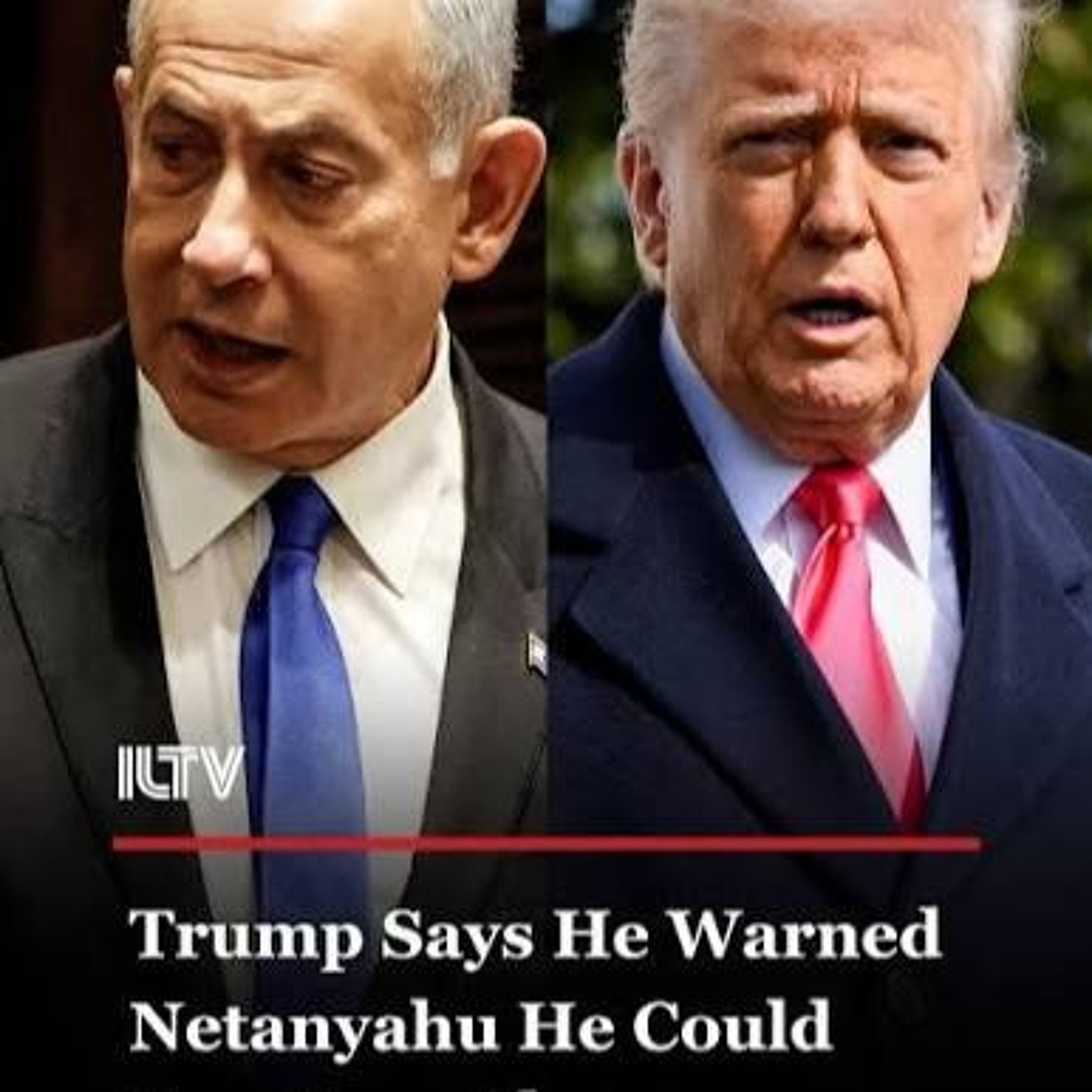
Trump and Netanyahu: Will Israel fight Iran by itself? – Text for a long Audio Post
Michael Novakhov (Mike Nova) 8/10/2026 03:34:00 PM https://thenewsandtimes.blogspot.com/2026/08/trump-and-netanyahu-will-israel-fight.html
Michael Novakhov (Mike Nova) 8/10/2026 03:34:00 PM https://thenewsandtimes.blogspot.com/2026/08/trump-and-netanyahu-will-israel-fight.html

GLOBAL #SECURITY AND #INTELLIGENCE #NEWS REVIEW
Israel, Iran, and U.S. Alliance Strain share.gemini.google/gFOemQvGaRfv
Trump and Netanyahu: Will Israel fight Iran by itself?
Gemini:
The U.S.-Israeli coalition that initiated the February 2026 war against Iran is currently fracturing over diverging strategic priorities. Whether Israel ultimately engages Iran entirely on its own depends heavily on the behavioral calculations, risk tolerance, and immediate domestic vulnerabilities of Donald Trump and Benjamin Netanyahu.
Here is a breakdown of the current dynamics shaping this strategic environment:
Trump’s Calculus: The Push for De-escalation
Facing the November 2026 midterm elections with domestic support for the war dropping below 30%, Trump’s decision-making has become highly transactional and focused on mitigating domestic political fallout.
The “Go It Alone” Ultimatum: In a stark behavioral shift from his initial posture at the war’s onset, Trump has explicitly drawn a boundary for Israel. In June, he reportedly warned Netanyahu that further escalation would leave Israel fighting “on its own”.
Economic Imperatives: Driven by the need to alleviate pressure on global energy markets before American voters head to the polls, the U.S. administration is actively pursuing a negotiated settlement with Tehran to reopen the Strait of Hormuz.
Netanyahu’s Calculus: The Appeal of Unilateralism
Conversely, Netanyahu’s behavioral profile under pressure tends toward risk-acceptant posturing, a survival strategy heavily influenced by his own existential political test: the upcoming October 2026 Israeli legislative elections.
Defying Washington: Netanyahu has recently demonstrated a willingness to publicly buck the U.S. administration, notably rejecting Trump’s 15-point disarmament plan for Gaza in favor of demanding genuine disarmament.
Coalition Pressures: Hardline members of his coalition, such as National Security Minister Itamar Ben Gvir, are actively demanding that Israel resist U.S. constraints and establish strict “red lines,” further incentivizing a defiant, unilateral posture from the Prime Minister.
The Strategic Reality: Will Israel Act Alone?
While Israeli leadership frequently hints at unilateral action to maintain deterrence, the reality of execution involves significant structural and operational constraints.
The Capability Gap: Israel possesses the tactical aviation and strike capabilities to hit high-value targets inside Iran. However, executing and sustaining a prolonged, multi-front campaign—especially while managing ongoing security demands in Gaza and Lebanon—without guaranteed U.S. logistical resupply, intelligence integration, and diplomatic cover presents a massive strategic vulnerability.
Ethological Signaling: Netanyahu’s current rhetoric regarding unilateral action likely functions as an ethological display. It serves as a signaling mechanism intended to project strength to his domestic electorate while simultaneously attempting to pressure the U.S. into maintaining a harder line in its negotiations with Tehran.
While a unilateral Israeli strike cannot be entirely ruled out if Netanyahu perceives a closing window of opportunity or a critical political advantage, the sheer logistical and strategic risks of fighting a protracted conflict without American backing make it an immensely dangerous gambit.
–
Trump and Netanyahu: Will Israel fight Iran by itself?
AI Mode
Israel is actively preparing to fight Iran by itself if the United States fully withdraws from direct combat. Following explicit warnings from U.S. President Donald Trump that Israeli Prime Minister Benjamin Netanyahu could find himself “fighting alone”, Israeli military planning has pivoted toward unilateral action. [1, 2, 3, 4]
The Trump-Netanyahu Rift
A widening strategic divide between Washington and Jerusalem has left Israel increasingly isolated in its approach to Tehran: [5]
Trump’s Warning: President Trump directly told Netanyahu, “Bibi, you better be careful, or you will be on your own very soon,” expressing deep frustration that Israeli escalations in Lebanon were ruining U.S. diplomatic efforts. [6, 7]
U.S. Exit Strategy: The Trump administration is seeking an “off-ramp” to end the conflict, engaging in what Trump calls “low-key” or “semi-negotiating” tracks with Iran to stabilize global markets and potentially reopen the Strait of Hormuz. [2, 4, 8, 9]
Israeli Resistance: Prime Minister Netanyahu has publicly rejected Trump’s 15-point regional peace plan, maintaining that the Israel Defense Forces (IDF) will not withdraw from Gaza or halt operations until Hamas is completely disarmed. [5, 9]
Israel’s Unilateral Strategy: “Operation Blue-and-White”
With the U.S. shifting toward economic pressure rather than military escalation, Israel’s defense establishment is independently planning its next steps. [2, 9]
According to Israeli intelligence and military leaks, the IDF is actively preparing “Operation Blue-and-White,” a contingency plan for unilateral airstrikes targeting Iranian nuclear facilities and ballistic missile infrastructure. Israeli officials have explicitly informed Washington that Jerusalem intends to retain full freedom of action against Tehran, regardless of whether a U.S.-led coalition remains intact. [2, 5]
–

Ukraine War: Current Status and Developments share.gemini.google/SZRaFBXQhfFS
The war in Ukraine is now in its fifth year since Russia’s full-scale invasion in February 2022. As of August 2026, the conflict has evolved into a prolonged war of attrition defined by heavy aerial bombardments, widespread drone campaigns, and a relatively static frontline, with Russia occupying approximately 20% of Ukrainian territory.
Here are the most recent and significant developments in the conflict:
Recent Escalations and Strikes
The current phase of the war is heavily focused on long-range strikes, with both sides targeting critical infrastructure and supply lines:
Ukrainian Drone Campaign in Russia: Ukraine has intensified its drone strikes deep inside Russian territory, aiming to cripple military logistics and economic assets. Recent targets have included a major oil refinery in Tatarstan and warehouses belonging to Russia’s largest online retailer. These strikes have reportedly knocked out up to 40% of Russia’s refining capacity and have increasingly resulted in civilian casualties within Russia.
Russian Aerial Bombardments: Russia continues its relentless missile and drone attacks on Ukrainian cities, exploiting Ukraine’s current shortage of U.S. Patriot interceptor missiles. Recent strikes have hit Kyiv, Odesa, Sumy, and Dnipropetrovsk. An attack on Odesa damaged residential buildings and left over 300,000 families without power, while another strike in Dnipropetrovsk utilizing a North Korean ballistic missile killed six people.
Civilian Impact: The United Nations recently condemned both nations for the rising number of civilian deaths. Russia’s ongoing strikes on the energy grid continue to worsen living conditions for Ukrainians, prompting preparations for severe power outages and shortages.
Strategic and Military Shifts
Technological Adaptations: Ukraine continues to adapt its drone warfare to dismantle Russia’s military supply networks, particularly in the occupied southern regions and the Azov Sea. Meanwhile, Ukrainian military intelligence reports that Russia is rapidly deploying “Rassvet,” a domestic satellite communication system designed to rival Starlink.
Foreign Military Support: Russia’s war effort is being heavily supported by North Korea, which has supplied ballistic missiles, long-range artillery, and reportedly sent between 14,000 and 15,000 soldiers to assist Russian forces. On the Ukrainian side, President Zelenskyy recently announced that Ukrainian-made ballistic missiles could be ready to strike Russian targets by the fall, complementing incoming shipments of ATACMS missiles from allies.
Diplomatic Standoff: Peace negotiations remain entirely stalled. Russian officials have recently ruled out any possibility of “freezing” the war without addressing Moscow’s core demands, while Ukraine remains steadfast against territorial concessions.
The Frontline
Despite the massive scale of the fighting, the ground war remains largely in a stalemate. Following a surprise Ukrainian incursion into Russia’s Kursk Oblast in August 2024, the frontline stretching across eastern and southern Ukraine has seen slow, grinding, and attritional advances by Russian forces without achieving major strategic breakthroughs.
–
AI Mode: Russia-Ukraine war today
Key Developments Today
Deep-Strike on Tatarstan: Ukrainian drones hit an oil refinery and industrial infrastructure in Nizhnekamsk, Tatarstan, over 600 miles (1,000 km) inside Russia. The strike killed at least 13 people (including seven Uzbek citizens) and wounded dozens, prompting a local day of mourning. [1, 2, 3]
Ballistic Missile Barrages: Russia continues pounding Ukraine with massive waves of drones and ballistic missiles. Over 1,000 missiles and drones were launched in the past week, heavily targeting energy facilities, logistics, and residential zones in Kyiv, Kharkiv, and Odesa. [4, 5, 6, 7, 8]
North Korean Troops: Ukrainian President Volodymyr Zelensky warned that Russia is preparing to receive as many as 50,000 North Korean soldiers to support its war effort and gain modern combat experience. [2, 6]
Targeting Logistics: Russian forces struck the Mayaki bridge on the M-15 highway, a critical alternative land corridor connecting southern Ukraine to Moldova and Romania, aiming to disrupt remaining Ukrainian grain exports. [6]
Air Defense Crisis: Ukraine faces an acute shortage of Patriot interceptors. While most drones are being shot down, officials report that recent Russian ballistic missiles have routinely penetrated depleted defenses. Western allies are urgently scrambling to source more air defense systems ahead of winter. [2, 8, 9, 10]
–
Eastern #Europe: Overnight Strikes and Drone Warfare
#Russia and #Ukraine exchanged strikes overnight, resulting in casualties on both sides. Ukrainian drones struck the Belgorod region, while Russian missiles hit a high-rise in Kharkiv and targeted the port city of Odesa. As the air campaign intensifies, new reports also highlight how Ukraine’s deployment of autonomous ground robots is beginning to change the tactical rules of engagement on the battlefield.
–

Russian Influence vs. Israeli Religious Politics share.gemini.google/AtEghqxJMDKH
To understand the intersection of Russian influence, religious politics, and Israeli society, it is necessary to separate geopolitical realities from demographic trends.
The premise that a group known as “Putin’s Jews” is driving “hardline, conservative religious politics” in Israel contains a fundamental misconception about the nature of Russian influence in the country. While Russian-speaking immigrants and wealthy oligarchs have profoundly shaped Israel’s right-wing political landscape, their influence is overwhelmingly secular and nationalist, rather than religious.
Here is a breakdown of how these factions operate, the source of their political power, and the controversies surrounding them.
1. Deconstructing “Putin’s Jews”
The term “Putin’s Jews” is typically used in geopolitical circles to describe a specific group of loyalist oligarchs and religious figures based in Russia, rather than the general Russian-Israeli public.
The Oligarchs: This refers to billionaires (like Roman Abramovich, Moshe Kantor, and the Rotenberg brothers) who have maintained close ties with the Kremlin while also holding Israeli citizenship, funding Jewish philanthropy, or investing heavily in Israeli real estate and tech.
The Religious Element in Russia: In Russia, Putin cultivated a close relationship with the Chabad-Lubavitch movement, specifically elevating Rabbi Berel Lazar to the position of Chief Rabbi of Russia. This mutually beneficial alliance provided the Kremlin with a loyal Jewish establishment, but this dynamic is largely domestic to Russia and does not dictate Israeli religious policy.
2. The Real Russian Influence in Israel: Secular Nationalism
The structural shift in Israeli society is driven not by oligarchs, but by the demographic weight of the over 1.2 million immigrants who arrived from the former Soviet Union (FSU) in the 1990s.
This demographic fundamentally altered Israeli politics, securing the dominance of the political right—but strictly on security and territorial grounds.
Secular Identity: The Russian-speaking community in Israel is aggressively secular. Having been raised in the Soviet system, they generally reject religious mandates.
Friction with the Rabbinate: There is deep, ongoing hostility between the FSU immigrant community and Israel’s ultra-Orthodox (Haredi) religious establishment. Under strict religious law (Halacha), hundreds of thousands of Russian-speaking Israelis are not recognized as Jewish. Consequently, they are barred from marrying, divorcing, or being buried in Jewish cemeteries through the state apparatus.
Political Representation: The most prominent political vehicle for this demographic is Avigdor Lieberman’s Yisrael Beiteinu party. Lieberman’s platform is a mix of hard-right security policies and fiercely anti-Orthodox secularism (advocating for civil marriage and drafting the ultra-Orthodox into the military).
3. The Political Paradox
While Russian-Israelis are not driving conservative religious politics, they are caught in a political paradox that often empowers religious hardliners.
Because the FSU demographic overwhelmingly votes for the nationalist right wing (traditionally led by Likud), they frequently vote into power governing coalitions that rely heavily on ultra-Orthodox and National-Religious parties to maintain a majority.
Sociologists often point out the irony in this dynamic: secular, right-wing Russian immigrants consistently vote for governments that empower the very religious institutions that question their Jewish identity and limit their civil liberties.
4. Controversies and “Corrupting” Influences
While religious radicalization is not driven by Russian actors, there are widespread concerns within Israeli society about the influence of FSU wealth on the integrity of Israeli institutions.
Oligarch Capital: For years, Israel offered generous tax exemptions and privacy laws for new immigrants, which critics argue turned the country into a safe haven for FSU oligarchs seeking to shield their assets from Western sanctions or Kremlin pressure.
Political Access: There is a perception that billionaire philanthropists with ties to Moscow use their wealth to buy political access in Jerusalem, funding think tanks, media outlets, and hospitals.
Geopolitical Balancing: The presence of this massive Russian-speaking demographic, combined with the financial weight of FSU oligarchs and Russia’s military presence in neighboring Syria, has historically pressured the Israeli government to maintain a delicate, sometimes highly criticized, diplomatic neutrality with Moscow—most notably seen in Israel’s cautious response to the invasion of Ukraine.
In summary, while wealth tied to the Kremlin has raised serious questions about financial and political corruption in Israel, the country’s hardline religious politics are a homegrown phenomenon driven by domestic Haredi and National-Religious factions, not by Russian immigrants or Putin’s inner circle.
–

THE CRISIS OF MOSSAD AND THE CRISIS OF ISRAEL
The corruption of the wide spread money laundering and the “hardline nationalism”, or to be direct, the RACISM, stream down through every ex-Soviet pore in Israeli society, and it is while 400,000 of them are not recognized as “halachically” citizens.
Clash with Religious Authorities: Despite their hawkish nationalist voting patterns, most FSU immigrants are thoroughly secular or atheist. A profound institutional tension exists because an estimated 400,000 citizens from this immigration wave are not considered halachically Jewish by Israel’s Orthodox Chief Rabbinate.
The corrupting influence of the hypocritical, hardline, conservative religious politics (of “Putin Jews”) on the Israeli society
The convergence of hardline nationalism and religious politics among certain factions of the Russian-speaking electorate is a heavily debated topic that shapes contemporary Israeli society. While the term “Putin Jews” is a colloquial and highly politicized label—often used by critics to describe recent right-wing Russian immigrants—the broader impact of post-Soviet immigration on Israel’s political and religious landscapes is well-documented. [1]
The Secular Right-Wing and Religious Polarization
The political profile of the massive wave of over one million immigrants from the former Soviet Union (FSU) is unique. Unlike native-born Israeli factions, the FSU electorate often combines hardline hawkish nationalism with fierce secularism. This creates distinct societal impacts: [1]
Nationalist Realignment: Many post-Soviet immigrants hold a deeply skeptical view of territorial concessions and peace agreements. Critics argue this hawkish stance has strengthened right-wing populism, entrenching the Israeli-Palestinian conflict and shifting the national consensus further toward annexationist policies. [2, 3, 4]
Clash with Religious Authorities: Despite their hawkish nationalist voting patterns, most FSU immigrants are thoroughly secular or atheist. A profound institutional tension exists because an estimated 400,000 citizens from this immigration wave are not considered halachically Jewish by Israel’s Orthodox Chief Rabbinate. [5, 6]
The Fight for Civil Liberties: Political figures representing this base, such as Avigdor Lieberman and his party Yisrael Beiteinu, frequently target the ultra-Orthodox (Haredi) establishment. They aggressively lobby against “religious coercion,” advocating for secular civil marriage, public transit on Shabbat, and the conscription of Haredi yeshiva students into the military. [7, 8, 9]
Cultural and Democratic Critiques
Critics within Israel’s progressive and veteran secular circles express concern over how post-Soviet political traditions intersect with Israeli democracy. [3]
Perceptions of Authority: Sociologists point out that some immigrant factions brought a political culture influenced by Soviet-style authoritarian structures, favoring strongman leadership over fluid democratic norms. Critics contend this has eroded democratic institutional checks and balances. [3, 4]
Social Fragmentation: Rather than fully integrating into a singular melting pot, parts of the Russian-speaking community operate as a highly independent cultural and political bloc. This reinforces a trend where Israeli society is split into parallel, self-contained tribal identities that struggle to find common civic ground. [3, 10]
Conversely, defenders argue that the post-Soviet aliyah revitalized Israel’s economy, technology sector, and military infrastructure. They maintain that the community’s fierce nationalism is a legitimate patriotic response from citizens who face immediate security threats and have sacrificed heavily in defending the state. [1, 3, 11, 12]
–

The Latest Assessment: What ails #Mossad?
Quote (and it puts it quite mildly):
#Ideological Shift: The rise of hardline, conservative religious #politics
has shifted national priorities away from secular defense pragmatism toward messianic and ethnocentric paradigms, straining relations with traditional military and intelligence brass who favor institutional norms and regional stability.
What ails Mossad? Did it become too political under Netanyahu and Yossi Cohen? What are the corrupting influences of the conservative orthodox judaism? – Google Search google.com/search?q=What+
AI Overview
Mossad faced intense scrutiny under Benjamin Netanyahu and former director Yossi Cohen , as critics argue the agency’s traditional apolitical stance was compromised by personal political ambitions, high-profile media operations, and the growing influence of right-wing religious coalitions in Israeli governance. [1, 2]
Politicization Under Netanyahu and Yossi Cohen
Blurred Lines: Observers argue that Yossi Cohen acted as a political extension of Benjamin Netanyahu, using high-visibility intelligence coups—such as seizing Iran’s nuclear archives—to bolster both leaders’ public profiles .
Succession Ambitions: Cohen was widely viewed as Netanyahu’s preferred political successor, leading to accusations that his operational decisions and media exposure were tailored to build a personal political brand rather than maintain institutional neutrality.
Post-Tenure Fallout: After leaving office, Cohen openly critiqued the political and military establishment, eventually calling for Netanyahu to step aside, which further highlighted the deep entanglement of intelligence leadership with partisan politics.
Personal Scandals: Cohen’s tenure faced distractions from ethical controversies, including accepted gifts from billionaires and unauthorized disclosures, raising concerns about compromised institutional integrity. [10]
Influence of Conservative and Ultra-Orthodox Politics
Conscription Disparities: A central friction point in Israeli society involves exemptions from military and national service for ultra-Orthodox (Haredi) men, a policy heavily defended by Netanyahu’s political coalitions to maintain power.
Erosion of Shared Burden: Critics argue that prioritizing sectarian political survival over universal civic duty creates a moral hazard, fracturing the egalitarian ethos traditionally expected within Israel’s security ecosystem.
Ideological Shift: The rise of hardline, conservative religious politics has shifted national priorities away from secular defense pragmatism toward messianic and ethnocentric paradigms, straining relations with traditional military and intelligence brass who favor institutional norms and regional stability.
–

#CIA #DIA #Mossad
It looks like a big SAMOVAR with pipes. A lot of tea.
x.com/KyivIndependent/status…The Kyiv Independent (@KyivIndependent)⚡️Russia’s version of Starlink deploying quicker than planned, Ukraine’s military intelligence says.“Moscow is implementing Rassvet, effectively a Russian analogue of the Starlink system. And they have begun launching it significantly faster than was envisaged in their plans,” Ukraine’s military intelligence deputy chief, Major General Vadym Skibitskyi, said in an interview with RBC-Ukraine.
kyivindependent.com/russia-a…— https://x.com/KyivIndependent/status/2086763088754188309
— Michael Novakhov (@mikenov) Aug 10, 2026
Summary
Recent developments highlight intensifying geopolitical friction, particularly in the Middle East and Eastern Europe, alongside a major humanitarian crisis in Colombia. Iran and the U.S. are locked in a compensation standoff, while Syria’s rapid military rebuild with foreign backing threatens Israeli security. A devastating earthquake in Colombia has killed at least 77, disrupting regional stability. Meanwhile, Russian sabotage and espionage activities persist across Europe, signaling a broader shadow war.
Key Stories
Iran-U.S. compensation demands escalate as Strait of Hormuz remains closed — Iran and the U.S. are now both demanding financial reparations from each other, with Iran linking the Strait of Hormuz’s closure to unfrozen assets and a Lebanon ceasefire. Trump’s public stance frames Iran as liable for regional conflicts, while Iran’s IRGC issues aggressive threats over Persian Gulf islands.
Syria accelerates air force rebuild with foreign support, raising Israeli concerns — Israeli defense officials report Syria has rapidly rebuilt its air force with backing from Turkey, Saudi Arabia, Russia, and France, conducting its first fighter jet exercise in years. The developments suggest a shift in regional power dynamics, potentially limiting Israeli operational freedom over Syrian skies.
Colombia earthquake death toll rises to 77 amid widespread destruction — A 7.4-magnitude earthquake in western Colombia has caused at least 77 deaths, with cities like Cali and Pereira facing severe structural damage. The U.S. Geological Survey estimates economic losses could exceed $100 million, as rescue efforts continue.
Russian sabotage and espionage operations persist across Europe — Sweden disrupted a Russian intelligence operation aimed at influencing its policies, while an explosive-laden drone linked to Russia was found at a German airport. A Bulgarian arms plant explosion, tied to GRU Unit 29155, revives concerns over Russian covert actions targeting military supply chains.
Colombia recognizes Israeli sovereignty over Golan Heights, signaling diplomatic shift — Colombia’s formal recognition of Israeli control over the Golan Heights marks a significant policy reversal, aligning with Israel’s security interests. The move coincides with heightened regional tensions, including Israeli warnings about a new defense alliance involving Pakistan, Saudi Arabia, and Turkey.
Russia’s highest court has ordered the only party opposing the Kremlin’s military action in Ukraine to be removed from the ballot in next month’s parliamentary election.
“An explosive-laden drone discovered at an airport in Germany this week likely belongs to the Russian government, according to U.S. officials familiar with intelligence reports about the incident.” wsj.com/world/europe/u-s-int…
— @michaeldweiss Aug 10, 2026
#CIA #DIA #Mossad
x.com/mikenov/status/2086862…Michael Novakhov (@mikenov)GLOBAL #SECURITY AND #INTELLIGENCE #NEWS REVIEW
Middle East
x.com/mikenov/status/2086861…— https://x.com/mikenov/status/2086862432908058698— Michael Novakhov (@mikenov) Aug 10, 2026
GLOBAL #SECURITY AND #INTELLIGENCE #NEWS REVIEW
Middle East
x.com/mikenov/status/2086861…Michael Novakhov (@mikenov) #Israel, #Iran, and U.S. Alliance Strain #Trump and Netanyahu: Will Israel fight Iran by itself? – Articles and Tweets thenewsandtimes.blogspot.com…— https://x.com/mikenov/status/2086861528825749977— Michael Novakhov (@mikenov) Aug 10, 2026