
‘Iran War Trump, Putin, Netanyahu’ by Mike Nova 2 is on #SoundCloud on.soundcloud.com/YV9u1TF22p…
— Michael Novakhov (@mikenov) Aug 14, 2026
Month: August 2026
‘Iran War Trump, Putin, Netanyahu’ by Mike Nova 2 is on #SoundCloud on.soundcloud.com/1oXaL9BTrb…
— Michael Novakhov (@mikenov) Aug 14, 2026
https://x.com/mikenov/status/2088306783571911089
European Wildfires: Extreme heat and massive wildfires continue to spread across Europe, forcing thousands to evacuate. In Croatia, at least a dozen people were hospitalized after fires tore into the tourist town of Omis. Meanwhile, authorities in France report that nearly 500 people have been arrested this summer on suspicion of intentionally starting wildfires.
Today’s News Headlines: August 14, 2026 share.gemini.google/VGRlajtT…
–
The catastrophic wildfires tearing across Europe are caused by a mix of immediate human triggers (both accidental and deliberate) and human-caused climate change, which transforms small sparks into massive, uncontrollable megafires. While over 95% of fires in Europe are ignited by humans, scientists emphasize that the extreme scale of the blazes is driven by record-breaking heatwaves and severe drought. [1, 2, 3, 4, 5]
Europe is currently experiencing an unprecedented wildfire season, with nations from France and Spain to Greece and the Balkans facing mass evacuations. As authorities investigate the blazes, a clear division has emerged between the immediate physical triggers and the underlying environmental drivers. [4, 6]
The Physical Triggers: Accidental and Intentional Ignition
While climate conditions prepare the landscape to burn, an initial spark is almost always required to start a fire. Investigators have traced recent ignitions to two main sources: [4, 7]Arson and Deliberate Acts: In France, where roughly nine out of ten wildfires are started by people, the government has arrested 420 individuals suspected of starting fires deliberately or through negligence. However, tracking deliberate fire-setting across borders remains difficult due to a stark criminal intelligence gap and fragmented national investigations within the European Union. [8, 9, 10]
Industrial and Daily Accidents: Many of the largest blazes began entirely by accident. In France, officials blamed a brush-clearing machine operating near a high-voltage power line, while Spanish investigators found that sparks from heavy agricultural machinery ignited major blazes. Other common triggers include parking hot car exhaust pipes on dry grass and discarded cigarettes. [4, 11, 12, 13]The Environmental Driver: Climate Change
Experts stress that looking only at who lit the spark misses the bigger picture: human-caused climate change is the true force behind why these fires are becoming uncontrollable. [4][Wet Spring Season] ➔ Rapid growth of grasses, brush, and fine vegetation
⬇
[Extreme Summer Heat] ➔ Vegetation bakes dry, creating highly flammable tinder
⬇
[Any Spark (Accident/Arson)] ➔ Instantly ignites explosive, uncontrollable MegafiresThe Climate Whiplash Effect: A very wet early spring caused significant growth of fine fuels like grass and understory. Consecutive, record-breaking summer heatwaves then baked this abundant plant mass entirely dry, turning landscapes into tinderboxes. [2, 11, 14]
The “Triangle of 30”: Once a fire is lit, it is accelerated by perfect storm weather conditions: temperatures above 30°C, winds stronger than 30 km/h, and relative humidity below 30%.
The Rise of Megafires: Because Europe is the world’s fastest-warming continent, fires quickly grow beyond 10,000 hectares. At this size, they become “megafires” that stop reacting to local weather and begin creating their own dangerous weather systems, making traditional firefighting methods ineffective. [2, 15]If you are tracking a specific region, let me know if you would like details on the current situation in France, Spain, or Greece, or if you want to look into the regional emergency responses being deployed.
[1] youtube.com
[2] youtube.com
[3] thelancet.com[4] dw.com
[5] youtube.com
[6] latimes.com
[7] offshore-energy.biz
[8] euronews.com
[9] bbc.com
[10] euobserver.com
[11] youtube.com
[12] facebook.com
[13] jasperbernaers.com
[14] theguardian.com
[15] youtube.comEuropean Fires: who is behind it? – Google Search google.com/search?q=European…
— Michael Novakhov (@mikenov) Aug 14, 2026
share.gemini.google/14nHVTlg…
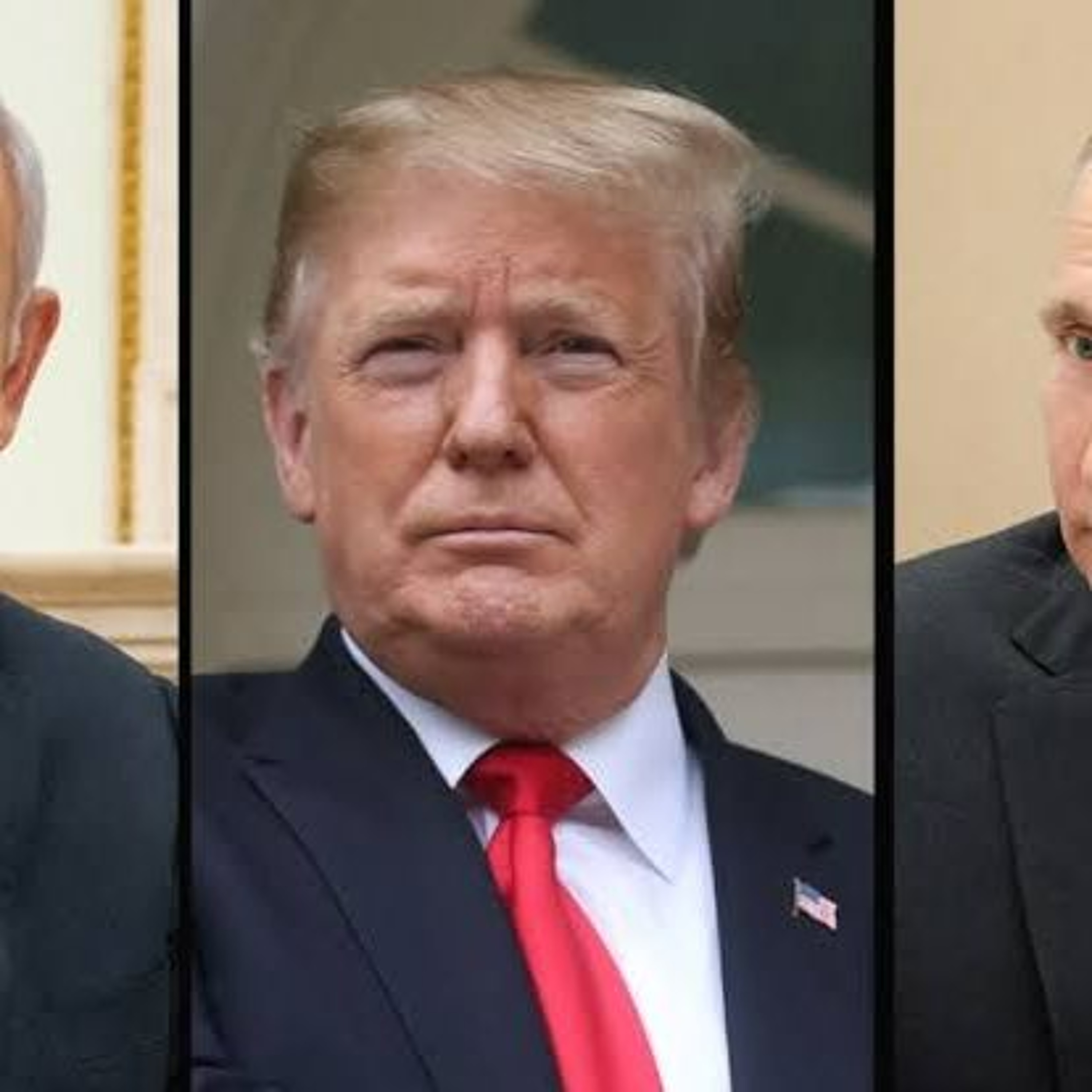
Iran War: Trump, Putin, NetanyahuBased on the current developments in the ongoing 2026 conflict with Iran, the dynamics between Donald Trump, Benjamin Netanyahu, and Vladimir Putin have become increasingly complex. What started as joint U.S.-Israeli strikes in February has evolved into a tense diplomatic and military standoff, with the three leaders pursuing diverging agendas.
Here is a breakdown of how the three leaders are navigating the crisis:
1. The Growing Trump-Netanyahu Rift
While the U.S. and Israel initially launched the war together, President Trump and Prime Minister Netanyahu now have vastly different priorities for how it should end.
Trump’s push for de-escalation: Driven by the economic toll of high oil prices and inflation ahead of the November 2026 U.S. midterm elections, Trump is actively trying to wind down the conflicts in Iran, Gaza, and Lebanon. He favors semi-negotiating with Tehran while relying on a severe naval blockade—which he dubbed a “steel wall”—to starve Iran of resources.
Netanyahu’s hardline stance: Netanyahu has pushed for continued escalation and explicitly rejected a Trump-backed 15-point peace plan meant to end the war in Gaza. Netanyahu insists that Hamas must be completely disarmed before Israel withdraws, framing his rejection as Israel standing its ground against U.S. pressure.
Intelligence cooperation: Despite the political friction, Israel has continued to feed the U.S. intelligence regarding serious Iranian assassination plots against Trump—revenge for both the current war and the 2020 killing of Qassem Soleimani. However, the CIA has occasionally expressed “low confidence” in the specifics of some Israeli warnings.2. Putin’s Calculated Involvement
Russian President Vladimir Putin has positioned himself as a cautionary voice, seeking to protect Russian interests in the region (including Iran’s Bushehr Nuclear Power Plant) while offering limited diplomatic off-ramps.
Warnings against force: In communications with Trump, Putin has backed ceasefires while warning that further military force by the U.S. and Israel would have “extremely dire consequences” for the entire international community.
The Uranium offer: Putin proposed that Russia could help by taking control of Iran’s enriched uranium stockpiles. Trump rebuffed this suggestion, telling Putin he would rather see Russia focus its efforts on ending the war in Ukraine.3. The Impasse Over the Strait of Hormuz
The conflict is currently deadlocked over the economic fallout and control of vital waterways.
Dueling demands: Iran has refused to reopen the Strait of Hormuz—a chokepoint for 20% of global oil trade—unless the U.S. meets steep demands, including withdrawing forces and paying war damages. In retaliation, Trump has demanded that Iran pay sweeping reparations for decades of U.S. casualties dating back to the USS Cole.
Military friction: While full-scale operations have paused for diplomacy, U.S. and Saudi forces continue to strike Iranian proxies in Iraq, and the U.S. military has had to intercept Iranian ballistic missiles targeting American forces in the Middle East.— Michael Novakhov (@mikenov) Aug 14, 2026
Ukraine plans to hand over captured Russian military equipment to museums across Europe in a stinging blow to Putin. thedailybeast.com/putins-hum…
— @thedailybeast Aug 14, 2026

![#EuropeanFires GLOBAL #SECURITY AND INTELLIGENCE #NEWS REVIEW European Fires: who is behind it? Humans are responsible for starting the vast majority of the historic wildfires currently devastating Europe, with official estimates indicating that up to 90% of the blazes are ignited by human actions. These ignitions stem from a mix of accidental negligence, agricultural and industrial accidents, and deliberate acts of arson, all of which have been amplified into uncontrollable megafires by severe climate-change-induced heatwaves and drought across the continent. [1, 2, 3] Europe is facing an unprecedented and destructive wildfire season. Recent developments reveal an intense legal and security](https://pbs.twimg.com/media/HPsXXrJWIAACOLO.jpg)

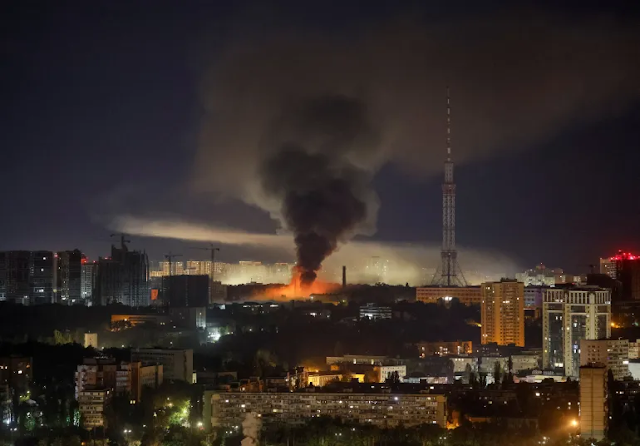


#EuropeanFires
GLOBAL #SECURITY AND INTELLIGENCE #NEWS REVIEW
European Fires: who is behind it?
Today’s News Headlines: August 14, 2026 share.gemini.google/VGRlajtT…
Humans are responsible for starting the vast majority of the historic wildfires currently devastating Europe, with official estimates indicating that up to 90% of the blazes are ignited by human actions.These ignitions stem from a mix of accidental negligence, agricultural and industrial accidents, and deliberate acts of arson, all of which have been amplified into uncontrollable megafires by severe climate-change-induced heatwaves and drought across the continent. [1, 2, 3]
Europe is facing an unprecedented and destructive wildfire season. Recent developments reveal an intense legal and security crackdown on those responsible for sparking the flames, alongside an acknowledged gap in cross-border criminal intelligence. [2, 4, 5]
Breakdown of Human and Environmental Causes
The devastating scale of the fires cannot be attributed to a single actor. Instead, it is the result of a dangerous combination of immediate human “sparks” and environmental “fuel”. [1]Arson and Deliberate Acts: Law enforcement agencies across Europe have launched massive crackdowns on intentional fire-setting. In France alone, the interior ministry announced the arrest of 420 individuals alleged to have started fires deliberately or through severe negligence, including 166 minors. In one high-profile case in the Var region, a 23-year-old man faces 15 years in prison for intentionally starting 10 fires in five days. [1, 2]
Industrial and Agricultural Accidents: Many of the largest fires were triggered entirely by accident during routine work. French authorities pointed to a brush-clearing machine operating near a high-voltage power line as the source of a historic blaze. Similarly, Spanish investigators concluded that sparks flying from heavy machinery ignited major forest fires in Spain. [1, 2]
The Arson Intelligence Gap: Investigating “who is behind” the fires across borders remains incredibly difficult. While the European Union possesses highly advanced satellite systems to detect fires and coordinate emergency responses, it lacks a unified criminal database for deliberate fire-setting. Because national reporting practices vary so widely, Europol largely depends on fragmented, country-by-country local investigations to hunt down arsonists. [1, 5]
Climate Change as the Force Multiplier: While humans provide the initial spark, scientists emphasize that human-caused climate change is the reason these small ignitions turn into unstoppable disasters. Successive, record-breaking heatwaves reaching over 40°C (104°F) since May have completely dried out forest vegetation, creating an unprecedented volume of highly combustible fuel across southwestern France, Spain, and Italy. [1, 3, 4]If you are looking into a specific country or region’s situation, please let me know. I can provide details on local arrest numbers, specific fire locations, or the ongoing environmental impact assessments.
[1] dw.com
[2] bbc.com
[3] youtube.com
[4] youtube.com
[5] euronews.com
–
Witnesses describe ‘wall of flames’ as wildfires rage on in France and Spain | DW News – YouTube youtube.com/watch?v=G3whbyEY…
–— Michael Novakhov (@mikenov) Aug 14, 2026
Today’s News Headlines: August 14, 2026 share.gemini.google/H3NW500E…
— Michael Novakhov (@mikenov) Aug 14, 2026