
PUTIN WIN🇷🇺🇺🇦🇺🇸: Zelenskyy says, he will not authorise the further strikes on Russia’s oil or energy sites after the Trump’s demands.
-Russia Is winning in the global Energy and oil prices volatility.
— @rkmtimes Sep 15, 2026
Day: September 14, 2026
Breaking:
Russia says Mecca defense pact is another NATO. It is against Israel.
— @_MegaPolitics Sep 15, 2026
BREAKING:
China says AI must be stopped to save humanity in the world. It has almost destroyed humanity.
— @World_Affairs11 Sep 15, 2026
The Supreme Court has rejected President Donald Trump’s bid to restrict mail ballots ahead of the midterms.
Chilling new details about Trump shooter Thomas Crooks revealed in bombshell FBI docs: emotionless since birth trib.al/rA9bbYm
— @nypost Sep 14, 2026
Extraordinary journalism from @NewYorker, on Jared Kushner’s catastrophic diplomacy, conflicts of interest, arrogance. He represents “a new kind of Washington figure, for whom public office serves as a means to extraordinary wealth”
newyorker.com/magazine/2026/…— @anneapplebaum Sep 14, 2026
Offering a grim assessment of Russia’s relations with the West, President Vladimir Putin pointedly warned European governments not to deploy any troops, including peacekeeping forces, to Ukraine, saying it would mean “war.” “They speak of contemplating the dispatch of troops to the territory of Ukra
 |
Michael_Novakhov shared this story . |
Offering a grim assessment of Russia’s relations with the West, President Vladimir Putin pointedly warned European governments not to deploy any troops, including peacekeeping forces, to Ukraine, saying it would mean “war.”
“They speak of contemplating the dispatch of troops to the territory of Ukraine,” Putin said, following his participation Friday at a summit of leaders of the BRICS bloc of nations in New Delhi. “This would mean war with Russia.”
Putin lashed out at what he called systemic errors committed by the “West’s globalist circles,” insisting that Russia posed no danger to European countries, which he said “seek to frighten their populations with a mythical Russian threat.”
He also insisted that the West was to blame for the war in Ukraine by seeking to expand NATO. “They directly supported separatism in the Caucasus and sought to break up Russia; this is a matter of fact. Furthermore, today’s crisis in Ukraine was likewise instigated by them.”
As if to put an exclamation point on Putin’s remarks, a Russian drone strike hit passenger rail infrastructure in western Ukraine as many Western diplomats, officials and experts, including former CIA director David Petraeus, former British prime minister Boris Johnson and former Swedish prime minister Carl Bildt were leaving the country after attending the annual Yalta European Strategy conference in Kyiv.
Passengers on at least one train were evacuated, but no deaths or injuries were reported from the strike.
German Defense Minister Boris Pistorius called the drone strike a calculated escalation to fuel fear in Europe.
“It is all the more important that we remain levelheaded, that we do not allow ourselves to be provoked, but that at the same time we leave no doubt that we are capable of defending ourselves,” Pistorius told reporters. “What Vladimir Putin is doing is dangerous. He knows that, and that is why he is doing it.”
The rail line attack further alarmed European officials who have been warning that Russia could attack near Ukraine’s border crossings with NATO countries or could intensify sabotage operations inside Europe to discourage Western leaders from further aiding Ukraine.
“These coming weeks and months will be a time of very intensified actions on the Russian side, and unfortunately we cannot rule out that this escalation will also affect our territory,” Polish Prime Minister Donald Tusk said Sunday following a government security briefing.
The Trump administration in recent days has renewed its efforts to jump-start peace negotiations between Russia and Ukraine, including with trips by presidential envoys Steve Witkoff and Jared Kushner to Moscow and Ukraine.
Following those talks, Kushner said that Washington had already drafted most of the peace agreement but that it was being held up by Ukraine’s reluctance to make territorial concessions to Russia, which now occupies about one-fifth of Ukraine’s sovereign territory.
Putin has demanded that Ukraine surrender all of its eastern Donbas region, and Russia has claimed, illegally, to have annexed four Ukrainian regions, even though militarily it does not control all of that land.
“President Putin laid out his position regarding what he wants to achieve,” Kushner said at the YES conference. “If Ukraine wanted to retreat to that line, we would have already prepared and agreed on the remaining terms of the deal. Currently, Ukraine does not want to do this.”
Ukraine has repeatedly said that ceding land that Russia failed to capture militarily is a nonstarter, arguing that withdrawing from fortified cities in Donbas would only expose the country to future attacks.
Kushner and Witkoff said they were pushing for trilateral negotiations. And Ukrainian President Volodymyr Zelensky said he is willing to meet Putin at the Group of 20 summit scheduled for mid-December at Trump’s resort in Doral, Florida.
The Kremlin immediately ruled out such a meeting, calling it “impossible” and saying that Putin would only meet Zelensky in Moscow. Kyiv repeatedly has dismissed the offer of a meeting in Moscow as the Kremlin playing games.
Putin’s spokesman Dmitry Peskov said that the talks on Ukraine probably would resume in October, after Russia holds a key parliamentary election this weekend.
The potential deployment of a European peacekeeping force has been discussed as one potential way to provide Ukraine with “security guarantees.” But any such step would first require the signing of a durable truce between Kyiv and Moscow.
Britain and France previously had agreed to deploy forces in Ukraine if the country reaches a peace deal with Russia, with then-Prime Minister Keir Starmer and President Emmanuel Macron signing a “declaration of intent.”
But as negotiations stalled, with Washington focused on its own war in Iran, the proposals to send European troops to Ukraine have also gone quiet.
Europe, because of its increasing role in Ukraine’s capability to launch strikes against Russian territory, is becoming “Moscow’s central strategic problem, overshadowing the United States, Ukraine and, to some extent, even NATO,” Tatiana Stanovaya, a senior fellow at the Carnegie Russia Eurasia Center, wrote on X.
“This will shape the nature of negotiations with and about Ukraine, as well as the outcome of any settlement, far more than it did a year ago,” Stanovaya added. “It is likely to dominate European geopolitics for decades.”
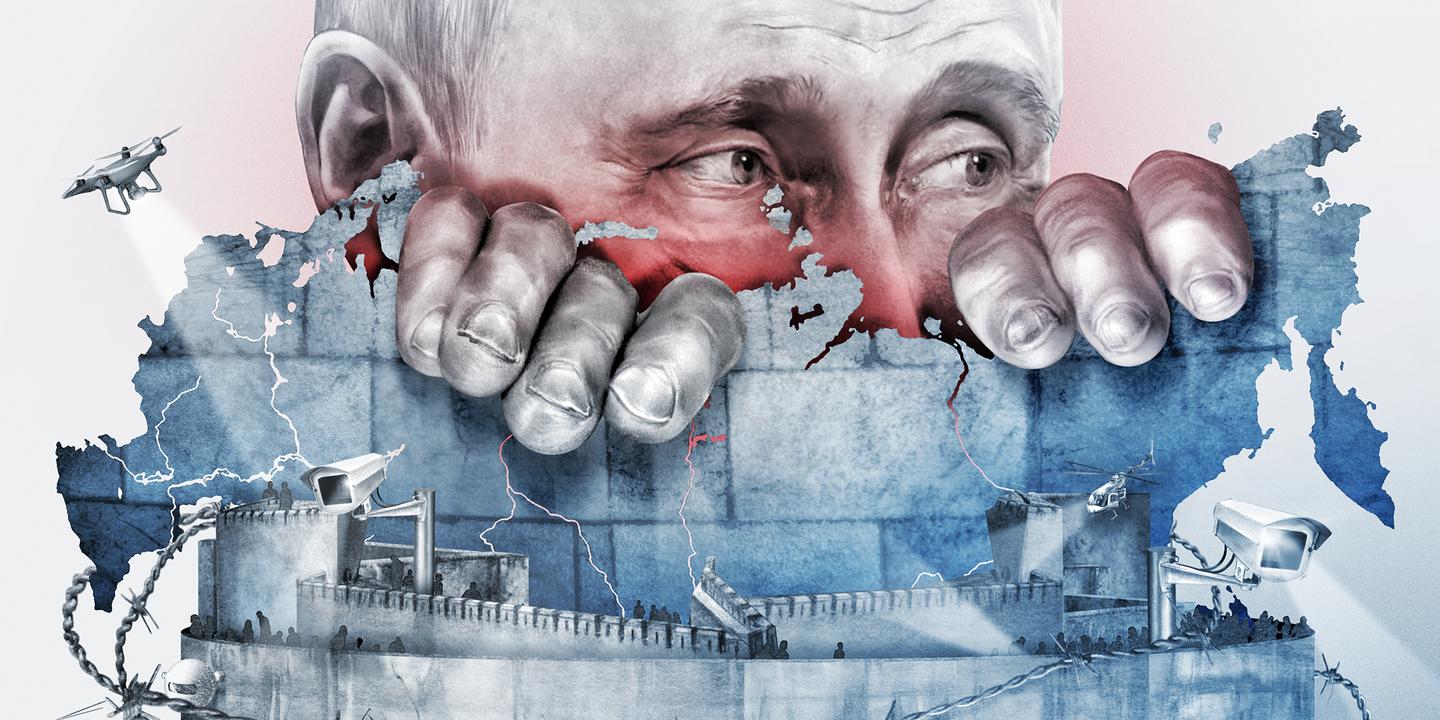
‘The Putin System’ (1/3). The many ‘siloviki,’ officers drawn from Russia’s security services, have seized power and are now omnipresent among the country’s elites. Within society, they have spread an atmosphere of fear and suspicion that prohibits any questioning of the Kremlin or its war in Ukraine.
Anne-Gaëlle Amiot World World World Russia Russia Russia Published yesterday at 8:00 pm (Paris), updated yesterday at 8:04 pm Subscribers only Investigation’The Putin System’ (1/3). The many ‘siloviki,’ officers drawn from Russia’s security services, have seized power and